Philly nonprofit promotes character education with free ‘playbooks,’ other resources

Philadelphia’s Character Lab is helping the city’s educators get the conversation on character started with students.

The nonprofit Character Lab was launched by Angela Duckworth, author of Grit: The Power of Passion and Perseverance, and two colleagues in 2013 to help build character in students that leads to fulfilling lives, Keystone Edge reports.

“Overwhelming scientific evidence now shows that character strengths are as important as IQ and socioeconomic status to achievement and well-being,” Character Lab communications manager Cameron French said.

“In other words, if we want students to be good people and to those around them—all of these things require what we call character.”

According to the Edge:

Character Lab offers free “Playbooks,” ready-to-use resources comprised of videos, interviews, examples and facilitation guides that target a specific character strength and are aimed at middle and high school students.

Another initiative, the Character Lab Research Network, brings top scientists together with schools that want to advance character development science. And every summer, Character Lab cohosts the Educator Summit, bringing hundreds of educators together to learn from each other and from world-class scientists about the latest in the field.

French explained that Character Lab works to promote strong character traits with a keen focus on academics.

“Our research has demonstrated that there are at least three categories of character that matter for school success,” she said. “Interpersonal strengths, like gratitude, enable harmonious relationships with other people; intrapersonal strengths, like grit and self-control, enable achievement; and intellectual strengths, like curiosity, enable a fertile and free life of the mind.”

Those character virtues, she said, can be learned and developed throughout life.

“There’s an element of nature and an element of nurture to all character strengths,” French said. “We know that character is malleable, so Character Lab is dedicated to finding ways to develop character. We focus on adolescents in middle and high school. While very young ages may be important for establishing the foundations of character, science shows that this is not the only time you can instill it. Character may never stop changing.”

And while the Lab’s playbook offers helpful tips for parents and educators who want to instill positive virtues like self-control, other critical elements  are required to form good character in youth.

University of Virginia sociologist James Davison Hunter completes the ecosystem of character in The Death of Character: “When moral discourse (discussion of character and virtue) is taken out of the particularity of the moral community—the social networks and rituals that define its practice, and the communal practice that forms its memory—both the self and the morality it seeks to inculcate operate in a void.”

Tools and lessons created by Character Lab work best in strong particular communities that have clear definitions of right and wrong that go far deeper than academic success and achievement. In these kids of communities, self-control helps students to focus their energy on doing the right thing for the sake of others.

Character, ‘noncognitive factors’ important for academic success

The University of Chicago’s Consortium on School Research recently summarized three decades of research on how students learn into a three-minute video that stresses the importance of “noncognitive factors” for success in school and life.

Noncognitive Factors from UChicago UEI on Vimeo.

“We know children spend over 16,000 hours in classrooms between kindergarten and high school graduation, and that teaching students to become learners requires more than improving test scores; it requires fostering the noncognitive factors that standardized tests don’t measure: the behaviors, attitudes, beliefs, and social-emotional skills that set students up for success in school and in life,” according to the Consortium.

“Research” shows those noncognitive factors—which are essentially character traits like perseverance, optimism, motivation, resilience—“matter a lot,” the video reports.

The Consortium sorts noncognitive factors that influence academic performance into five categories: mindsets, perseverance, behaviors, learning strategies, and social skills.

“Fostering noncognitive factors requires helping students develop positive mindsets—belief in their ability to learn, grow, and succeed. Those mindsets are closely linked to perseverance and academic behaviors, which have the most direct effect on academic performance,” the Consortium reports. “And even the most motivated student will do better if they have learning strategies for overcoming challenges and accomplishing goals, as well as the social skills to work well with peers and adults.”

Jeffrey Dill, Donchain Fellow for Character and Culture at the Institute for Advanced Studies in Culture, and Dan Scoggin, co-founder of the Great Hearts Academies, weighed in on measuring noncognitive skills and character virtues in a column for The Hedgehog Review.

Dill and Scoggin noted that psychologist Angela Duckworth’s research shows “current measures for noncognitive outcomes are limited by self-reporting and reference bias,” and argued that attempting to measure character would also be “premature and counterproductive.”

They wrote:

So what can be done? First, we need to be sure that we’re not placing the responsibility solely on schools. Schools do not and cannot operate in isolation from other key institutions that affect the formation of the young (families, neighborhoods, after-school programs, athletics, civic and religious groups and so on). A child lives in a larger environment that—for better or worse—influences his or her moral development. We must give attention to the moral ecology which the young are nurtured and their moral identities formed.

The Consortium affirms its research shows students’ noncognitive skills “are not fixed traits” but rather “are shaped by the environments students are in every day, what they hear, see and feel from parents, teachers, schools and society.”

The Consortium offers a two-page summary about “The Role of Noncognitive Factors in Shaping School Performance,” while the 2012 literature review “Teaching Adolescents To Become Learners: The Role of Noncognitive Factors in Shaping School Performance” delves deeper into the issue.

Experts argue moral guilt ‘healthy, good to develop’ in children

A recent column in The New York Times explores the role of guilt in children, and explains how it relates to the way kids develop character virtues like empathy and kindness.

Pediatrician Perri Klass discussed how guilt—“a complicated element in the parent-child equation”—is a healthy part of child development that evolves as they grow.

Klass cited research by University of Toronto psychology professor Tina Malti, who argues that “moral guilt is healthy, good to develop.”

“It helps children refrain from aggression, antisocial behavior,” Malti said.

Malti explained young children can experience an empathic guilt for making another child cry, or for violating their own standards of right and wrong, and “those two reactions can be entirely independent, or can go together.”

Children generally develop beyond the simplistic version of guilt by age 6, when it becomes more about transgressions.

“There’s lots of evidence that healthy guilt promotes children’s prosocial behavior,” Malti said.

Helen Egger, chairman of the department of child and adolescent psychiatry at NYU Langone Health, told Klass guilt stems from “theory of mind” and it’s closely tied to a child’s empathy for others.

Egger said “children have to have developed a theory of mind, self and others, to be able to feel guilt.” On the other side, “when you have lying or lack of guilt, the child seems to have a reduced capacity for empathy,” she said.

Klass contends “guilt is part of children’s normal development, and we don’t actually want to see children grow up without it, but we also worry that they may judge themselves too harshly, or feel responsible for things that are well beyond their powers (the classic one would be the child who blames himself for his parents fighting, or even divorcing).”

Egger, Malti, and others highlighted the links between dysfunctional forms of guilt and depression and anxiety, and offered ways adults can identify and correct children to ensure they put their relationships and behavior in proper perspective.

The researchers highlight the natural and productive role of guilt to help youngsters internalize the values of society, a process that James Davison Hunter, founder of the Institute for Advanced Studies in Culture at the University of Virginia, discusses in broader context in The Tragedy of Moral Education in America.

In a critique of contemporary moral culture, Hunter writes, “. . . in the attempt to avoid the language of good and evil, the word guilt is effectively banished from this new vocabulary. People certainly feel guilty, but no one is actually guilty. Because we understand the mental and social causes of behavior, we know that wrongdoers are troubled, not guilty, and need therapy, not punishment. The goodness innate in them has not been properly brought out . . .”

Educators can explore the questions of guilt more deeply with students with lessons from the nonprofit Facing History and Ourselves, which offers a challenging assignment on guilt and responsibility in the context of the Nuremburg Trials.

“Using this lesson along with the documentary (‘Nuremburg Remembered’) will introduce teachers and their students to the essential questions of guilt, judgment and responsibility that were initially posed at the end of World War II and continue to be raised in the twenty-first century,” according to the Facing History site.

David Brooks: “What a wise person says is the least of that which he gives”

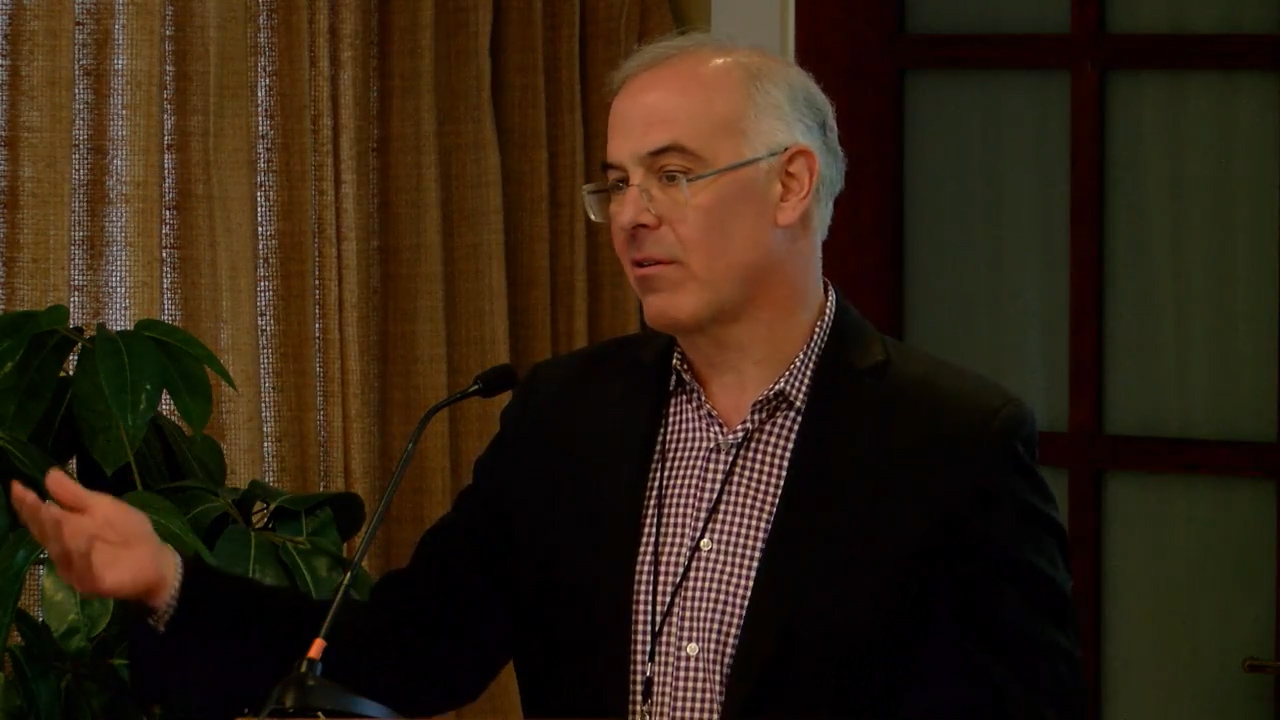
New York Times columnist David Brooks spoke at the Institute for Advanced Studies in Culture’s Education Leaders Roundtable in March about why words matter in character education, while also acknowledging that “there’s shortcomings to words, even in the teaching business.”

“When I think back on my teachers, I really don’t remember what they said, but I remember how they were, and how they were regarded,” Brooks said.

Dalai Lama calls for moral education for ‘a more peaceful planet’

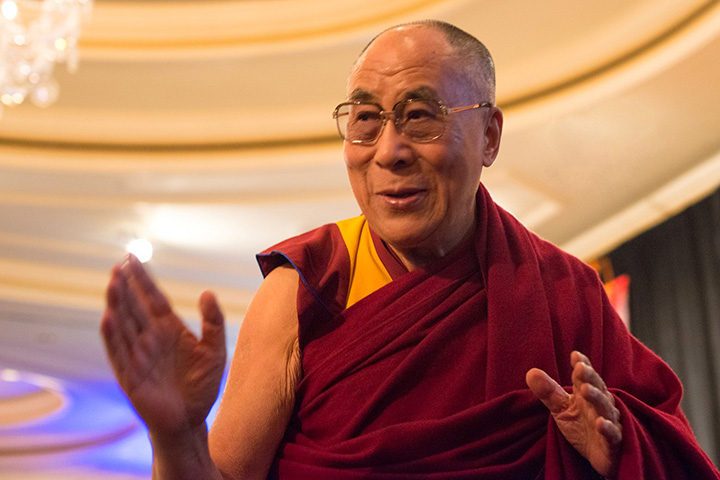
The Dalai Lama believes schools should do more to promote moral education to move the world away from the “violent” and “sad” reality of the 2oth century.

“I think existing modern education is inadequate and it teaches more about materialistic pleasure and values. So when we grow up with modern education we go after power, money, and fame. Education should include moral education as an academic subject,” the Buddhist spiritual leader told more than 27,000 at the Kalinga Institute of Social Sciences in India, where he received the 10th KISS Humanitarian Award last month.

The international award, selected by a “high-level jury,” is designed to highlight people who make exceptional contributions in fields that tackle social issues.

The Dalai Lama said the last century was plagued with destruction, war, and mass killings, including deaths from the use of two nuclear weapons. The Nobel Peace Prize winner believes that by cultivating inner peace through moral education is the key to helping today’s youth reverse the trend and create a more peaceful planet in the 21st century.

“In this century . . . killing has become almost normal. This must change,” he said, according to The Times of India. “This century should be a century of peace. World peace can be achieved only through inner peace.”

The Dalai Lama’s invitation to make moral education central to education is worth heeding. Already, schools around the world are struggling to define moral education and how to integrate it into the curriculum.

Yet University of Virginia sociologist James Davison Hunter points out that curriculum is just one piece of a larger moral culture that extends beyond schools and into all aspects of human life.

“This moral culture not only gives us our ethical understanding, it also tells us who we are,” Hunter wrote in The Tragedy of Moral Education in America. “It provides us with an understanding of what it means to be human and what kind of human we should ideally be.”

A moral culture can make this explicit in classes, but it can also be woven into the ethos of a school, as it is in the Great Hearts Academies network of schools in the United States. Rather than making moral education an academic subject to give students a moral compass, this network of classical charter schools relies on its robust academic curriculum to weave moral formation into all of its instruction.

Cassie Mason, a teacher at Great Hearts, reflects, “What amazes me is that they [the students] really see the virtues that we talk about as something beautiful and something to strive for.”

Educators can learn more about Great Hearts’ approach to forming character with its Building Goodness by Building Character video.

“I think character and virtue are really the center of everything we do, because we are called Great Hearts, after all, not great minds,” said student Jack Fresqez. “And we’re encouraged to kind of question our actions, question everything we do, around whether it’s virtuous.”

“It’s not just about producing brilliant kids, but brilliant kids who have the character to deploy that talent for a good that’s greater than themselves,” said Great Hearts founder Daniel Scoggin.

The time is now for citizenship and character education

Andre Perry, education researcher and founder of Davenport University’s College of Urban Education, believes “democracy is in deep trouble” and educators are the key to saving it.

“Educational leaders must take responsibility for instilling basic civic practices and virtues in their students immediately, or they may lose the option to autocrats who have other ideas on how to run a country,” Perry wrote in a recent editorial for The Hechinger Report, a nonprofit news site dedicated to inequality and innovation in education.

Perry pointed to Harvard lecturer Yascha Mounk, who said during an October gathering of political scientists that “if current trends continue for another 20 or 30 years, democracy will be toast.”

Those trends involve a push toward college and career readiness that seemingly ignores foundational skills students need to develop into good citizens with the ability to think critically, engage in democratic processes, and behave in a civic fashion.

Without foundational skills like social and emotional learning, citizenship education, and other strong character virtues, “the foundation on which education stands will crumble beneath it,” Perry wrote.

“An overemphasis on individual academic development and preparation for college and career has come at the expense of learning responsible leadership and learning for the benefit of social cohesion. To maximize our chances of getting a job or into college, we’ve separated learning into discrete components—academic, social, emotional—that when applied in narrow terms of college and career readiness defies how we actually live,” he continued.

Perry contends that the current individualistic, compartmentalized approach to education is working against the true purpose of education, which is to maximize individual talents for the good of democracy, citizenship, and social cohesion. There is a direct link between the education system and the fate of democracy, he wrote, and it boils down to how educators understand their role and their ability to instill foundational character virtues in students.

“People don’t live in schools or jobs; they live in communities. Schools and employers don’t transcend neighborhoods and cities; they are part of them. We can no more dissect and separate learning from our civic selves than we can disconnect individual talents from their public impact. The segregation of learning reflects that we educators have lost our purpose,” he wrote.

“Based on conventional measures, literacy is on the rise. But so are class inequality, incidents of hate as well as government attacks on basic civil liberties,” Perry argued. “We must primarily focus on our civic selves or our ‘solutions’ will continue to further divide us.”

The Vanishing Center of American Democracy,” a 2016 report by the Institute of Advanced Studies in Culture at the University of Virginia, supports Perry’s perspective, though the report notes that it’s not just schools that are struggling in their mission.

The Institute report noted “fear, animosity, distrust, and lack of comprehension that it fosters—is the common culture of early twenty-first century American democracy. It hasn’t helped that the mediating institutions directly or indirectly charged with political formation—schools, youth organizations, churches, and other institutions of faith, and local political parties—have weakened over the past half century.

“These institutions have failed to cultivate the shared civic sensibility at the heart of citizenship,” according to the report.

Educators who want to focus more on civic education and civic character in the classroom can look to places like the National Constitution Center, which offers lessons to help students examine the issues more closely.

In one assignment, “Citizenship and Character: Moderation, Finding the Balance,” students reflect on how the important virtues of moderation and self-discipline played into the founding of the United States by reviewing the Declaration of Independence, the U.S. Constitution, the Federalist papers, and other historic documents and applying it to their own lives.

‘State of the Kid’ report: kids looking to parents as role models

A national survey of youngsters conducted by Highlights magazine suggests kids are looking for more from parents and other adults as role models, and it’s serving as a call to action.

The popular children’s magazine polled 2,000 kids ages 6-12 from across the country about their perceptions of kindness and other issues.

“We asked kids—the world’s most important people: What messages are they hearing from their parents and other adults in their lives about the importance of kindness?” according to the magazine’s “The State of the Kid 2017” report.

“Are they learning that adults value caring behaviors? Do kids witness their parents or other adults behaving rudely, and, if so, how does it make them feel? Does our next generation understand what it means to be empathetic?”

The results speak volumes.

The majority of children polled (68%) said they have watched their parents or other adults acting unkindly or saying mean things, mostly in the car (36%), on the phone (27%), and watching TV (24%).

Of those respondents, a total of 93 percent said they had negative reactions to the experience. Roughly half said they felt uncomfortable, while 43 percent were sad, 33 percent were scared, and just over a quarter were confused. Others were surprised, or angry, while small percentages were entertained, or felt safe or proud.

Highlights also asked students whether their parents think being happy, doing well in school, or being a kind person is most important. Forty-four percent of kids said their parents most want them to be happy, 33 percent said their parents want them to excel at school, while only 23 percent reported kindness as the top priority.

The data suggest that parents and other adults, the lead role models, could do better.

Research from the Institute of Advanced Studies in Culture makes it clear there’s a lot at stake, as family and the surrounding community play a crucial role in the lives and character development of children.

The Institute’s “Culture of American Families” report concluded:

In formation, it is the culture and the community that gives shape and expression to it that is the key. Healthy formation is impossible without a healthy culture embedded within the warp and woof of family and community.

The healthy formation requires parents and other adults to take responsibility for their failures, to encourage children to live up to the same high standards they hold for themselves.

Harvard University’s Making Caring Common Project offers an excellent starting point, with a list of parenting tips that can help parents take action to rebuild a healthy culture in their family and community.

David Brooks: surround people with strong love

New York Times columnist David Brooks discussed the “pressure points of character” during a School Leaders Roundtable at the Institute of Advanced Studies in Culture in March.

Brooks argued that programs can’t “change and transform a child’s life,” only meaningful relationships can.

“If you want to affect people and their character, the first thing is to give them a sense of attachment,” Brooks said. “To surround them with strong loves to which people want to remain faithful.”

Leading students to consider what will lead to a flourishing life can be facilitated by a resource like “Beginning at the End,” available from the Jubilee Centre for Character and Virtues.


Moral discipline is a 21st-century skill

CNN’s Fareed Zakaria thinks students in today’s world of information overload must develop “intellectual discipline” to say “no” to the lure of social media in order to “go deep” and “actually read books.”

Zakaria discussed his perspective as part of a panel on “Education in the Post-Truth World” during the 2017 World Innovation Summit for Education (WISE), which drew thousands of educators from more than 100 countries to Doha, Qatar, in November.

“I say this to my kids all the time, you can graze all these headlines and tweets and blog posts you like—at the end of the day the way you develop real knowledge about a subject still remains that you have to go deep; still remains that you have to actually read books; still remains that you have to talk to experts, travel to countries,” he said.

Zakaria compared the plethora of modern technologies to his experience growing up in India in the 1970s, when there was only one black and white television channel available that nobody watched.

The situation forced Zakaria to spend much of his time reading, and that led to a promising career. But today’s youth face a much different situation that will require them to learn how to tune out to focus in and sort fact from fiction.

“If I had a supercomputer in my pocket called an iPhone that could stream all the entertainment in the world, all the TV shows, I don’t think I would’ve read that much but I don’t think I would’ve had the career that I have,” he said. “I don’t know where that takes you.

“Children are going to have to learn something I didn’t have to learn as much which is discipline, intellectual discipline—the ability to say no,” Zakaria added.

“The world my children are growing up in is exactly the opposite, an explosion of choice, an explosion of options, an explosion of opportunity.”

Knowing how to say no and using “intellectual discipline” to “actually read books” is becoming increasingly important as many teens look to social media and other questionable sites to gather information.

Quartz points out that a 2016 Stanford University study shows the majority of students from middle school through the undergraduate level access news through social media sites like Twitter and Snapchat, and most can’t tell the difference between what’s real and what’s propaganda.

Zakaria’s comments also echo the same argument University of Virginia sociologist James Davison Hunter applies to character education.

“Moral discipline, in many respects, is the capacity to say ‘no’; its function, to inhibit and constrain personal appetites on behalf of a greater good. This idea of a greater good points to a second element, moral attachment,” Hunter wrote in The Death of Character. “It reflects the affirmation of our commitments to a larger community, the embrace of an ideal that attracts us, draws us, animates us, inspires us.”

“Without strong moral attachment to the good, we won’t know when to say no.”

Educators looking to develop students’ moral attachment to the good and intellectual discipline to say no can find guidance at the The Jubilee Centre’s “Teaching Character Through Subjects” page.

The series was developed in England to “create an innovative resource for building character within 14 subjects across the school curriculum.”

When our heroes falter: lessons from 3 UCLA athletes

The recent arrest of three University of California Los Angeles players in China for shoplifting, and their subsequent return to the United States, provides valuable lessons on character, humility, and taking responsibility as role models.

In October, President Trump intervened to facilitate the release of three UCLA freshman basketball players who were caught shoplifting at several stores during a trip to China for an exhibition game.

The players—LiAngelo Ball, Jalen Hill, and Cody Riley—were suspended indefinitely from the basketball team once they arrived home, and they held a press conference in mid-November to own up to their misdeeds, which could have resulted in up to 10 years in a Chinese jail, NPR reports.

Each player at the press conference admitted to stealing, apologized for their actions, and pleaded for forgiveness in what’s become an embarrassing international incident for the university and the United States.

“I take full responsibility for the mistake I have made, shoplifting,” Riley said. “I know that this goes beyond me letting my school down, but I let the entire country down.”

“I take full responsibility for my actions, and I’m sorry,” said Ball, younger brother of Los Angeles Laker Lonzo Ball.

Jalen Hill told reporters “what I did was stupid, there’s just no other way to put it.”

The students also recognized the impact of their actions on their family, friends, teammates, university, and the United States.

“I apologize to my teammates, my coaches, and my family because of how much negative attention that I put on them that they do not deserve,” Hill said.

All three students stressed that the stealing is not their origin or destiny, and vowed to learn from the experience so it doesn’t happen again.

“I’d also like everyone to know that this does not define who I am,” Ball said. “My family raised me better than that and I’m going to make myself a better person from here on out.”

While these young men are not necessarily role models for most children, as parents don’t want their kids to become shoplifters, they are role models for some, a fact that Riley addressed in a message to his younger brother at the press briefing.

“To my younger brother, Ben, this is not the example that I want to set for you,” he said. “But from here on out, I promise I will be the best role model I can be . . .  for you to look up to.”

Taking responsibility is tough, but the players’ comments show their willingness to own up to their action, to ask for forgiveness, and to enter the slow process of rebuilding trust. Children who watch their athletic heroes humble themselves learn this is the only way to grow. People who can publicly admit their failures, seek the forgiveness of those they’ve wronged, and actively seek to change are the only ones worthy of emulation.

In the book The Death of Character, University of Virginia sociologist James Davison Hunter wrote that the most essential feature of character “is the inner capacity for restraint—an ability to inhibit oneself in one’s passions, desires, and habits within the boundaries of a moral order.”

In this case, the student athletes failed by shoplifting.

But Hunter notes that “character is, in explicit ways, the embodiment of the ideals of a moral order . . . ” and the contrition and apology offered by the students illustrate their submission to a moral order they’ve violated.

This is the world we live in: one with fallible heroes who grow only by humility and taking responsibility.

Coaches looking to build strong character in students can find resources in University of Virginia’s basketball program, which coach Tony Bennett built on Five Pillars: Humility, Passion, Unity, Servanthood, and Thankfulness.