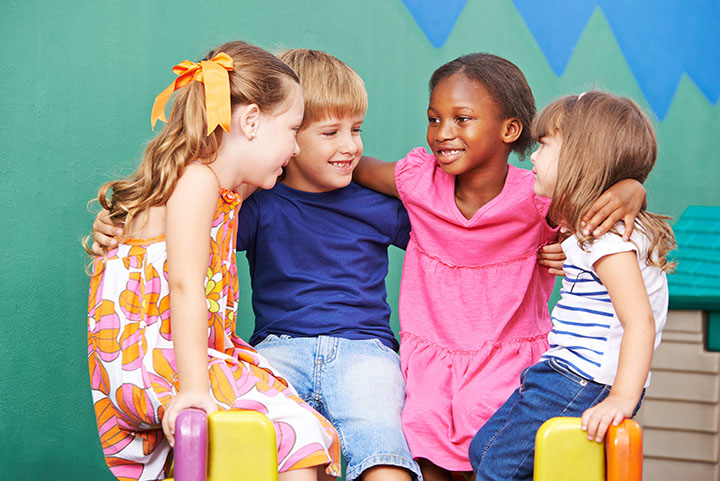
In Queens, pre-kindergartners learn kindness every day

Pre-kindergarteners at a Queens, NY, elementary school are learning as much about academics as they are about themselves with a new curriculum that encourages students to focus on managing their emotions.

Teachers at P.S. 212 in Jackson Heights work with many new immigrant students, principal Carin Ellis told The New York Times, and a new Kindness Curriculum introduced this year promotes mindfulness and builds social and emotional skills they need to persevere in academics.

“A child can come in and say, ‘My father was deported last night.’ How do you deal with that?” said Carin Ellis. “We give them tools to cope with their hurt and pain.”

The principal expects youngsters will also learn to better manage the stress of standardized tests and mitigate interpersonal conflicts.

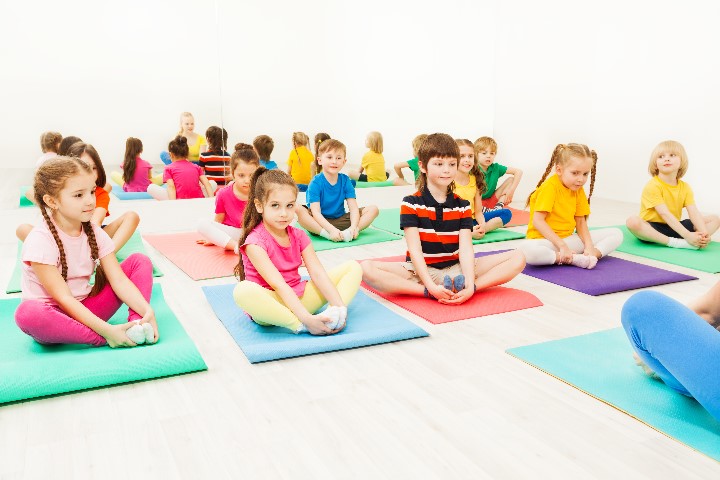
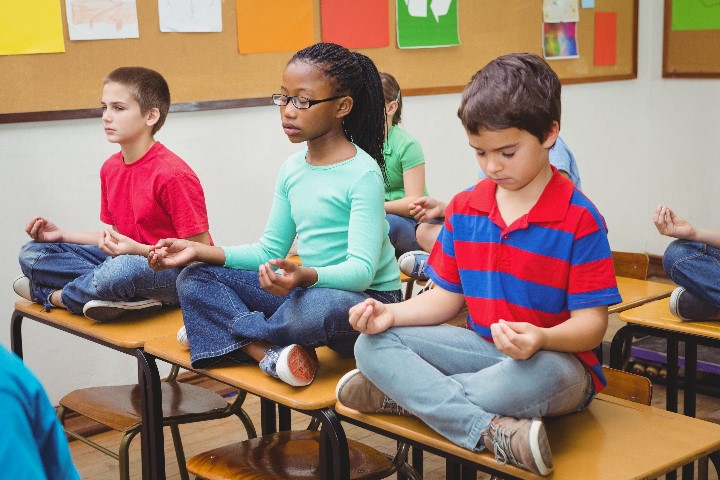
The Kindness Curriculum uses breathing exercises, sensory games, songs, and stories to help students focus on their emotions and process their feelings, led by teachers like Danielle Mahoney-Kertes at P.S. 212.

“Our world is kind of a scary place,” she told The Times. “We can’t always control what is happening outside us. But what we’re teaching them is that they can control how they respond.”

Teachers at P.S. 212 are among 15,000 educators, parents, and others who signed up for the Kindness Curriculum since August, when it was introduced by the University of Wisconsin, Madison. The popularity of the curriculum stems from a broader, growing global movement to incorporate social and emotional learning in schools.

Research by psychologist Lisa Flook suggests students who learn about kindness are more willing to share, focus better, and show modest academic gains. The reason, she told The Times, is students who are struggling with anxiety, fear, or anger can’t focus on their work.

“Children who have positive relationships with their peers and teachers do better in school,” she said.

The University of Wisconsin team led by Richard Davidson, founder of the school’s Center for Healthy Minds, worked with the producers of “Sesame Street.” Davidson said the Dalai Lama inspired him to remove the religious context around contemplative practice to develop strategies that help people, and he pointed out that ages 4 to 7 is optimal for helping students learn lifelong psychological habits.

Rosemarie Truglio told The Times that the main objective was to guide children “to identify their feelings and to put a label on them.”

When children understand their own emotions, she said, they’re better able to empathize with others and offer help. A key to that is to introduce students to the concept of kindness and “to define it not so much in words as through behaviors,” she said.

The emphasis on both words and actions means educators at P.S. 212 and elsewhere are modeling kindness and helping students practice kind words and actions on a regular basis. The overarching goal is not merely to improve academics, but to form good children.

How schools form good children, wise leaders, and virtuous citizens is the animating question of a research study at the Institute for Advanced Studies in Culture at the University of Virginia that involved observations in classrooms, cafeterias, drama clubs, and athletic programs.

The study’s primary investigator, sociologist James Davison Hunter, echoes Davidson’s emphasis on the critical developmental period between the ages of 4 and 7 to help students form strong character.

“(W)e must acquire a moral sensibility—we learn what is right and wrong, good and bad, what is to be taken seriously, ignored, or rejected as abhorrent—and we learn, in moments of uncertainty, how to apply our moral imagination to different circumstances,” Hunter wrote in The Death of Character. “Over time, we acquire a sense of obligation and the discipline to follow them.”

The University of Wisconsin offers the Kindness Curriculum for preschoolers for free to interested educators.

Exec Director of EdNext offers counsel to SEL champions

Peruse an education-focused magazine or website these days and you’re likely to come across a reference to Social and Emotional Learning (SEL). As with so many recent education trends (e.g., personalized learning, universal design for learning, etc.) proponents of the movement can be guilty of purporting to provide a “magic bullet.”

Frederick Hess, director of Education Policy Studies at the American Enterprise Institute and executive director of Education Next, advised SEL proponents based on his experience with education fads. The advice is worth noting as schools are always doing the work of forming student’s character—whether or not they acknowledge and plan for it.

Hess is appreciative of the contributions that SEL has made to raise awareness of this fact to policymakers, educators, and reformers. He says, “we’re now enthusiastically rediscovering that schools are actually supposed to tend to other important stuff too—things like character, decency, perseverance, responsibility, and citizenship.”

Hess notes that commendable as this shift is, SEL advocates have had to be careful of the fact that using such language can seem stale, so he explains, “these traditional virtues have been retro-fitted with cool new names (like ‘persistence,’ ‘grit,’ and ‘non-cognitive skills’), rebranded as ‘social and emotional’ learning (SEL), and packaged with earnest white papers, outsized university initiatives, and excited TED Talks.”

Unfortunately, the desire to be different things to different practitioners has caused there to be some muddling of terms. What Hess calls “opacity” threatens to make SEL, “[S]eem like it’s everything and anything—whatever is most rhetorically convenient at the moment . . . [and] this makes it tough to discern whether and why the idea of the moment is actually likely to help.”

To combat this, Hess suggests that advocates make it clear “what the ‘it’ is.” He also provides one piece of advice for SEL that is particularly salient to any discussion of character formation: “SEL advocates need to concede that this stuff invites discussion of ‘ideology.’”

He is right that SEL invites discussion of ideology: What is the ideal to which we are pointed? On this topic, Institute for Advanced Studies in Culture founder James Davison Hunter offers a modest proposal in The Death of Character: “[P]erhaps the most we can do is to create greater space in our social life (and not just in private life) for what remains of our wide-ranging and diverse moral communities to be renewed and to renew.”

He continues, “[I]t is precisely these kinds of social worlds, defined by a clear and intelligible understanding of public and private good mediated consistently through integrated social networks of adult authority, that moral instruction has its most enduring effects on young people.”

The Character Formation Project is one example of a program that doesn’t shy away from ideals, but has built a narrative library of historical figures who have embodied the ideals to which they are committed. If SEL champions can learn how to state those ideals, and provide rich historical and literary examples, they will contribute to Hunter’s vision of renewed moral communities.

Yoga as a promising way to keep students focused

Elementary students in Kentucky’s Jefferson County schools are learning that holding a yoga pose requires mental attention and physical poise—skills they also use in the classroom.

More than 10,000 students across 25 Louisville elementary schools are taking part in a six-year pilot project called the Compassionate Schools Project. The project infuses fitness with health education and social and emotional learning in a curriculum aimed at the “whole child,” according to The Hechinger Report.

Students spend two 50-minute sessions a week doing exercises like partner yoga, which encourages students to practice mindfulness, cooperation, and problem-solving with their classmates.

From The Hechinger Report:

Tish Jennings, an associate professor at the University of Virginia’s Curry School of Education, is one of the researchers who developed the curriculum and is studying its impact in Louisville-area schools . . .

Jennings sees whole-child education as critical to student success. Schools can’t focus only on academic content, she said, with students who don’t feel safe and calm in the classroom. Many children experience trauma at home or in their communities. Those experiences don’t disappear when the school bell rings.

Jennings’ study is currently in its fourth year, but Stonestreet Elementary School Principal Donnie Boemker believes he’s already seeing an impact.

Students are recognizing when they’re stressed or angry—through physical cues like tightened shoulders and furrowed brows—and are applying what they learned through the Compassionate Schools Project to keep their cool, he said.

“If you catch it up front, think about your breathing and those calming skills, it’ll help them in the long run,” he said, adding that kids regularly use the strategies and language from the program.

Jennings believes that helping students overcome obstacles outside of school, and to center themselves in class, will ultimately help to improve academics, and data from schools in the study should reflect that.

“If we don’t find ways to help them overcome these reactions from trauma that they bring to school with them, it’s going to be hard to teach them the academic content,” she said. “[The Compassionate Schools Project] is really helping prepare their bodies and minds—the whole child—to be ready to learn what we want them to learn.”

Gordon Marino, philosophy professor at St. Olaf College, reflected on advice from Pulitzer Prize-winning playwright David Mamet in an essay for The Hedgehog Review, a publication of the Institute for Advanced Studies in Culture.

Marino explained that he solicited one piece of advice from Mamet to pass along to his students. Mamet replied, “Tell them to pick some physical art—ballet, boxing, judo, yoga, whatever—and stick with it. It will make them feel grounded and better able to deal with adversity and rejection in this world.”

Marino summarized: “By moving your body in a certain way, he was saying, you will shape the way you feel and who you are.”

Through yoga, the Compassionate Schools Project helps students develop self-regulation, as well as other skills like focusing attention and cooperation. With practice, those skills will not only improve academics, but also help to shape students into better people.

The Compassionate Schools Project’s website offers more information on its mission, timeline, and partners, as well as details on how the initiative is advancing in Kentucky and its potential impact for other schools.

Fourth-graders teach adults to focus

Good character is formed over a lifetime. At a recent Ashland (Oregon) School Board Meeting, board members were well-reminded of this fact as they were led through a series of mindfulness exercises by local 4th-grade students, reports the Ashland Daily Tidings.

Distractions are an unavoidable facet of our modern lives. Smart phones, social media, and other outlets pour a deluge of digital information into our brains. Being able to maintain attention to a task or important matter has become an essential trait for success in family, career, and life. If we were to think of attention as a resource, then it represents a precious commodity indeed.

Students at Bellview Elementary in Ashland have been working on this problem by participating in a program called, MindUp, and they came to the board meeting prepared to share their knowledge of how to “achieve and maintain focused attention.”

“MindUp really is about self-regulation and it’s about calming your body, and it’s brain-based learning,” said Bellview principal Christine McCollom. She has spearheaded the implementation of different character-education initiatives in her school, including a social-emotional curriculum and now MindUp.

Maintaining attention is a foundational ability with regard to character. McCollom highlighted this fact when explaining that she didn’t feel her students were prepared to dive right into social and emotional learning. “[T]he kids didn’t have all the precursor skills to do all that and [the] program wasn’t necessarily designed to provide that,” she said.

Hence, her school’s focus on attention and mindfulness. And so far, the effort seems to be paying off.

McCollom, like any good principal, withheld judgement of the program until she saw the data related to outcomes. So, her staff adopted a strengths and difficulties survey for students and she says, “We used that tool to measure whether or not [students’] social skills grew over the course of the year, and they did.”

Institute for Advanced Studies in Culture fellow Matt Crawford would be encouraged by the work at Bellview Elementary. He argued in the The Hedgehog Review that, “Attention is a resource; a person has only so much of it.” Crawford also urged readers to consider the impact of this line of thinking, “What if we saw attention in the same way that we saw air or water, as a valuable resource that we hold in common?”

We must remember that cultivating the habit of attention is challenging and important work. Charlotte Mason, a renowned British educator, wrote of the subject:

It is impossible to overstate the importance of this habit of attention. It is…”within the reach of everyone and should be made the primary object of all mental discipline”; for whatever the natural gifts of the child, it is only so far as the habit of attention is cultivated in him that he is able to make use of them.

Ambleside Schools International offers this helpful guide for educators to nurture this habit of attention in students through “a finite amount of time for specific work to be done.”

Leading culture change in schools through SEL

Social and emotional learning (SEL), a fast-growing movement in education that seeks to support students beyond academics, has reached the Worcester (Massachusetts) school district, telegram.com reported.

The local School Committee received an update on the progress of a new department, the social-emotional learning division, from Maura Mahoney.

Mahoney described the comprehensive efforts led by the department, “It’s not really one single program . . . It’s about teaching the whole child—it’s a universal approach.”

Mahoney’s focus on “teaching the whole child” is evidence of why SEL initiatives have taken root across the country. Many see the movement as a much-needed return to some of the core purposes of education, namely those related to the development of students as persons, and not just as scholars.

The social-emotional learning division administers a variety of programs commensurate with the breadth of their goals: mindfulness exercises, positive behavioral interventions, conflict resolution, and student trauma support.

Mahoney notes that while some of the topics or programs covered in SEL can seem intuitive, educators can never take for granted that students have built fundamental social or emotional skills.

She said the department’s work in positive behavioral interventions aims to address things like, “this is what walking in the halls looks like, this is what playing at recess looks like, because not everyone has been taught those things.”

The fact that the Worcester school district, and others, have devoted entire departments to implementing SEL is an indicator of how seriously the movement is being taken. In part, this uptake can be read as an appreciation of the movement’s goals.

Mahoney emphasized that SEL “comes back to school culture and climate.”

James Davison Hunter, founder of the Institute for Advanced Studies in Culture and author of The Death of Character, has also emphasized the importance of culture, “Whether it is provided formally or informally, deliberately or unwittingly, moral instruction . . . is an exercise in the transmission of culture. It is a mechanism by which character is etched into a person’s identity and existence.”

Hunter and Mahoney’s insistence on the importance of culture is a reminder of the reason that so many educators got into the job in the first place. Obviously, strong student academic achievement ranks high at the top of their goals, but for many there was also a desire to help students learn and grow as people.

Generating that particular type of growth requires an understanding and appreciation for the importance of culture.

Students spend significant portions of their days in school, and whether or not school leaders are intentional, the school will mold students’ beliefs, behaviors, and attachments.

For those who long for their children to develop wisdom, alongside intelligence, the Jubilee Centre for Character and Virtues offers a guide for educators that makes practical wisdom the core, with SEL in service of that end. A school culture and climate that nurtures SEL in pursuit of practical wisdom is one that will help its students navigate a fast-changing world.

Principals favor SEL but puzzled about implementation

A recent survey of 884 public school principals showed high rates of commitment to Social and Emotional Learning (SEL), but low levels of understanding of how to encourage it or assess it.

“There’s an elevated sense of urgency about developing a plan for SEL without a lot of expertise on how to do it,” said Karen Niemi, CEO of the Collaborative for Academic, Social, and Emotional Learning (CASEL), which conducted the survey of K-12 principals.

Kate Stringer, reporter for the 74 Newsletter, wrote: “While most principals believe that social-emotional skills should be measured, only 17% reported knowing which assessments they could use. Only one-quarter of principals are using the assessments for all their students.”

But many principals are still skeptical that the assessments are helpful. Only 40% reported them to be very or even fairly useful, and only 16% think their teachers know how to use the assessment data to help their students.

“How do you actually do it? That’s something we’re working really hard on,” said Niemi. The problem is that social and emotional skills—as parts of a person’s overall character—aren’t learned by rote, or even by commitment. They are formed by practice and absorbed through culture.

CASEL has been working on ways to measure social-emotional skills, but the many barriers to successful measurement include the absence of a consistent definition of SEL and programs that can scale across America’s diverse districts.

The challenge is that there isn’t a formula for formation of social-emotional learning. It is nearly impossible to turn into a program what happens as a continuing process. Institute of Advanced Studies in Culture founder, sociologist James Davison Hunter, writes in The Death of Character: “Character is not . . . solitary, autonomous, unconstrained; merely a set of traits within a unique and unencumbered personality. Character is very much social in its constitution. It is inseparable from the culture within which it is found and formed.”

As the principals surveyed demonstrated, educating and responding to emotions are important skills. The emotions play a critical role in performance, civic, and moral character that can lead us to good decisions about right and wrong actions in different circumstances. Educators and parents can learn more about helping students with their emotions in this lesson from the Jubilee Centre for Character and Virtues.

Principal employs child whose mother disparaged him

As a school principal it can be difficult to quickly grasp how to handle a difficult situation. However, principal Karen Shaw had no doubts that she needed to do something for a student whose own mother referred to him as a “little sh**.”

Chalkbeat recently spoke with Shaw as part of a series on school administrators who have been recognized for their work. She was awarded the 2016 National Distinguished Principal of the Year for Colorado. In the interview she reflects on her handling of this student, her leadership style, and her goals as a principal.

When asked about how interactions with student families can affect her approach to the job, Shaw described this situation, where a mother called her son as a “little sh**” in conversation with school staff. “Knowing that is what his mom shared with the school, I knew I would have to take a different approach with him,” Shaw said.

She sought out ways to connect the boy with caring adults throughout the school, and this included a job working in the library. The job built up the boy’s sense of dignity, but it also provided Shaw and the school’s librarian an opportunity to develop deeper relationships with him.

Shaw said that this year, “I have him ’employed’ as a kindergarten helper for 15 minutes a day with his favorite person in our school, Ms. Rene. Ms. Rene is always positive with him and happy to work with him. I hope this little intervention will help change his life.”

Her devotion to the well-being of all those within the school community extends beyond just this single case. Shaw is committed to helping everyone in her building grow and learn, including staff. Each day she makes it a priority to visit every classroom and holds weekly data meetings to discuss student progress with teachers.

Shaw’s attitude of caring, and concern for whole-child development, even impacts her budget priorities. “We use our district funds and federal funds for low-income students in creative ways to have the most impact on our students’ academic and social emotional wellbeing,” Shaw said.

Unfortunately, the tough home life that Shaw encountered with her one particular student is the norm for many children in America.

It is the work of principals like her, and a myriad of teachers, coaches, counselors, and social workers to build networks around all students, so that the children may see themselves as part of a caring community.

James Davison Hunter, founder of the Institute for Advanced Studies in Culture, has highlighted the need for  “networks of adult authority [that] are strong, unified, and consistent in articulating moral ideals and their attending virtues.” He added in The Tragedy of Moral Education in America that,  “adults [should] maintain a ‘caring watchfulness’ over all aspects of a young person’s maturation.”

Shaw sees part of her role as principal to include building a school culture that consistently emphasizes that all community members are worthy of love and respect.

Parents or teachers looking for ways to pass along some of the lessons from Principal Shaw’s story might look to the book, Mr. Lincoln’s Way. It’s a tear-jerker for adults and eye-opening for students.

Maryland schools combat fights with conversations

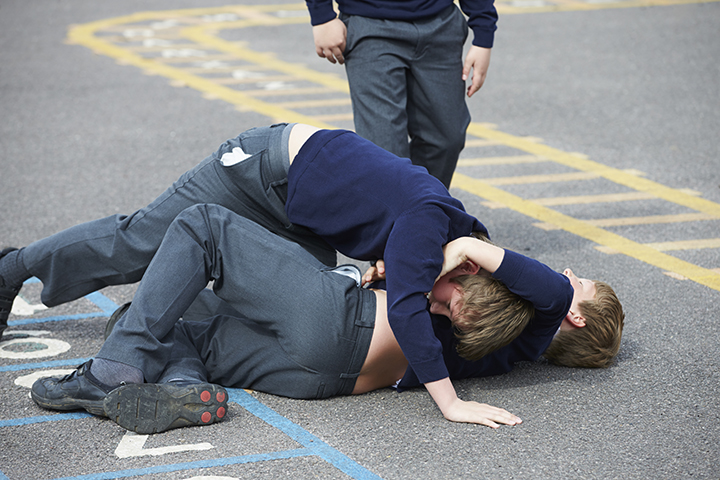
Six student fights this school year, and three in the last week, prompted Wilde Lake High School Principal Rick Wilson to start a conversation with parents.

In the early December letter to parents, Wilson discussed “a very visible fight” a few days prior and explained how many of the recent altercations spawned from conflicts in the community, often involving students from other schools, The Baltimore Sun reports.

He asked parents to have a conversation with their kids.

“I kindly ask that you take some time . . . to speak with your children and remind them that the adults in their lives are here to provide for their safety and to guide them through difficult situations,” Wilson said in the letter. “We have trained personnel throughout the building if he or she feels the need to talk to a trusted adult.”

The call for communication reflects the Howard County school district’s shifting approach to student discipline and other school issues that’s moving away from punishments toward “restorative justice” practices focused on repairing relationships.

According to the Sun:

To prevent recurring acts of violence, Kevin Gilbert, director of diversity, equity and inclusion, said his office is working to expand relationship-building skills, known as restorative justice practices, and train staff at more schools. These practices teach students how to create and maintain healthy relationships with their peers, focusing on social and emotional development.

Since 2012, 34 schools have been in the process of implementing restorative practices, mostly at the middle and high school level. The process to fully implement and change culture in all county schools could take three to five years, Gilbert said.

Behavioral support specialist Rosanne Wilson explained how it works.

“A lot of times, schools want training on the discipline part of restorative practices [and] want to know how to facilitate a circle that brings the victim and the offender together, so that both can tell their story,” she said. “Then, they come up with a means for some kind of an agreement to say this is how we’re going to move forward so that this doesn’t happen again.”

The district is working with the Howard County Education Association teachers union and the Community Justice for Youth Institute in Chicago to train educators on restorative practices like talking circles, which allow students to resolve conflicts through discussions to prevent or resolve incidents.

“The emphasis in the training was on how the implementation of peace circles can build trust, promote social and emotional well-being and facilitate harmonious relationships,” said HCEA President Colleen Morris. “Just like teaching academic subjects requires planning, preparation and knowledge of students, peace circle implementation relies on well-trained facilitators to insure a safe learning environment is created.”

District spokesman Brian Bassett noted “The most effective way to prevent a physical altercation before it happens is through conversation.”

Joseph E. Davis, scholar at the Institute for Advanced Studies in Culture and publisher of The Hedgehog Review, quotes Massachusetts Institute of Technology’s Sherry Turkle on the critical importance of conversation:

But it is in this type of conversation—where we learn to make eye contact, to become aware of another person’s posture and tone, to comfort one another and respectfully challenge one another—that empathy and intimacy flourish. In these conversations, we learn who we are.

Howard County schools are trying to rebuild this sort of conversation through restorative circles in which students deal honestly with each other and repair the damage caused by a slight or a fight.

Harvard researcher puts SEL front and center

“There is a moment for (social and emotional learning) right now,” Harvard University professor Stephanie Jones said.

“There is so much interest and excitement about it, that in order to take advantage of it and not lose it, we have to be really clear about what we mean, what we are targeting, and why it’s relevant,” Jones said at a recent Bennett Lecture in Prevention Science at Penn State University.

Jones is a member of the Council of Distinguished Scientists for the Aspen Institute’s National Commission on Social-Emotional Learning, which defines SEL as “a student’s ability to focus, manage emotions and stay engaged, which plays a large role in his or her ability to perceive, process and ultimately learn.”

Jones explained that her team is working on three areas of SEL—implementation, content, and lexicon—to determine what’s working best and promote the most effective practices.

“We have large group studies and trials of specific interventions that are located in preschools and schools, and those have told us about the kinds of specific behavioral, increasingly physiological, and academic outcomes that we can expect from interventions that are implemented in these settings,” Jones said, according to Penn State News.

One of the projects, funded by the Wallace Foundation, involves the analysis of 25 evidence-based SEL programs to determine which strategies drive positive outcomes for students. Jones said Harvard researchers are also working to create a website, briefs, coding system, and online searchable thesaurus to make their research more accessible to the public.

The overarching goal is to guide schools and organizations to better evaluate SEL programs and identify what works best to help students build the foundational social and emotional skills they need for success in school and life.

“Dr. Jones’ work demonstrates her big-picture thinking, her growing influence, in shaping new ways to think about the interface of research, policy and practice,” said Mark Greenberg, Bennett Chair of Prevention Research at the College of Health and Human Development. “Not many people extend themselves that far, and it’s one of the unusual things about Stephanie, her uncanny ability to think in new ways about old problems.”

Social and emotional learning is important because it highlights aspects of a child’s development as a person, and raises important questions about what is worthy of focus and which emotions are appropriate in a given situation.

Consider the capacity for empathy, for example.

University of Virginia sociologist James Davison Hunter wrote in The Death of Character:

It is through our capacity to imagine the suffering of others, even those in circumstances that are utterly alien to us, that we learn compassion and mercy . . . Empathy on its own simply does not lead to enduring, or discriminating moral commitments. Indeed, it can lead to just the opposite! As Bernard Williams observed, “If it is a mark of a man to have a conceptualized and fully conscious awareness of himself as one among others, aware that others have feelings like himself, this is a precondition not only of heroic benevolence but (as Nietzsche pointed out) of cruelty as well.”

The groundswell of research around SEL—and empathy in particular—is a golden opportunity for parents and educators to provide children with a clear moral compass that directs these important skills.

The Jubilee Centre for Character & Virtues offers helpful resources on developing emotional skill in children.

The time is now for citizenship and character education

Andre Perry, education researcher and founder of Davenport University’s College of Urban Education, believes “democracy is in deep trouble” and educators are the key to saving it.

“Educational leaders must take responsibility for instilling basic civic practices and virtues in their students immediately, or they may lose the option to autocrats who have other ideas on how to run a country,” Perry wrote in a recent editorial for The Hechinger Report, a nonprofit news site dedicated to inequality and innovation in education.

Perry pointed to Harvard lecturer Yascha Mounk, who said during an October gathering of political scientists that “if current trends continue for another 20 or 30 years, democracy will be toast.”

Those trends involve a push toward college and career readiness that seemingly ignores foundational skills students need to develop into good citizens with the ability to think critically, engage in democratic processes, and behave in a civic fashion.

Without foundational skills like social and emotional learning, citizenship education, and other strong character virtues, “the foundation on which education stands will crumble beneath it,” Perry wrote.

“An overemphasis on individual academic development and preparation for college and career has come at the expense of learning responsible leadership and learning for the benefit of social cohesion. To maximize our chances of getting a job or into college, we’ve separated learning into discrete components—academic, social, emotional—that when applied in narrow terms of college and career readiness defies how we actually live,” he continued.

Perry contends that the current individualistic, compartmentalized approach to education is working against the true purpose of education, which is to maximize individual talents for the good of democracy, citizenship, and social cohesion. There is a direct link between the education system and the fate of democracy, he wrote, and it boils down to how educators understand their role and their ability to instill foundational character virtues in students.

“People don’t live in schools or jobs; they live in communities. Schools and employers don’t transcend neighborhoods and cities; they are part of them. We can no more dissect and separate learning from our civic selves than we can disconnect individual talents from their public impact. The segregation of learning reflects that we educators have lost our purpose,” he wrote.

“Based on conventional measures, literacy is on the rise. But so are class inequality, incidents of hate as well as government attacks on basic civil liberties,” Perry argued. “We must primarily focus on our civic selves or our ‘solutions’ will continue to further divide us.”

“The Vanishing Center of American Democracy,” a 2016 report by the Institute of Advanced Studies in Culture at the University of Virginia, supports Perry’s perspective, though the report notes that it’s not just schools that are struggling in their mission.

The Institute report noted “fear, animosity, distrust, and lack of comprehension that it fosters—is the common culture of early twenty-first century American democracy. It hasn’t helped that the mediating institutions directly or indirectly charged with political formation—schools, youth organizations, churches, and other institutions of faith, and local political parties—have weakened over the past half century.

“These institutions have failed to cultivate the shared civic sensibility at the heart of citizenship,” according to the report.

Educators who want to focus more on civic education and civic character in the classroom can look to places like the National Constitution Center, which offers lessons to help students examine the issues more closely.

In one assignment, “Citizenship and Character: Moderation, Finding the Balance,” students reflect on how the important virtues of moderation and self-discipline played into the founding of the United States by reviewing the Declaration of Independence, the U.S. Constitution, the Federalist papers, and other historic documents and applying it to their own lives.