Dissipating Vapor: In Search of a Grander Story

For many teachers and parents, the news that broke last week was tragic but unsurprising. Long touted by teens as harmless and eyed by adults with deep concern, e-cigarettes are now being identified as the probable culprit behind nearly 150 hospitalizations and the first vaping-related US death. According to a joint statement by the CDC and the FDA last Friday, health officials are investigating 215 cases of severe lung disease associated with vaping.

Even before the recently breaking stories—and the harrowing photographs of intubated teens making their rounds on social media—health experts were concerned. In 2018, vaping represented the biggest upsurge in substance abuse among young people in the past 44 years, according to a study out of the University of Michigan. More than 37 percent of high school seniors admit to using use e-cigarettes; the devices—often designed to look like USB drives or pens—are ubiquitous.

Educators know this better than anyone. Many bathroom breaks have become suspiciously long. The trademark sweetness of flavors like gummy bear and cotton candy lingers in locker rooms and restrooms and buses. Districts scramble to educate parents as the school year begins. Vapes are illegal for kids under 18, and they’re almost always banned at schools, even for those who can legally procure them.

But in the face of health risks and disciplinary action, many teenagers still vape. Why? Despite it being dangerous and illegal, vaping is also pleasurable and addictive.

Nagging, threatening, and guilt-tripping are notoriously unsuccessful, just as they are with scores of other temptations. Even horror stories of hospitalized young people bounce maddeningly off the psyches of immortality-deluded adolescents. They often lack the character to say “no” to what is enjoyable but harmful or illegal. And yet this is exactly what a lifetime of strong character will ask of them.

In fact, the bar is even higher. Even when a thing is permissible, there will be times when it is appropriate—an adult drinking wine at dinner—and others when it is not—an adult drinking wine at a PTO meeting. People of character will be required to say “no” to themselves over and over again—to their desire to sleep in, or eat three desserts, or zone out on their cell phone—for the sake of higher goals like holding down a job, staying healthy, and maintaining family relationships.

Resisting the allure of vaping is bootcamp for a life of moral decision-making.

In the introduction to The Content of Their Character, James Davison Hunter and Ryan S. Olson write that

in its formal sense, character is comprised of moral discipline, moral attachment, and moral autonomy: the capacities of an individual to inhibit his or her personal appetites or interests on behalf of a greater good, to affirm and live by the ideals of a greater good, and to freely make ethical decisions for or against those goods.

In other words, character requires that we inhibit our appetites on behalf of a greater good and also affirm a greater good by saying “yes” to something better.

Herein lies the key to character: There is a bigger picture in view than just forgoing forbidden fruit. The “no” to more sleep is a “yes” to gainful employment, financial independence, generosity, and productiveness. The “no” to spending all night on one’s phone is a “yes” to intimacy, service, and engagement.

When we ask teenagers to abstain from vaping, what greater good do we hold out? What more compelling vision do we present?

In The Death of Character, James Davison Hunter writes, “Implicit in the word ‘character’ is a story. It is a story about living for a purpose that is greater than the self.”

There is no simple solution to addiction, and the siren song of vaping is loud. But as we talk with young people about choices, we can be agents of change if we help them yearn for a story grander than their own immediate pleasure. “No” becomes easier when the corresponding “yes” is in view. With their eyes set on bigger ambitions than personal indulgence, teens’ choices can become clearer and wiser—and perhaps the vaping epidemic will begin to recede.


Character in the Classroom: Transcript of Interview with Joshua Gibbs

This is a lightly edited transcript of an interview conducted on August 13, 2019 with classical educator Joshua Gibbs. Mr. Gibbs teaches humanities at the Veritas School in Richmond, Virginia. He is the author of How to Be Unlucky: Reflections on the Pursuit of Virtue. Gibbs blogs about education here.

Joanna Breault: Thank you for joining us today. I just wanted jump right into our discussion of virtue. You have a book that was published back in 2018 called How to Be Unlucky: Reflections on the Pursuit of Virtue, and I noticed that it contains a statement that “effective education is primarily concerned with the acquisition of virtue.” I think there might be some watching this [interview] who maybe aren’t familiar with the term virtue, or [think] that can sometimes maybe sound old-fashioned. Can you explain, first of all, kind of what you mean by this term and then what you mean by the idea that education should be primarily concerned with acquiring it?

Joshua Gibbs: Well, when I say that education ought to primarily be concerned with the acquisition of virtue, I’m thinking of a claim that Walker Percy once made, which is that you can get all A’s and still flunk life. You can be very good at what you do and still be miserable in your life. And the way that you don’t flunk life is by pursuing virtue; the way that you succeed in life is pursuing virtue. And when I say virtue, I would define a virtue as “a quality of excellence in a human being.”

So, the ancient Greeks and Romans acknowledged four virtues: wisdom, justice, courage, and temperance. And Christianity added three virtues to those, and those three virtues are faith, hope, and love. And so the kind of education that I offer my students, the kind of education which classical educators offer, is an education in all seven virtues: faith, hope, love, wisdom, justice, courage, and temperance.

JB: Okay, thank you. That’s helpful. And so, I guess that answers the question, Then why they should be primarily concerned with that? You’re talking about succeeding at life and not just winning the game. In your pursuit of that, how do you go about that? How do you go about teaching those seven virtues? What kind of lessons do you find useful that seem to stick with the students after they leave your class?

JG: Well, a classical motto is “all things by imitation.” And so the modeling of virtue for students in my classroom is primarily done through the examination of classic texts, texts which have lasted, texts which have been submitted to the difficult test of time and succeeded. So I model virtue for my students or I tell them to model the virtue in—virtue as it’s presented in—a text like Jane Eyre or Paradise Lost or Frankenstein. Those are some of my favorite books to teach. Those are some of my favorite books to teach virtue from.

So, I wouldn’t hold up myself as an example of virtue. I would look at men and women who have contributed something great and something lasting to the world and look at faith or love or courage as they modeled it. And I wouldn’t say that there’s a difference between virtue and the pursuit of virtue. And so I wouldn’t tell my students, you know, “be like me”; I’m not worth imitating. I would tell them, “Be like Jane Eyre”; I would tell them to be like Solomon. I would point to someone whose life was really worthy of imitation. At the same time, you can’t just tell someone, “Go be good.” The response to that is, “Well right, but how?”

JB: Right.

JG: There’s something kind of strange and funny about the rookie preacher who just keeps shouting, “Stop sinning!” to the congregation, to which the congregation ought to respond, “Right…you know, how do we do that? That’s what we’re here for.” You have to tell them that. So I think that there are habits of life that are consistent with the pursuit of virtue, and those are really kind of where the rubber meets the road.

So as far as me and my students are concerned, there’s various habits that I would say tend towards the acquisition of virtue. One is respecting traditions that last. Another is reading generously: delving beyond first, not trusting first impressions or second or third impressions. I often tell my students that the work of an intellectual is to get all the way to sixth or seventh or eighth impressions. And to, you know, to dial it back. Use the common sense of your third impression and the nuance of your sixth impression and wait to speak until you really know what you want to say. Don’t speak off the cuff. But then the daily habits of prayer and the recitation of canonical texts I think are terribly important in the acquisition of virtue as well. All of my students daily—in class every day—recite lengthy portions of all the books that we read in class.

So those are some of the habits, those are some of the ways, in which we can pursue virtue. And I would model those practices to my students. Even if I didn’t say, you know, “I’ve obtained virtue; just be like me,” I would tell them, “I myself am trying to be like Jane Eyre; I myself am trying to be like Boethius or Solomon.”

JB: And so would those literary texts be what you would consider sources? Or I guess you’re saying they’re more models. Sources would be the Scriptures, the ancients. But those would be the models that you go to.

JG: Yeah, those would. Yeah, I would. So I’m not a Bible teacher. I’m not a theology teacher, and I think that while I reference scripture all the time and I reference biblical truths in class, I’m not a trained theologian. It’s my place at the school to teach classic literature, and I believe that you learn virtue from scripture. But I believe that God is very generous, and that he’s not stingy, and that he’s granted a great many people knowledge in virtue. And so when I read or teach Jane Eyre or Frankenstein or Paradise Lost, I believe it’s the generosity of God that’s being studied and understood in these books, even if it’s not a canonical scripture.

JB: Do you tend, with a piece of literature, to focus on one virtue? Or do you pull multiple examples of different virtues from one text?

JG: I would say I pull multiple examples. There are certain texts, of course, that tend towards a meditation on a certain virtue. There is a lot about the virtue of chastity and the vice of lust in a book like Jane Eyre. There’s a lot about the vice of idle curiosity and the virtue of steadfastness in Frankenstein. So I think all these books tend towards a discussion of a certain virtue and a certain vice, although you’ve got to be open, on every page, to what it is that the author has for you.

JB: I read recently a blog post that you wrote about teaching virtues through history. Can you talk a little bit about that?

JG: Yeah. So as a classical educator, I believe that the purpose of any class is teaching virtue, so if it’s a geometry class, if it’s a biology class—no matter what the class is—it’s about inculcating virtue in students. And I think that there’s often a temptation to view history as a discipline which is separate from the pursuit of virtue, there’s a temptation to treat history as just a catalog of names and dates and peace treaties and wars and body counts and generals and that kind of thing, and to not have any heroes in a history or to not recognize any villains in a history. And objective facts don’t train human affections; subjective judgments do, which means that when you teach history, you need to uphold certain people as worthy of imitation and you need to condemn other people as being villains and scoundrels who are not worth imitating, not worth modeling your life after.

And of course, you have to teach names and dates and facts and peace treaties and wars and all the rest. But the point of unloading all of that information on your students is aiding them in making judgments about who is good and who is evil, and who did good and who didn’t do good. And unless history class tends towards the upholding of certain men and women as worthy of imitation, you’re not going to capture the heart of a student. Merely throwing [out] a lot of facts and names and dates is not going to inspire love. But if you uphold certain people as being worthy of imitation—if you have heroes, if you admire people, if you love people…. No one ever loved a method. We love people, not methods, and so history class needs to have people worthy of love—and worthy of hatred, as well.

JB: How do you find students responding to this kind of approach to history? Are they more engaged than otherwise? What’s their response like?

JG: Well, that’s an interesting question. So it depends on what point in the student’s career you’re asking about. It sometimes happens that early enough in the year, students ask in the middle of a lecture on history, like, “When are we going to get to history?” And what they mean is, When are we going to get to a long catalog of names and dates and wars and peace treaties? And while I think those things are valuable and you can’t teach history without those things, the idea that history is mainly confined to those things is a weird assumption that a lot of students come into class with.

And so I think that early on, students can be a little put off by the fact that… teaching virtue through history is not necessarily a way of teaching history that’s going to boost your SAT score, because the SATs are not concerned with virtue. They’re not concerned with who was a hero and who was a villain. They’re concerned with rote facts that can be put on a list of multiple-choice options. And students know this—even students at classical schools know this, because they’ve taken standardized tests—and they realize that the way that the standardized test asks for information is different than the way that someone who’s teaching for virtue asks questions.

So I don’t give multiple-choice tests. I don’t give tests that are like SAT tests. The purpose of a test should not just be an IRS audit of the mind to see what you know. A test should be a learning experience. A test should be a transformative experience. Too many tests are just bureaucratic. And the primary way that students conceive of history is a kind of bureaucratic list of things to know that is then tested over in a bureaucratic-like document that is called a test. And so breaking students of the idea that there’s any value in that—that that kind of thing is transformative in and of itself—is something that can take a while.

JB: That makes sense. They’ve been so shaped by the culture to think of learning in a certain way; it makes sense that there would be a process there. So I know that your book contains some of your own story, your own journey, as related to this topic. Can you just share a bit of that story—how you came to the convictions you hold now?

JG: Yeah, absolutely. I’ve been a teacher for—this would be my 15th year. I’m 38 years old. I was a terrible student in high school. I was not interested in learning. I was not interested in virtue. I was very interested in my friends. I was very interested in popular culture. Top 40 radio was a kind of sacred text to me that I studied with all the diligence that the ancient Hebrews would have studied the Pentateuch [with]. I was a very shallow person, and I carried that shallowness into college. And most of my time in college was wasted as well. I was very arrogant; I thought I knew better than anyone. I was a terrible student. I didn’t like to read.… I didn’t like to read until I got married. And something happened when I married. And you know, I was the kind of student that would brag about passing a test on a book that I hadn’t read—that’s the kind of high school student I was.

There was one thing I could do as a student. As a writer, I was a decent stylist. I had nothing of substance to say, but I was a decent stylist. And several years after I graduated high school, I was invited to teach a composition class at a very small private school in town. I was invited to be a composition teacher by some former teachers of mine in high school who knew that I was a competent stylist. And so I went to work at a very small private school teaching composition, and I was successful at it in my first year, and the second year I was asked to teach an additional class. I began teaching a history class the second year, and by the third year, I was teaching a history class, an English class, and a composition class. I just added classes year by year.

And it was during that time that a friend of mine got a job at a classical school, and he…kind of shoehorned me into this position at a classical school. But I got a job teaching classical literature having not read any classical literature myself.

I was a sham. I was a con artist. I got a classical education teaching classical literature—that’s really when it opened up to me. And the first book that ever really did it, as I described in How to Be Unlucky, was The Consolation of Philosophy by Boethius.

All my life I thought philosophy was an esoteric discipline that was always going to be over my head. But then I read The Consolation of Philosophy by Boethius, and it was the first work of philosophy that made sense to me. And that was a turning point in my life. I realized that I had to make this career as a teacher work.

And so I slowly started acquiring, on my own, the classical education that I was offered when I was younger but didn’t accept. So this meant, because I was receiving a classical education as I taught these books for the first time, that I didn’t come to these books with a strong sense of judgment over them. I didn’t condemn these books. I had no idea what the books were going to say—so I had to keep an open mind as I read them, often reading out loud, in class—for the first time—things that I was teaching! So, you know, I’m not proud of any of this—this is, you know, 12 years ago, 11 years ago now—but that really is how I got into classical education. I was a something of a scam who was forced to become authentic to keep food on the table, I guess you could say.

JB: That’s a great journey. I mean it’s refreshing, honestly, to hear that kind of transparency, and it’s just cool to hear how you got to where you are now. Going back to the whole topic of virtues: Pop culture is so strong, as it was in your teenage years—maybe all the more so now—how do you see the influence of pop culture sort of colliding with what you’re trying to teach at your school? Is there a lot of grappling that goes on? How do kids come in line with this idea that virtues are worthy of their attention?

JG: Well, one of the most important ways that I present virtue to my students is that a virtuous life is a stable life. A virtuous life does not require great personal upheavals. So, I mean, an example of this would be—I often tell my students, “Anything that you do today that you promise yourself you’re not going to do when you’re older you should just stop doing now.” So if you go off to college and you make it through college telling yourself, “I’ll drink less when I’m older,” well, you should start drinking less now. If you’re having to promise yourself these great changes in the future in order to imagine yourself stabilizing as an adult, you should try to move towards those changes that you know you’re going to have to make as soon as possible.

And one of the things about pop culture that I often try to persuade my students of is that pop culture is exceedingly ephemeral. It’s exceedingly passing; nothing lasts very long in popular culture. The most popular song in the country right now will be an embarrassment a year from now. The songs that fill the dance floor this year will clear the dance floor next year. The songs that everyone loves this year will induce groans just by mentioning them next year.

And students have often never thought about why things are popular and then they’re not anymore. Like, why is it that something was popular six months ago but it’s not popular now? And if you walk students through that, they say, “Well, you know, we got sick of it.” But why did you get sick of it? Why do we get sick of some things and not others? Why do we get sick of a Macklemore song, but 200 years later we’re still listening to Beethoven? Why is it that some things last and other things don’t? Why have we been reading Paradise Lost for over 300 years and yet the most popular books of ‘91, ‘92, ‘93, ‘94—I’m like, “No one reads these books anymore.” What is it that makes a thing last?

And one of the great things that I want students to come away from a classical education with is the sense that if you feed your soul with things that last, you will last too. You will know who you are. You will have a set of responsibilities that you subscribe to year after year, decade after decade, and when you turn 40 or 50 years old, you will not look in the mirror and say, “Who am I?” and not have a great answer to that question. Whereas if you love and feed your soul on ephemeral, sensual trash, if your soul is primarily sustained today by things that you will despise and laugh at five years from now, you will change with it, and you will not know who you are or what you’re supposed to do, because you don’t love the same things that you used to. And the kind of alienation and confusion that settles into the human heart that has not consistently loved things is what prompts people to spend their lives on terrible things, to do terrible things.

If you don’t know who you are, you don’t know what you’re supposed to do, and if you don’t know what you’re supposed to do, you’re probably going to do something terrible. So I encourage students to love things that have lasted and to try to relegate the ephemeralities of popular culture to a smaller and smaller place in [their] diet of things. I’m not saying that you’re wicked if you listen to a Top 40 song, but I am saying that you don’t want to become comfortable sustaining yourself on things that feel good and don’t last.

JB: That’s well said. Thank you. Is there anything else that kind of comes to mind as you think about this topic that you feel is important for educators think about—maybe educators who…the virtues are not part of something that they’re being told to teach? How they should work that in or change their thinking?

JG: I think I would encourage educators to regularly ask themselves whether they’re playing a long game. Do you have an eye on what kind of person you want your students to be when they’re 75 years old? Or do you merely care about getting them into a line of work when they’re 19 or 22, when they graduate high school or college? Is it all about trading grades for scholarships, trading scholarships for better colleges, trading better colleges for better jobs, better jobs for better paychecks?

Then what? If it never really gets beyond better paychecks, then you’re not really playing the long game, because society proves to us over and over again that better paychecks do not satisfy the human spirit; they do not satisfy us in the long run.

So I would encourage teachers to play the long game and to consider often how you’re helping your students become old. Like what are you offering them today that will be of value to them when they retire? And if you’re not offering them anything of value when they retire, then you’re setting them up for failure in the long run. So, you know, play the short game, be faithful today, but keep an eye on the long game as well.



Shaping Character: The Reason Why

The list of goals can seem endless.

Integrate technology better.
Make learning fun.
Improve classroom management.
Boost test scores.

Dozens of worthy objectives compete for educators’ attention, all jockeying to be most important. At the best of times, they’re inspiring; at other times, they can feel like the straws threatening the camel’s back.

And now we’re proposing one more: Resolve to shape your students’ character.

Hear us out.

This goal may sound like one more thing that looks good on paper but won’t really happen. Or perhaps you teach at a public school and think of “character formation” as something that’s inappropriate in your setting, where a wide range of values must be accommodated. Maybe you’re so buried under test prep that you can’t imagine adding one more thing. Or maybe you think of character formation as the jurisdiction of the guidance department, not the classroom.

But the shaping of character is happening whether you intend it to or not. Kids are catching character even when you’re not teaching it. When you’re irritated but choose to communicate kindly, your students notice and are formed. When you stay up late to grade their papers by the day you said you would, you are modeling dependability and hard work. Your example is not lost on them; on the contrary, research suggests that it changes them.

In reflecting on a massive sociological study of American high schools, scholars James Davison Hunter and Ryan S. Olson sum it up this way: “The moral example of teachers unquestionably complemented the formal instruction students received, but arguably, it was far more poignant to, and influential upon, the students themselves.”

And here’s another truth: The shape of your students’ character directly impacts their school performance. How? Let’s look at a definition of character.

According to Hunter and Olson, character is demonstrated by three things:

  • Moral discipline—the capacity to inhibit one’s own personal appetites on behalf of a greater good
  • Moral attachment—living by the ideals of a greater good
  • Moral autonomy—the freedom to make ethical decisions

When a student has learned to inhibit their personal appetites, they can live for the ideals of a greater good. This means that a student who can say “no” to their desire to binge on Netflix all night is able to say “yes” to studying for an important exam instead, because they have chosen to value the greater good of hard work and academic excellence. A student whose character has been well formed can deny a desire to impress their friends with ill-timed humor in favor of honoring your classroom rules.

As 30-year veteran educator Angus McBeath likes to say, no one becomes a teacher to fulfill the dream that their students will learn to name all 50 capitals of the United States. Most teachers choose their profession because they want to change the lives of students—and in so doing, to change the world we share. So go ahead and put shaping character on your goal list. As you model—and even discuss—what it means to be a good person of strong character, you not only create an environment where meaningful learning can happen; you invest in the integrity of the next generation.

The Same Page

America’s schools are various and diverse, but one concern seems ubiquitous: ensuring parental backup. At one point or another, most teachers have seen their efforts in the classroom undermined by a student’s home environment. While some educators feel their hands are tied, other schools address the issue squarely.

In a revealing new book, Robert Pondiscio asserts that the achievements of the famed Success Academy schools are nearly impossible to replicate. Pondiscio writes, “What will prevent anyone else from achieving Success Academy’s results is that few other schools—not even the other famous charters—would make such relentless demands on parents.”

At Success Academy schools, parents receive written evaluations of their school policy compliance. They must agree to leave work when there is a problem at school, read with their children daily, and make sure their children adhere to a strict dress code. Many parents, presumably upon learning of the expectations, decide not to send their children once admitted.

But Success Academy is not the only school that requires parental buy-in. Waldorf schools are widely known for their low-tech approach to education, and at Sacramento Waldorf School, the lower-school parent handbook recommends “no media at home through fifth grade and limited access, accompanied by clearly defined family policies and monitoring, for older children, stating ‘none’ is the optimal condition for young children and less is better than more.” Similarly, some Montessori schools ask parents to limit technology at home and provide a nutritious diet that is low in sugar.

In The Content of Their Character: Inquiries into the Varieties of Moral Formation, sociologist David Sikkink notes that at an evangelical Protestant school he studied, parents were challenged to read scripture with their family during the week; they were even offered a discount on tuition if they attended a Christian parenting seminar.

At public schools, parents may not be required to adjust household practices to school paradigms. But they are still asked to sign syllabi, participate in back-to-school nights, stay current on parent portals, and review homework assignments.

In varying ways and to varying degrees, almost all schools encourage parental concurrence with the school’s mission and priorities. The reason behind this is an idea we call “social reinforcement”—the truth that students are shaped best when there is strong overlap among the key adults in their lives.

Just as schools rely on parents to review multiplication facts after they are taught in class, so there must be a united front when it comes to character. The most valiant efforts to teach honesty in the classroom can be undermined by a casual attitude toward lying at home. And when parents model and reinforce a school’s moral messages, the power of those messages is amplified—all the more reason for school leaders and teachers to reach out, in every possible way, to parents.

It Still Counts

Despite the inspirational slogans on teacher swag, it can often seem that quantified outcomes—scores, rankings, performance-based assessments—are what really matter in education. School funding and student futures depend on raising those numbers. But sometimes, the unexpected happens, pointing to the possibility that even now, the highest good may be unmeasurable.

Last week in Texas, the Waco School Board named Dr. Susan Kincannon the lone finalist in its search for a new superintendent, effectively awarding her the job. The slot was vacant due to the resignation of A. Marcus Nelson, a highly successful district leader who resigned in March after his arrest for the possession of marijuana.

When Nelson was appointed superintendent in Waco in 2017, six of the district’s schools were underperforming such that they were threatened with closure. After a year of Nelson’s tenure, five out of six of those schools had “met standard” in state accountability ratings. Waco schools earned 21 distinctions in contrast with the 12 earned the year before. An in-district charter partnership, led by Nelson, resulted in higher rates of kindergarten readiness, more students reading on grade level by third grade, and a steadily increasing number of economically disadvantaged students enrolling in higher education.

The community was ecstatic.

And then came the arrest. On March 6, 2019, Nelson was pulled over for driving in the passing lane when not passing. The officer detected the odor of marijuana, searched the car, and found less than two ounces of the drug in the passenger seat; Nelson said he had just received it from a friend for treating back pain. He was booked into a local jail and released the next morning on a personal recognizance bond.

Reaction ranged from immediate demands for his firing to pleas for forgiveness. A petition circulated containing over 5,800 signatures of people who believed Nelson should be supported and allowed to keep his job. The school board deliberated for hours and dozens of community members signed up to speak, mostly in support of the superintendent. But several dissented, including Brigitte Eichenberg, a junior at Waco High School.

“A few weeks ago in my physics class, a student I know was kicked out for using marijuana. He was taken out of Waco High,” Eichenberg told the Waco Tribune-Herald. “So, the question that I wrestled with is, What message are we sending to the students if we’re not holding our own superintendent to the same standard that we hold our own students to?”

In the end, this perspective won out. Two weeks after his arrest, Nelson resigned.

Nelson’s arrest and resignation—especially in light of his achievements as a school leader—have sparked an array of conversations about racial profiling, second chances, drug laws, and expectations of conduct. They’re important discussions, as is the practical question of whether Nelson should have kept his job. But the debate itself—as well as its outcome—proves that even within a society fixated on performance and results, personal character does matter. Adherence to society’s rules—especially by those in leadership over others—is a reasonable and widely held expectation. The rules themselves may be in dispute, but it’s broadly understood that a person of character will abide by them. James Davison Hunter, in The Death of Character: Moral Education in an Age Without Good or Evil, says that

character is shaped not by a cowering acquiescence to rules imposed externally but as conscious, directed obedience to truths authoritatively received and affirmed. In this way the imperatives of social life—both positive in obligation or negative in prohibition and repression—possess a moral power that we recognize as transcending ourselves. By virtue of the authority invested in it, morality is inwardly compelling; it exerts a leverage upon our will. When it speaks to us, we conform to it—not because the required conduct is necessarily attractive to us, nor because we are so inclined by some innate predisposition, but because there is some compelling influence in the authority dictating it.

Like the rest of us, those with authority must be under authority. And when they are not—in spite of achieving exceptional good for others—the fallout can be great.

The Character Formation Project’s Origins and Outcomes

From its inception several decades ago, Open Sky Education—a not-for-profit organization that runs a network of both faith-based voucher and nonreligious charter schools—has prioritized character formation. They have employed a variety of approaches, but six years ago, they determined that their tactics were not having a lasting effect.

“We realized they were great for behavior management but didn’t do a good job in terms of sticking with kids once they left the school building or left for the summer,” says Ellen Bartling, National Director of Content and Operations at the Character Formation Project, an initiative of Open Sky. “We wanted to avoid focusing on behaviors in a carrot-and-stick kind of way, because research tells us that once a student leaves the building, those kinds of character perspectives don’t go with them.”

So Open Sky set out to develop a different way of guiding kids toward being good people—one they hoped would yield lasting change.

“The first people who worked on it wanted to find a way to grow character in kids from the inside out,” Bartling said. “Not just to change their behavior but the way they perceived their presence in their communities and what kind of effect their actions had on their schools and families. They wanted students to build a virtuous outlook on life as they went through their school years and to hold onto that. Essentially what these individuals looked at is, How does character get formed?”

Those individuals were Andrew Neumann, CEO of Open Sky; Ryan S. Olson, now President of the Advanced Studies in Culture Foundation, publisher of CultureFeed; Duncan McCrann, now Founder and CEO of The Catholic School Renaissance Institute; and Matt Hoehner, now Executive Director of Christ Community Lutheran School. Neumann, McCrann, and Hoehner were all working for Open Sky at the time, while Olson was working for the nonprofit Kern Family Foundation. Based on research and their experience in education, these four came up with the basis for what would eventually become the Character Formation Project.

Several elements set the Character Formation Project apart. The program emphasizes the importance of a “Greater Purpose”—an ideal higher than one’s own happiness to be consulted in the face of moral choices. That Greater Purpose isn’t dictated to the students; rather, they are guided to it by considering what they care about and how they can improve their communities. However, the civic program does specify that it seeks to grow character “in the larger context of preserving human freedom. As members of a civil society, we share a common purpose to advance human freedoms for ourselves and others.” And the Christian version grows character in the context of Scripture with an goal of “glorifying God and making Him known.”

The project uses the stories of historical figures in the civic version and Bible characters in the Christian version to illustrate complex decisions that require character. Students, who may not have experienced many ethical dilemmas, are invited to identify with these stories and to envision their choices at such crossroads. They discuss each story, practice making decisions through role-playing, and commit to working on the particular virtue involved.

During the early stages, the planning team brainstormed as many important virtues as they could, writing them on a whiteboard—150 in all. They then whittled the list down from there, and ended up with seven: justice, respect, responsibility, integrity, self-sacrifice, diligence, and courage.

Originally, the program was presented to Open Sky teachers as a methodology alone. But as time went on, the teachers began asking for a formal curriculum to help them more effectively impart the principles. And so, thanks to a grant from The Kern Family Foundation, the Character Formation Project curriculum was born.

More than 50 teachers were hired to write the lessons—now 504 lessons total, spanning grades pre-K through 12. The curriculum can be taught in 15-minute sessions on multiple days or in a 45-minute session one day a week.

The Character Formation Project was first used by Open Sky’s own teachers; their feedback led to revisions. It was then used by “out-of-network partners” whose input also yielded adaptations and polishing. The Character Formation Project is now housed online and all materials—from lessons to parent information letters—are accessible digitally and as downloadable PDFs. Open Sky offers onsite and online training, and there is even an app for mobile use. The program is being used by about 20,000 students in the US and around the world.

Recently, Open Sky ran a pilot with five rural Illinois school districts. They administered surveys before and after use of the program in an attempt to see if it had a measurable impact on students’ perspectives.

“Because this program takes time to show efficacy, and we were very limited in terms of time frame, we didn’t see a whole lot of variation, for the most part,” says Bartling. But she explains that while they did not achieve a “statistically significant” result, they did see positive variation in several areas, including student confidence, a sense of teachers being good role models for them, and a self-perception of being caring, brave, outgoing, and thoughtful.

Open Sky also ran focus groups—both of teachers and of students—and these were helpful in illuminating both the culture of the schools and the effectiveness of the program.

“A lot of the kids said their teachers were really important to them, in that they listened to their problems and gave them good suggestions about how to solve them,” Bartling says. “There is a lot of poverty in rural southern Illinois. School is a caring, safe place for them. At school, they have one adult that is modeling behavior and character, a close relationship with at least one adult.”

Sometimes, parents’ demanding work schedules make it difficult for them to spend as much time with their children as they would like. For this reason, a strong and structured approach to character formation is important, and the Character Formation Project hit the mark in many ways.

“The kids were really engaged with the lessons,” Bartling said. “They really liked the [follow-up] questions, because they led to led to robust discussions, even among younger kids. It was a great way for kids who didn’t usually have a voice in class to have a platform from which they could talk about themselves and their experiences. All the teachers said that the robustness of the conversations [was] astounding, as well as the engagement of the kids. Sometimes teachers would start with a question and then the kids took over. Even with older kids, they would often come up with activities to do beyond the lesson.”

Bartling also attributed the program’s popularity to the variety of the people featured in its lessons.

“The kids enjoyed learning about American people they had never learned about before, especially those belonging to different racial and ethnic groups,” she said. “We didn’t just use dead white guys. We were very particular about including people of color, both male and female—people in the arts, sciences, law, civil rights, and reform movements—so kids have a chance to see that American history is quite varied. Sometimes you don’t hear about all these people.”

Time will tell if the Character Formation Project’s results are as lasting and expansive as its creators hoped they would be. But for now, it seems that the program’s feedback is favorable and future holds promise.

Lunch Is on Me

In recent months, the issue of school lunch debt has drawn the nation’s attention, including a controversial story about parents’ being threatened with loss of guardianship for failure to pay. The problem is widespread. Student meal debt reportedly exists in 75 percent of US public school districts. Although the median district lunch debt is about $2,500, in some districts, the number ranges into six figures. The shortfall becomes an urgent issue at the end of the school year, when monies must be found in other parts of tight school budgets to cover the debts.

Schools handle the problem in different ways, some of which can be contentious. A district in Rhode Island faced criticism for “lunch shaming” when it provided only sunflower butter and jelly sandwiches to students whose accounts were overdrawn. There have been reports of districts’ hiring collection agencies, cafeteria workers’ throwing away hot lunches, and students’ forgoing field trips and even graduation in light of unpaid debt. Some object to punishing students for tight family finances or parental irresponsibility, while others say that the provision of free food puts an unfair burden on schools.

But amid different opinions about how to address the lunch debt issue, stories of generous students who care about their classmates’ difficulties have emerged to offer inspiration and hope.

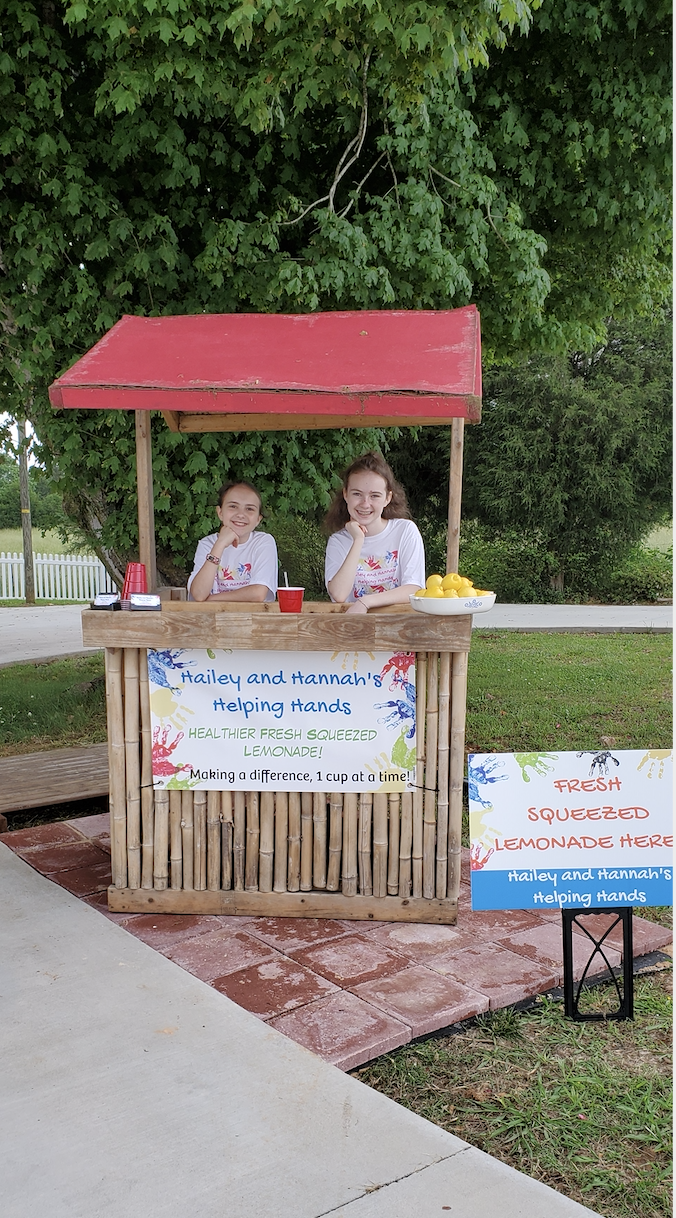
Ire Cherry, a Kansas City third-grader who opened a bakery at age eight, learned that some of her classmates’ families were struggling to pay their lunch bills and donated $150 of her earnings to help. In Davidson County, North Carolina, a pair of sisters, Hailey and Hannah Hager, aged 14 and 11, set up a lemonade stand and hosted a hot dog lunch when they heard that their school’s student lunch debt was $3,100. Nine-year-old Ryan Kyote of Napa, California, saved up his allowance to cover his class’s $74.50 in lunch debt, and in Texas, eighth-grader Ben Hofer crowd-funded more than $10,000 to pay off the Austin Independent School District’s debt.

“I [guess] I always thought of lunches just like you go to lunch and eat,” Hofer told Here & Now’s Peter O’Dowd. “But some kids might get lunch some days and not some other days, and it’s very stressful, and they might not get a good meal, because they don’t want to go over their parents’ budget, and then they won’t do well in academics or sports.”

Stories of children giving up their own time and money to help their classmates are striking; especially when you’re young, it can be challenging to put the needs of others first. But it probably comes more easily to some, according to Richard Fournier, education researcher and author of the chapter on rural schools in the book The Content of Their Character.

“I think some people are naturally very willing to help, and I think also some kids just recognize from an early age that when we do something nice—whether in private or not—we feel good, and that’s partly why we do it,” Fournier says.

At the same time, he says, adult examples have an impact.

“I do think parental and, perhaps, school influence on modeling that kind of altruistic behavior is really, really important,” Fournier says. “I have two little kids right now.… They definitely don’t want for much, so it’s going to be really important that I model for them … giving away money to charity and exposing them to situations where they can literally see people who might not have what they have and how they can help. Increasingly, I think all of these issues are actually done best through modeling more so than through any kind of explicit instruction. [Children must] see it and feel it.”

In the case of school lunch debt, adult models of generosity abound, including local business owners, large corporations like Chobani, and foundations like the one established by the mother of late cafeteria worker Philando Castile’s mother. They contribute to a social ecology of benevolence that inevitably influences children’s attitudes and behaviors.

All of this can get lost amid the heat of the school lunch debate. We live in an age when cultural disagreements mushroom into culture wars. Often, we don’t just judge each other; we judge each other harshly. One side of the conflict is cruel, selfish, heartless; the other is lazy, spendthrift, irresponsible. Listening to the accusations fly, one could conclude that America is hopelessly divided and immoral.

But then along come kids like Ben Hofer, Ryan Kyote, Ire Cherry, and Hailey and Hannah Hager. Here we see children investing their own time, their own ingenuity, and their own resources to reach out and show compassion for classmates who, through no fault of their own, are feeling shame or missing meals at lunchtime.

Perhaps, then, we are not so divided and immoral after all. If our kids are displaying moral character and unity, they inevitably learned some of that behavior from us. And if our kids aren’t so bad and we aren’t so bad, perhaps, too, we have all the more reason to invest in the moral education of our children, and to provide the role models they need to become even better, kinder, and stronger people than they already are.


In Their Own Words

For 15 years, Cape Henry Collegiate School in Virginia Beach has sent students all over the world in pursuit of character formation and personal growth. We ran a story last week on this ambitious travel program, Nexus Global Studies. Today, we feature interviews with three participating students. While their destinations differed, they all experienced a common benefit of immersive travel: insight into their own culture, its values, and its effect on them.


Fiona Clunan

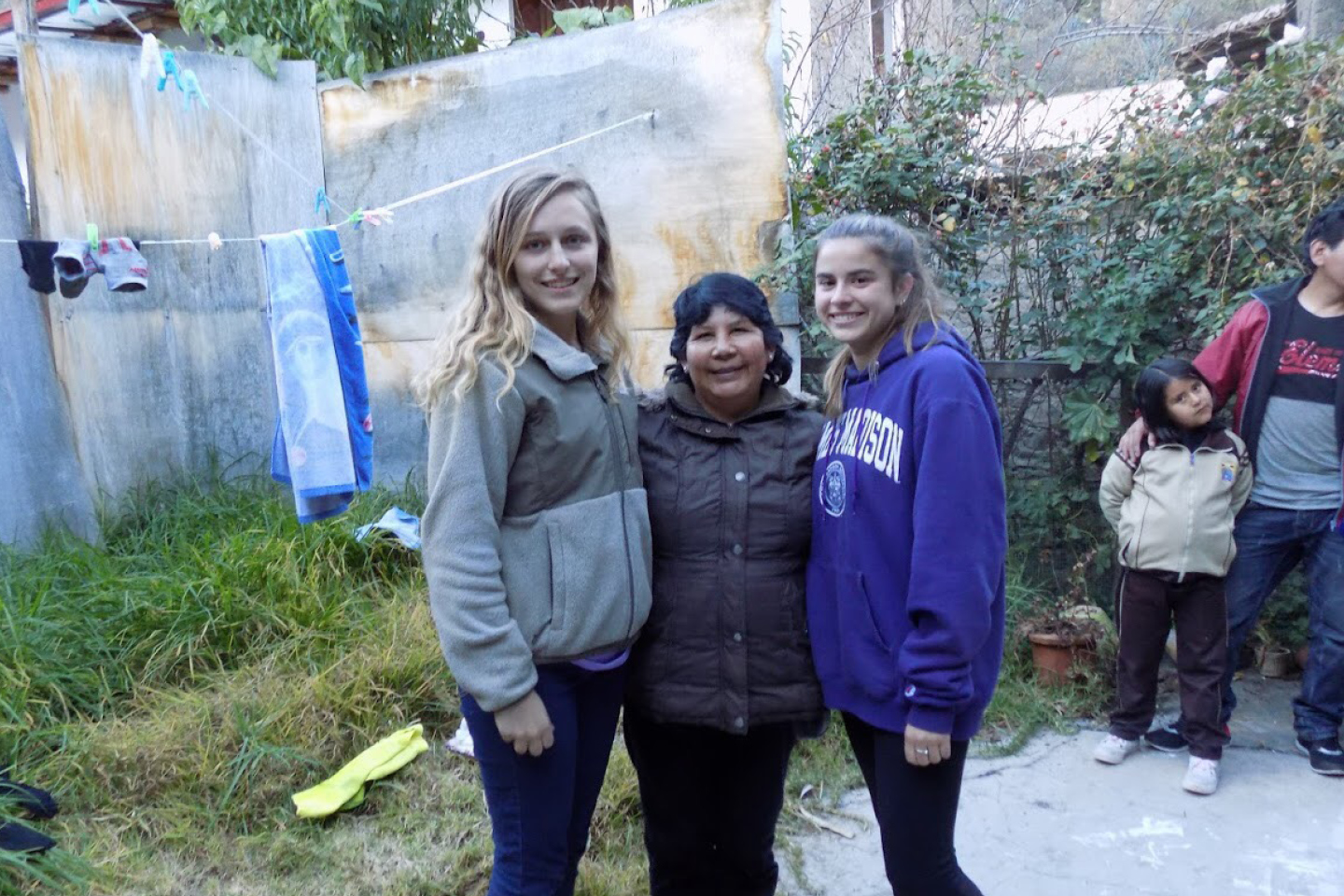
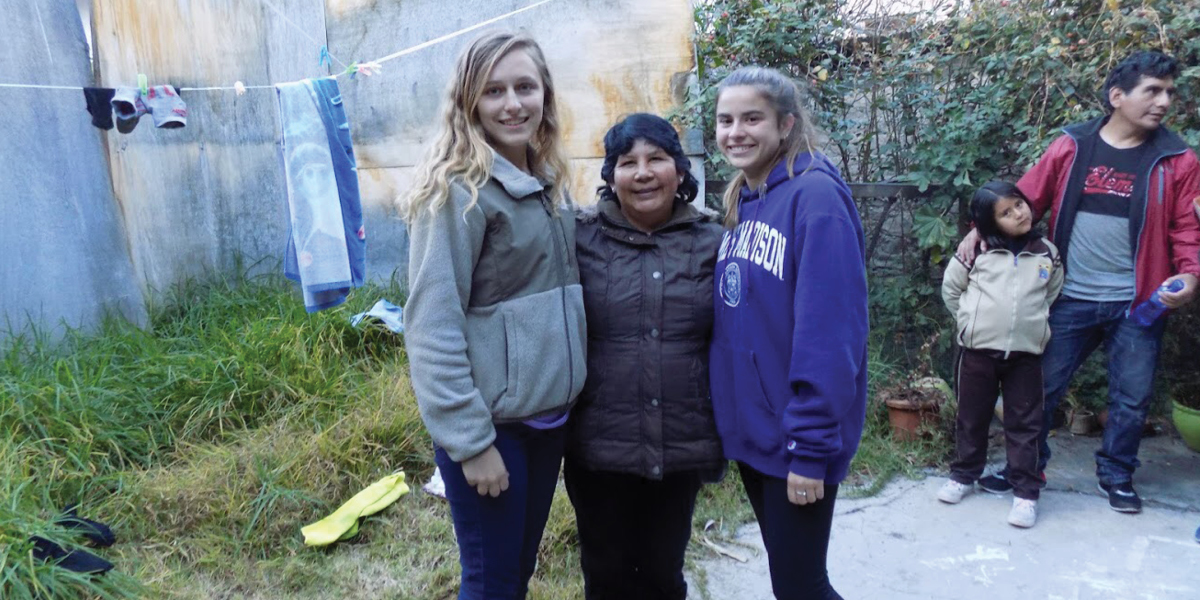
Fiona Clunan (left) with her host mom and a friend in Ollantaytambo, Peru.


Fiona Clunan graduated from Cape Henry Collegiate this past spring, and after a gap year, she will attend Stanford University in the fall of 2020. Clunan had already participated in two domestic Nexus trips—one to New York City, another to Atlanta—when she traveled with Nexus to Peru last summer. In Peru, she and her team lived with local families in two different locations and helped renovate a center for entrepreneurial women in a high-altitude village. They also biked and ziplined in the mountains.


On the difference between her expectations and reality

“It was not the easy paint-a-mural work I thought we’d do. We were mixing and pouring cement. We were laying stones. One day, we walked up a mountain, used sickles to cut hay, and brought it back on our backs. It was 40 degrees and raining. We had to carry a bunch of trees that had been cut down. We got to experience how they lived in their daily challenges.

“It was not what I was expecting—but it worked out. I expected to see Machu Picchu, use my Spanish, get a taste of the food. It was definitely much more intimate than that. The conditions were hard to adjust to in the high-altitude village, and the sustenance wasn’t very filling. It was hard to be working all day in those conditions, but I really enjoyed getting to know their culture.”

On the value of interdependence

“I learned the most in the high-altitude village. When we first arrived, we learned that the core value of the community is the Quechua word ‘ayni.’ The best translation of that word is ‘reciprocity.’ It means that whenever an individual needs help, the whole community will go help them.

“The communities are very tight-knit; it’s how they survive. I got to experience life in community and internalize their values—to think about their values compared to Western values. Individualism has its benefits, but they receive a lot of personal satisfaction—even if their lives are hard—they get a lot of their happiness from being reliant on each other. That came out for me and my group. We had to rely on each other to do work that was hard, which really strengthened our relationships. It made us better friends and better people.”

On how to approach travel

“Getting to know other cultures is the true benefit of travelling. Seeing the sights is wonderful, but when you travel, you should look to spend time in the local community getting to know how they live. That’s how you get the most out of it. There is sightseeing, and there is getting to really know people and places, and I have learned that the latter is more fulfilling.”


James Tyler

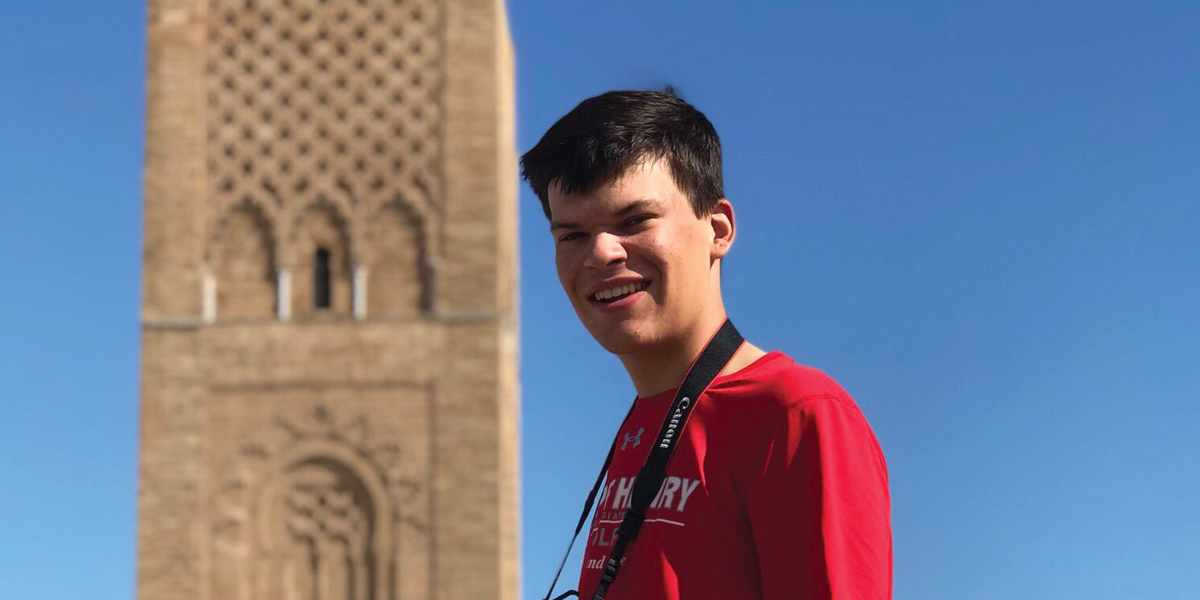
James Tyler at the King Hassan II Tower in Rabat, Morocco.


James Tyler just graduated from CHC. Through the Nexus Global Studies program, Tyler went on a 12-day trip to Norway during the spring break of his sophomore year, and he took a 17-day senior trip to Morocco after graduation. While on these journeys, Tyler attended a Norwegian school, cleaned up Moroccan hiking trails, met snake charmers in Marrakesh, and learned about the production of rosewater and carpets in Casablanca. This fall, Tyler will attend Yale University and major in math.

On cultural comparisons and insights

“We had group discussions every day about issues in Morocco and America. The goal was to build cultural understanding. In Morocco, there was a lot of interest in women’s issues and how women are treated there versus in America. There was a lot of talk about living in an Islamic culture and how strict or not strict you have to be; there was really a wide range of responses. There was a lot of talk about the king and what it’s like living in a society under a king and what people thought of him. There was also some talk about environmental issues. And they were interested in what we thought about Trump and our political situation.

“A lot of them would ask similar questions to what we asked. They’d say, ‘America isn’t perfect—you have these issues too.’ And yes, obviously America has gun issues, gender issues, race issues. They spoke good English, and they were way more informed on America than we were on Morocco.”

On the people he met during homestays

“Norway is a developed country like the US, but their society is so much more communal. There’s value placed on being equal, where in the US it’s more about individual gain. A lot of people there were content with what they had.

“In Morocco, the people seemed super happy and friendly. They weren’t anywhere as well off as we were, but they were honored to have guests and were so welcoming. We came in as total strangers, and as we were leaving, they were inviting us to come back as if we were family. It was amazing to see the impact we had on them and they had on us after just a few days.”

On cross-cultural socializing

“We [Americans, Moroccans, and Norwegians] have these cool differences in our backgrounds, but that makes it really interesting to connect. There were a lot of funny moments where you could make a joke and they would totally get it. [At other times,] you’re just speaking and don’t really understand because there’s a language barrier, and so you’re just trying to communicate in ways other than words. We were having to be nonverbal, and you end up laughing a lot, trying to make a connection. That happened a lot in Morocco, especially with older people who don’t speak as much English. People come from all different backgrounds, but we are similar in so many ways.”

On his personal highlights

“In Morocco, we drove over the Atlas Mountains out to the desert, and there we went on camels out in the Sahara Desert. We stayed the night in a camp in the Sahara, and we watched the sunset and the sunrise. It was incredible, something you never imagined you’d do.

“One other thing that was cool was that we weren’t allowed to have technology on this trip. We could have cameras, but that’s it. Not having technology was cool because you’re just together with 11 friends, having these amazing experiences and being isolated from what’s going on. You end up having these interesting conversations and moments that you wouldn’t ordinarily get.”


Grayson Bunn

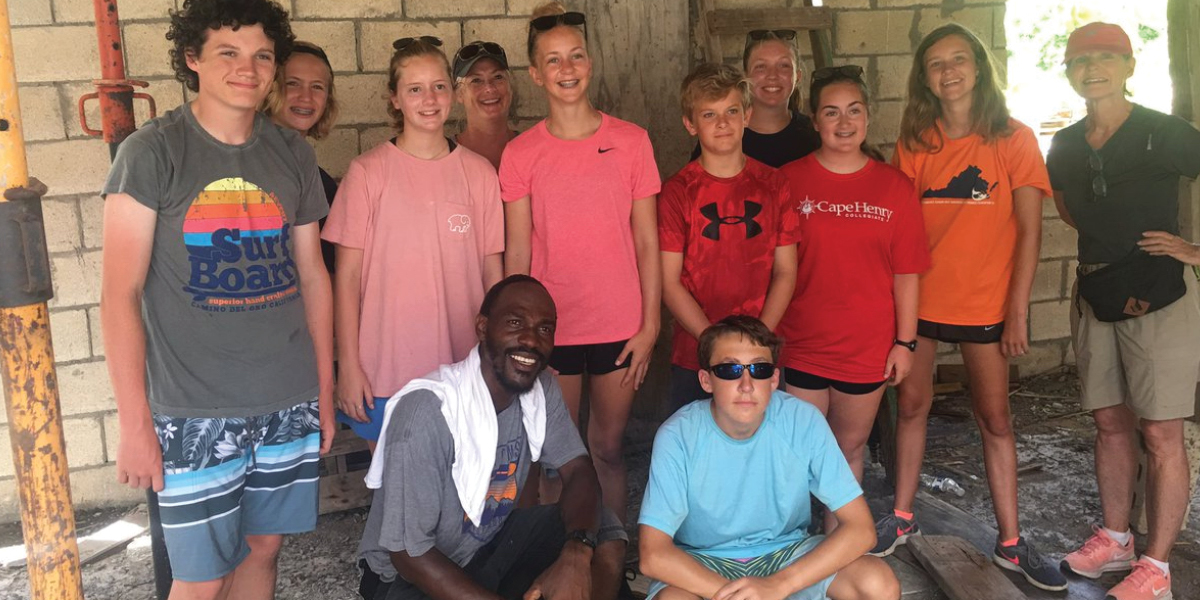
Grayson Bunn (seated in blue shirt) with his classmates and a local chicken farmer in Tortola, BVI.


Grayson Bunn is a rising ninth-grader at CHC. Last summer, he travelled with Nexus to West Virginia and Idaho on white water rafting trips. In June, he visited the British Virgin Islands for 10 days to help with cleanup from Hurricanes Irma and Maria.

On helping BVI communities rebuild after hurricanes

“We painted a church, and we went to a school where I built a guinea pig cage. We sealed structures so they wouldn’t be damaged by wind. We went to a chicken farm and cleared rubble from the home. Coy, whose farm it was, told us stories from the hurricane and what he went through. He had no power for 10 months, and then he had been working for months to restore his farm.

“My favorite project was on Anegada, a flat island where the highest elevation is 24 feet. We went to a flamingo observation deck to restore it and put sealant on it. I got to go with a group of two others to a house called the Faulkner House, which is a memorial that tourists visit. It was built with such craftsmanship; the roof has no overhang, so hurricanes can’t pick it up. But a few of the stairs were too narrow, so we took them out and built wider steps. It was my favorite because we got to see a house which was built with such attention to detail. And we were all proud of the work we accomplished.”

On what he learned from visiting another country

“We got to talk to locals, live their lifestyle, see what they were going through. We hung out with kids. Immersing myself in another culture was an amazing experience. It taught me skills in construction, but more, it taught me how lucky I am to have been there. Even though there is devastation on the island, they weren’t very affected by the disarray. They were happy and content people. They have adapted, and they seem thankful for what they have.”

On traveling outside your ‘bubble’

“Doing it can give you experiences you can’t have here. I think it develops a change in perspective. When I got home, I felt more independent. My parents said there was a change in me.

“It’s perspective-changing to see other cultures and compare them to how you’re living. While you can learn things through a textbook, actually being there, hands on, living their lifestyle, really helps you to understand the world instead of the bubble you’re currently in.”

The Character Formation Project Garners Praise

When fifth-grade teacher Sharon Craig agreed to help pilot a new curriculum called The Character Formation Project at Lick Creek Elementary School in Buncombe, Illinois, she didn’t know what to expect. She had never formally taught anything related to character before. But because she had experience launching other new educational strategies, her principal asked her to take it on.

By the end of the school year, her students—previously prone to bickering and even meanness—were noticeably kinder to one another.

“I’ll never forget the day I had a student come in to me and say, ‘We were out on the playground, and one boy was being bullied, and I told that other boy he didn’t need to talk to him like that,’” Craig recalls. “She was so excited to tell me she had stuck up for someone in our classroom. It was a turning point, and I thought, ‘I really do think this is working.’”

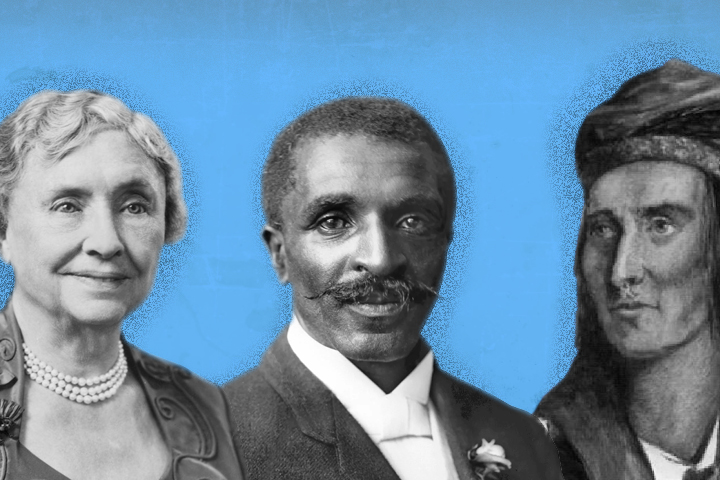
The Character Formation Project is a resource designed to help teachers shape student character beyond the classroom and the current school year. The program uses the stories of influential people like George Washington Carver, Helen Keller, and Tecumseh to engage students’ imaginations. As the children hear and discuss the stories, they consider the exemplars’ struggles and virtues—virtues like justice, respect, responsibility, integrity, self-sacrifice, diligence, and courage. They reflect on the “greater purpose” that drove the choices of the people they learn about, and they commit themselves to emulating the person’s virtues. Lessons are short and easily accessible via the organization’s website.

The program is currently being tested in a handful of schools in rural Illinois. Craig believes that the secret to the program’s success in her classroom is twofold: its realness and its interactive nature.

“The readings, videos, and samples were very history-based, about real people they could actually relate with,” Craig says. “They really liked that it wasn’t about fake characters. And their biggest takeaway was having that time to actually have a discussion and talk about our feelings and the way things work in our own homes. They liked the way they were able to take things away from our lesson and use them in real life.”

The program’s real-life applications also stood out to Cheryl Hinkle, who teaches in Murphysboro, Illinois, at COPE Alternative School, which serves expulsion-eligible students. “There was one kid,” she says, “who had the attitude that everything was always someone else’s fault—‘It’s the principal’s fault, it’s the other kid’s fault.’ After using this program, the other kids started to say to him, ‘You have to own up to your mistakes.’”

Hinkle’s students, who spend most of their days on computers, loved the opportunity to interact with each other on more-personal topics. They especially enjoyed reflecting, she says, on the courage it took for Jackie Robinson to break the color barrier in baseball.

Jeremy Pierce is the principal of the school where Hinkle teaches. “I have been looking for more than 20 years for a curriculum like this,” he says. “I have always lived and worked in rural school districts. With the way the economics are around here, often both parents are working—sometimes even multiple jobs—and there is not a lot of family time. We have an influx of students who are not learning things they used to learn at home. They tend to be self-centered, technology driven, and don’t know how to deal with peers. Thanks to their exposure to character traits through these activities and lessons, they’re starting to get along. This is really needed.”

Nathan Emrick, a world history teacher at Cobden High School, envisions The Character Formation Project’s having a broad impact on his school community and being used across all grade levels in future years. “It will take a few years to see fruit, but for 12 years, to get character training on the same consistent virtues—there’s no way it can’t work a little bit for most kids,” he says. “We could adapt our school mission statement and vision around the virtues. All discipline could go back to the virtues. There’s the potential to be very consistent from top to bottom.”

This sort of consistency has been described by scholars James Davison Hunter and Ryan S. Olson as a “thicker” student moral ecology—a presumably stronger environment for shaping a child’s character. The project’s emphasis on someone’s “greater purpose” also recalls Hunter and Olson’s discussion of “moral discipline” and “moral attachment” in service to “a greater good.” The continuities between Hunter and Olson’s thinking and the project itself are not a coincidence, given that Olson, president of the Advanced Studies in Culture Foundation (the publisher of CultureFeed), served as an early advisor to the project.

Inevitably, goals like building a consistent school environment and helping students explore a “greater purpose” will involve different things in different schools. The Character Formation Project itself comes in three formats: Civic Character Formation (“suitable for all learning environments”), Christian Character Formation, and Homeschool Character Formation. But if the results of the project in rural Illinois prove measurable and enduring, and if they can be replicated elsewhere, the Character Formation Project may help provide common ground for students’ personal character development in America’s diverse schools.


Wide-Ranging Journeys, Inner Change

When people think of destinations for student travel, most envision the usual European settings: Spain, Italy, France. But most people are not Willy Fluharty. Fluharty pictures students staying with Bedouins in Morocco, learning about Hinduism in Nepal, or irrigating a school garden in Zimbabwe.


Fluharty is the Director of Nexus Global Studies at Cape Henry Collegiate School (CHC) in Virginia Beach, Virginia. CHC is a private school that currently serves 950 children in grades pre-K through 12. It is long-established and well regarded, but many parents choose it because of its global focus and the opportunities it provides, starting in fourth grade, to travel with Nexus. Fluharty is happy to admit that the goals for the unconventional trips he has been organizing since 2003 have more to do with forming character than anything else.


“All travel is good, but it’s not all the same,” Fluharty says. “In Europe, the food is familiar, and the people look like them. But I want to take them out of their comfort zone and put them in a growth zone, where they are forced to adapt, to get comfortable with the risk of the unknown. I seek out adventures where there is very little western influence, where they are so far away from what they are familiar with that everything is new—new sights, smells, and people. They come back different.”


The Nexus Global Studies program has sent students to over 50 countries and to every continent but Antarctica. Some trips focus on service, such as hurricane cleanup, building schools, or helping at orphanages. Others center on science or language immersion. Fluharty has taken students to stay with the Kutump tribe in Papua New Guinea, where they participated in a bride price ceremony and a “sing-sing”—a traditional festival of singing and dancing. He also led a trip to India, where, after spending three days learning about Buddhism, students visited the Dalai Lama at his home. In 2006, CHC was the first US school to be welcomed by the government of Bhutan in South Asia.


“Visiting Bhutan at that time was like going back in time,” Fluharty says. “It is incredible to take kids to see a place that very few people have seen. It’s a unique experience. It’s like plugging their soul into a socket—they are electrified with an energy they haven’t known before.”


It is this potential for personal change that has inspired the leadership of CHC to make trips like this part of their school DNA. Last year, over 500 CHC students traveled through Nexus, which operated more than 30 programs, both domestic and international.


The travel options begin in fourth grade and continue through senior year. Most take place over the summer, and each time, there are six to eight international options, which range from 14 to 19 days in length. Last year, according to Fluharty, 61 percent of the graduating class had participated in at least one of the international programs.


Fluharty finds that cross-cultural trips stretch students mentally, physically, and spiritually. Students often stay in huts or tents. The bathing facilities are basic, and the food may be very different from what they eat at home. The kids often end up wrestling with issues like, Why do they seem happier than we do? According to Fluharty, students “question their materialism and who they are as a person.”


Fluharty also sees the children grow in courage and flexibility. “Kids who travel have higher self-confidence on so many levels because they have learned to deal with fear,” Fluharty says. “When you’re traveling, it’s unpredictable. Sometimes a bus breaks down and kids ask, What will we do? Often there’s not a lot of structure. But the kid that can thrive in an unstructured environment is a kid that’s going to thrive in life.”


Fluharty, who has joined almost every senior trip since 2004 (and other trips as well), is convinced that global exposure has a significant effect on civic engagement at home.


“My goal is to create better American citizens,” Fluharty says. “Travel makes students question who they are and American society and culture in general. I want them to come back and have a better ability to make an educated decision when they go to vote for somebody. They have become more multicultural, sensitive, and understanding. And these are all important qualities for a better American citizen.”


The examination of personal values, the development of courage, and the deeper concern for the greater good that Fluharty sees emerging from the Nexus program coincide with what sociologist James Davison Hunter refers to as “moral education.” In The Tragedy of Moral Education in America, he writes:

The purpose of moral education is to change people for the better and, in so doing, to improve the quality of life in society, so that, individually and collectively, we can become better people than we might otherwise be.

This moral education can happen in the classroom, but in the Nexus program, Fluharty and CHC have found a way to ensure it extends outside the classroom as well—even in far-flung destinations on the other side of the globe.