The Field School: Character at the Fore

In 2003, a group of boys at the Landon School in Bethesda, Maryland—most of them lacrosse players—conspired to cheat on the SAT. For a well-respected prep school, the scandal was a disappointment and a PR nightmare. For history teacher Todd Barnett, it prompted a career shift into the school’s newly created Endowed Chair for Ethics and a personal focus on what really works in teaching character.

Barnett brought in speakers, held conferences, and started student leadership programs. But the most effective approach, he says, was the Prefect Program, in which hand-picked high school seniors were paired with ninth graders to coach them in moral decision-making.

“The whole point was to get kids to exercise their moral muscles as much as possible, to think through things that might happen,” Barnett said. “Schools tend to have the attitude that things should be black and white. But there are so many personalities and situations, and kids are growing throughout school. Often in those conversations, kids were talking about the gray of the issues.”

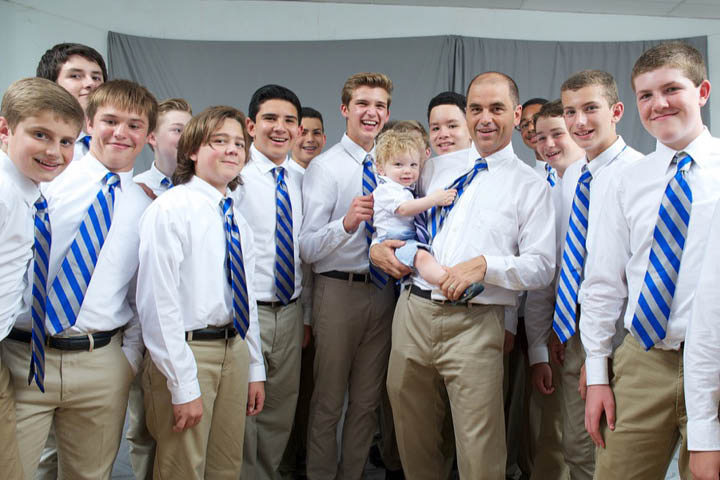
Thinking through such issues—and how to help students care about them—served Barnett well when he founded the Field School, a private, all-boys middle school in Crozet, Virginia. The school, which has 50 students in fifth through eighth grades, has a stated mission to “develop well-rounded boys of character and accomplishment.”

“Character development is an appeal of our school,” Barnett said. “Parents perceive that this is going to be a big part of our curriculum, and middle school is a vital time for that to develop. There are lots of opportunities to reflect and learn during these years.”

Barnett believes the successful shaping of character happens in two primary ways at the Field School: through the modeling of ethical behavior by teachers, and how teachers and school leadership respond when things go wrong.

Barnett tries to hire teachers who exemplify the kind of character he wants to see in his students.

“I think about it with myself,” he said. “I feel like if I want people to be respectful, I need to be respectful of them. If I want them to be responsible, I need to model that in the classroom.”

The quality of compassion, Barnett noted, can be particularly challenging for boys at this age. He encourages his staff to treat the students with the kind of tender-heartedness they want to see emerge.

“The more you can show you care about them, the more it rubs off, and they are willing to behave in ways that are not necessarily reflective of adolescent boys,” Barnett said. “We do all we can to show respect to the boys, and they respond to us in the way we treat them.”

Children are bound to make mistakes, and middle school boys are no exception. Instead of dreading student transgressions, Barnett sees them as a prime opportunity for growth and for communicating each boy’s value.

“Kids get to learn when they do something wrong,” he said. “Those episodes get a lot of our collective attention. We call you out when you do something wrong because you matter in this community.”

For small infractions, there is a system of merits and demerits, with resultant rewards and consequences. In other circumstances, the school’s response depends on the situation, but reminiscent of the Prefect Program Barnett initiated years ago, it always involves a lot of discussion. Barnett has learned that in the case of dishonesty, it is best to engage the student as soon as possible; coming clean happens more often when there isn’t time to concoct a good lie. On the other hand, he noted that giving students reflection time can be helpful with interpersonal conflicts and other issues. In all instances, teachers spend a great deal of time talking through missteps with students, rather than just meting out punishments.

“We try to get them to a point where they feel remorseful,” Barnett said. “Hopefully this will help them think about things before they do them again.”

It is this modeling and careful handling of mistakes that Barnett hopes will shape young men who avoid the kinds of disastrous choices he witnessed early in his career. Field School alumni confirm that Barnett’s priorities and efforts in this area are compelling.

“In surveys, our graduates tell us that the character formation component is more significant than any of the other programs we do,” Barnett said. “They leave and eventually come back from college and tell us, This is such a good place and I didn’t appreciate it at the time. A big part of that is that we find lots of opportunities to talk, counsel, advise, and encourage.”


On Feeding the Good

This article was originally published on January 29, 2018. In it, former Idaho Superintendent of Public Instruction explains how daily choices shape character.

Everyone has character. A person is not born with character; it is learned. It is not genetic, but it can be taught. It cannot be bought, but it can be earned.

To me, character is how you act when no one is watching.

I heard a story long ago about an old Cherokee who is teaching his grandson about life.

“A fight is going on inside me,” he said to the boy. “It is a terrible fight and it is between two wolves. One is evil—he is anger, envy, sorrow, regret, greed, arrogance, self-pity, guilt, resentment, inferiority, lies, false pride, superiority, and ego.”

He continued, “The other is good—he is joy, peace, love, hope, serenity, humility, kindness, benevolence, empathy, generosity, truth, compassion, and faith. The same fight is going on inside you—and inside every other person, too.”

The grandson thought about it for a minute and then asked his grandfather, “Which wolf will win?”

The old Cherokee simply replied, “The one you feed.”

My experience is that choices made during our lifetime, especially during our youth, have the greatest impact on who we are, what we stand for, and how others view us.

Inside each of us there is an internal struggle between competing interests. One interest is based on selfishness and greed; the other interest is based on honesty, truth, and kindness. Only one will prevail. What we choose will reveal our true character.

If we “feed the good” and strive to do the right thing, even when it is difficult, eventually what were once difficult decisions become easier, and soon they become part of our character.

“Feeding the bad” can create habits that dull our senses, and soon we begin to rationalize decisions that we would previously have never considered. They eventually become part of who we are. They make up our character.

As a young man, I learned a poem by Alexander Pope that still rings in my ears.

Vice is a monster of so frightful mien,

As to be hated needs but be seen;

Yet seen too oft, familiar with its face,

We first abhor, then we pity, then we embrace.

Sadly, I have seen this play out many times.

We need poetry like Pope’s to warn us of the perils of vice, and stories like that of the Cherokee grandfather show us the consequences of our daily choices, because all of us are building character. The daily decisions of which wolf to feed define what our character will be.

The Courage to Begin Small

It is only right that when we think of courage, we think of profound sacrifice, suffering, and voluntary risk on behalf of the innocent. The most common icons of courage are soldiers and martyrs, after all, and this is fitting given that soldiers and martyrs offer up not just their comfort or wealth, but their very lives. However, when teaching courage to high school students, it is fitting also that we should think of laughter, for the sound of laughter is a cracking whip that terrifies young men and women.

Several years ago, while rounding out two months of lectures on the saga of King David, I asked a class of seventh grade boys to choose whatever passage they liked from the story and write a short homily about it. I told them their homilies should be addressed to their fellows, encouraging and exhorting them to virtue in some area in which they were commonly tempted. In retrospect, the results of the assignment were not terribly surprising. Most of the boys chose the story of David and Goliath, which is arguably the most iconic depiction of courage in all of literature. The homilies they built from the account of David’s courage were not all that helpful, though, for they all concerned great and noble deeds. They exhorted one another to share the gospel with their travel soccer teams, to stand up to bullies, and to someday become missionaries and soldiers. While none of these exhortations struck me as improper, they did remind me of Aristotle’s claim that young people tend to “overdo everything.”

As a high school teacher, I do not yet need students with great courage—just the courage appropriate to overcome the thousand small temptations to cowardice and sloth which emerge over the course of the day. He who is faithful in little will be faithful in much, which means that students who want to someday risk their lives for the innocent should gain practice risking their egos and their pride today. I had asked my students to address an area of common temptation, and to be frank, the battlefield and mission field were simply too far off. My students were eager to exhort their fellows to courage in unusual situations, situations in which they rarely found themselves. At so young an age, courage rarely requires the shedding of blood. For most high school students, courage simply means being willing to be laughed at. “What your teachers need the most,” I told my students when handing back their work, “is your willingness to be embarrassed for following mundane, unglamorous rules.”

I know that teenagers are sometimes tempted by weighty sins and crimes, but such temptations are typically born of continual, habitual resignation to temptation in small matters, like breaking the dress code, cheating on tests, using cell phones during the school day, and disappearing at lunch. Of course, such “crimes” really are quite trivial, and so taking a stand against them often means adopting a mock-heroic quality that is easily ridiculed. On a battlefield, no honest soldier scorns his enemy for defending home and hearth. Two soldiers charging at one another have no cause to crack jokes at the other’s expense. The same is not true of two boys in the restroom, one of whom is using his cell phone against school rules, and the other of whom is saying, “Put it away. That’s not right.” Such opposition is ripe for sneering and jesting. Such opposition will earn the cracking whip of laughter.

Absolutely no one enjoys being laughed at, but the young hate it more than the elderly because, as Aristotle says in his Rhetoric, “owing to their love of honor they cannot bear being slighted, and are indignant if they imagine themselves unfairly treated,” which means the high school student who is courageous in small, daily temptations must endure a kind of suffering which he finds particularly loathsome and distasteful.

Similarly, no one enjoys a bee sting, especially those who are allergic to bee stings, and teenagers are allergic to the indignation which accompanies a slight. The teenager who sticks up for the rules is not likely to get kicked and jabbed but jeered and mocked. Most adults have clocked their own failures often enough that loving honor seems pure fantasy. At thirty-eight, I have said and done enough foolish, embarrassing things (and meditated sleeplessly about who has noticed) that “my honor” strikes me as fair game. It is not so with the young, Aristotle argues, for they think too highly not only of themselves, but of everyone, for they have “not yet witnessed many instances of wickedness.” What is more, the young “trust others readily, because they have not often been cheated,” which means that the mockery that common courage earns is, paradoxically, both predictable and surprising. By middle-age, it is only predictable.

Common courage ultimately matures into great courage, and yet it is dangerous to grasp at greatness too early, for it usually means an unwillingness to undertake the drudgery that attends practice. Mockery is adverse to the teenage temperament, so much so that the sixteen-year-old who becomes accustomed to being laughed at will be well-prepared, by the age of twenty-six, to be shot at.

“If the jeers of your fellows feel like knife blades,” I told my students, “you will be ready when they become actual knife blades.” Do not withhold examples of great courage from your students, but do not fail to appropriate those examples to common, mundane temptations to vice. If a student is willing to be laughed at for God and country (and school), that student will certainly be willing to die for God and country, as well.

# # #

Joshua Gibbs teaches humanities at the Veritas School in Richmond, Virginia. He is the author of the book How to Be Unlucky: Reflections on the Pursuit of Virtue, and he blogs about education here.

A Bullying Lesson from an Inspiring Teacher: Character Is Destiny

This article was originally published on October 30, 2017. In it, education leader Bill Jackson recounts a lesson about character he has never forgotten.

I don’t remember much of 6th grade other than the day Mr. Kastroll cancelled our regular classes and taught an impromptu lesson on character. No math that day. No art or PE. Just lecture, discussion, reflection, and writing on a choice we had made.  

Early that morning a 5th-grade girl had been physically bullied by another 5th grader. A 5th-grade matter, you might say, but the problem was that many of us in the 6th grade had seen the incident—and we had done nothing about it.  

The girl who had been bullied was injured and upset. Mr. Kastroll was livid.  

How could we possibly have seen this and done nothing, he wanted to know. He didn’t ask us this question just once or twice and then let the matter slide. As I recall it, he lectured us for more than an hour about our individual and collective failure.  

I also recall that it didn’t feel like a lecture in the traditional sense. The talk he gave us, along with the reflective writing and discussions we did, felt more like a punch in the gut.  

Mr. Kastroll wanted us to see that moment as a test of character that we had failed. He wanted us to know that failing to act in the face of injustice perpetrated by others is itself an injustice. We were to think of ourselves as defenders of justice and kindness and safety on our school campus, he told us. Inaction in the face of serious challenges to those norms was hardly better than direct violations of the norms.  

I’ve never forgotten this lesson, even if I haven’t always lived up to it.  

I think of character as “values made manifest” through human behavior. On the one hand, we hold in our hearts certain aspirations for our behavior. We may aim to be kind, just, and reverent. But how do we bring these aspirations to life through our actions? When other people aren’t watching or when there is a significant price to be paid, what are we really committed to doing?  

An old cliché teaches us that character is something more “caught” than taught. From a young age, children are watching their parents and peers for clues about how to behave. They’re absorbing the norms of the community—the virtues and values that that community prizes above all others. 

Another old cliché is also true: Character is destiny. There is no more important focus for teachers and parents than character formation.  

So ask yourself: what are the norms of my community? Are they what I and others want them to be? And how should the adults who care for students and children collaborate to help them internalize the norms to which we’re deeply committed? 

Bill Jackson founded GreatSchools.org, and now leads RaiseReadyKids.com to help parents of children before they reach school age.

Civics and Comparative Religion Belong in Public School, Survey Says

Every year, Phi Delta Kappa—an organization that has been connecting and supporting educators since 1906—conducts a poll called “The PDK Poll of the Public’s Attitudes Toward the Public Schools.” The annual poll measures opinions on a variety of topics related to K–12 education. This year, pollsters asked 2,389 Americans 61 questions. The survey revealed widespread discontentment among teachers, considerable parental support for a teachers’ strike, and concerns about a lack of financial support for public schools.

Some surprising results regarding curriculum content emerged this year: 97 percent of American parents and adults overall believe civics should be taught in public school, with two-thirds of this group saying it should be a requirement. In addition, 77 percent say students should have the option of taking a comparative religion class and 58 percent say bible study should be available.

Aligning public schools with these findings would require some major shifts in current practice. Presently, just 36 states require students to study civics, and only eight mandate a yearlong course. And the inclusion of the bible in public schooling has been much less common since 1963, when the U.S. Supreme Court put strict limits on bible reading in public schools.

Jeffrey Guhin, a Fellow at the Institute for Advanced Studies in Culture and an Assistant Professor of Sociology at UCLA, weighed in to CultureFeed on the survey’s curriculum findings—and in the areas of both civics and comparative religion, offered support with a note of caution.

Guhin studies how moral life works in schools and religious groups and is writing two books, each featuring case studies of American high schools. While Guhin endorses the idea of civic education, he cautioned that if people’s desire is to increase civic engagement, disappointment is probably inevitable.

“I’m skeptical of civics programs for the outcomes most people want,” Guhin said. “If the outcome they want is knowledge, they can be helpful. But if the outcome they want is greater participation in government or civic-mindedness, the most effective tool is probably not a class.”

Guhin mentioned the “more information hypothesis”—the idea that the more we know, the more our behavior changes. This, he said, is almost always false.

“These classes are great for learning how a bill becomes a law and about the different branches of government, but they don’t necessarily lead to attitudinal or political changes in behavior like voting more,” he said.

This kind of change is best accomplished through involvement in activities like the Boy Scouts and ROTC, Guhin said. In addition, he noticed during his research that smaller schools—both public and private—have an easier time fostering a sense of mission and community, elements that may be important to inspiring civic engagement.

“My hunch is that the more a school can have a sense of mission and community, the more effective it will be at giving students a sense of being a citizen of the school, and then also of the community and the world,” Guhin said. “At a big school, it’s hard to do that.”

Guhin also noted that a teacher’s passion is more critical to inspiring students’ civic participation than the content of a curriculum. He said, “You can’t guarantee all kids will love poetry, but a charismatic teacher will make that a lot more likely. It’s the same with civics; the charisma of the teacher can have that effect.”

Guhin agreed that comparative religion could be an important addition to public school curricula.

“Religion is a huge part of people’s lives,” he said. “We absolutely should raise the awareness of religion in American history, of world religions, of the role of religion in history. I am concerned about how, in some parts of America, it would play out. But I think that among some secular people, there is a knee-jerk reaction against learning anything about religion, which is silly and anti-intellectual.”

However, he was cautious about the idea of public school students offering a class wholly devoted to the bible, even when couched in a “bible as literature” class.

“I observed a bible as literature class, and it really was evangelization class,” he said. “The teacher covered his bases, but he would take off hats and put on hats in the course of the class. I often feel as though ‘bible as literature’ is a smokescreen to get the bible back as a moralizing force in schools.”


Equipped: Beyond Backpacks and Barricades

Last week, Sandy Hook Promise—a nonprofit formed by parents of students killed in 2012 at Sandy Hook Elementary School—released a public service announcement called “Know the Signs.” The video went viral, and it was chilling.

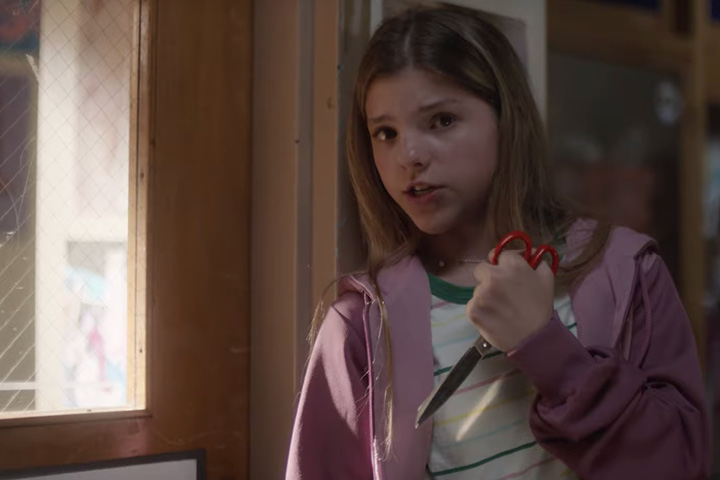
It begins like any other back-to-school commercial: upbeat music, kids showing off their new stuff. But quickly things change. While students continue to speak cheerfully about their school supplies—“these scissors really come in handy in art class”—the footage tells another story: The girl holding scissors is hiding by a classroom door as gunshots and screams are heard in the background. A boy uses his new skateboard to break the window of a classroom and escape; a girl uses a sock as a tourniquet for a bleeding friend.

The presence of mind depicted by the children in the video is startlingly dissonant with the backdrop of chaos; the creators make the point that children shouldn’t have to think about dual uses for objects that should only represent learning. At the same time, the courage they display—the ability to be clear-headed in the face of terror—is striking, and it suggests a way educators can help equip their students.

Fears related to school shootings were widespread long before this video. Demand for bulletproof backpacks reportedly surged after the school shooting in Parkland, Florida, last February; they were a hot item recently during the back-to-school season. Architects are designing schools with curved hallways to minimize sight lines and with impact-resistant glass for windows facing hallways. Active shooter drills are as commonplace as fire drills, required by law in most places and conducted in about 96 percent of schools.

The concerns aren’t groundless. There were 25 school shootings last year, and The Washington Post estimates that more than 228,000 students have been exposed to gun violence during school hours since the Columbine High School shooting in 1999. That’s a small percentage of the tens of millions of American students, but the scenes of horror that emerge after a shooting are so disturbing that they motivate adults to take measures to protect students, should the unlikely become a tragic reality. It makes sense to prepare.

Students learn to barricade the door and sit quietly with an item in hand to use in self-defense. They are taught the “run, hide, fight” tactic—a series of words to guide them through choosing the best response. But what if there is an element of preparation we are overlooking, one not related to safety of the body but to steadiness of the self?

Emergencies call not only for planning but for courage. To some, the idea of teaching virtues like courage in the face of mass shootings might sound outdated, or like simplistic response to a horrifying situation. But we know instinctively that we aspire to more than self-preservation; we want to live bravely. We desire this even and especially on our scariest days.

The human longing to be courageous is as old as recorded history, and it is time-tested sources that often serve as the best reference points for this kind of teaching. There are numerous sources from which courage can be taught. Aristotle discusses courage in Nicomachean Ethics Book 3.6, explaining that courage is the mean between too much fear (cowardice) and too little (rashness); modern resources have been developed based on Aristotle’s ideas. The chivalric code understood courage as the willingness to undertake difficult tasks and accept sacrifices that may be required. History is full of examples of men and women who, in the face of danger, acted with selflessness and mettle.

Religious schools can draw on additional resources. In both the Christian and Jewish scriptures, the command “do not fear” is often repeated, many times followed with a reminder that God helps and is near to his people. Similarly, the Quran promotes bravery in the face of opposition and is full of examples of people who did so.

For students growing up in a post-Columbine world, courage is needed not only when they consider facing an active shooter, but when they notice signs of violence or instability in a classmate. Many observations of disturbing behaviors in the Parkland school shooter went unreported. Speaking up is its own kind of courage.

It is good for teachers to be supplied with what they might need should the unthinkable happen, as it is wise for students to practice responding to such an attack. At the same time, the harrowing circumstance of active shooter preparation can serve as an opportunity to both teach and model courage, a trait that will serve students for the rest of their lives, should they face this particular threat or not.

Community Worth a Change of Address

About five years ago, something unusual started happening in the neighborhood surrounding a former Baptist seminary in north Richmond. Though not considered desirable real estate by many, the area swelled with families interested in attending a local school.

But it was not a public school, as is often the case. These newcomers were the parents and staff of Veritas School, a classical Christian school that had recently purchased the old Baptist seminary. The culture the families and the school have created together represents a fascinating example of a “moral ecology”—one that may provide valuable insights for parents and schools elsewhere, whether the schools are secular, Christian, public, or private.

One of the families in this Richmond neighborhood is the Kleinschusters. Dan and Dana Kleinschuster’s four children began attending Veritas 14 years ago when it was renting a Presbyterian church building, and the couple has always deeply appreciated the sense of connection among parents at the school. They realized that eventually their children would graduate, and that they would no longer interact with other parents—unless they were neighbors. So a year and a half ago, they sold their home in the Windsor Farms neighborhood and bought a house near the school.

“There are kids over five days a week, often spending the night,” Dan says. “We’ve had music classes held in our home. On Saturday night, every two weeks, we have Veritas families over for dinner. We love connecting people, older and newer families.”

The Kleinschusters’ youngest child is in eighth grade, but their desire to live near the school is long-term.

“We did it because we think that what is happening there might not be just for the next four or twelve years for our family, but for much longer,” Dan says. “Even after our kids are gone, we will still get to live and enjoy community with each other.”

Dan meets with fathers of his kids’ classmates after each child begins seventh grade—a stage at which many new families join the school. He hopes to ensure the fathers are unified in handling issues like cliques and dating.

“We want them to come into a culture that we have worked on,” Dan says. “You can influence culture in a lot of different ways. We are protective and mindful of establishing a culture that cultivates kids’ hearts to love things that are true, good, and beautiful.”

A love for such classical ideals is precisely what Veritas seeks to inculcate, and while the passionate engagement between Veritas families has grown independently and organically, it has also been intentionally cultivated. The school leadership works hard to connect families to the school and to one another.

At back-to-school night, the “Partnership at Veritas” slideshow includes a slide noting three events parents are expected to attend: the back-to-school night itself, a community dinner, and the spring forum. Veritas makes name tags for each parent, in part so that the unclaimed badges indicate who isn’t there. Attendance at these events is considered part of the covenant parents make with the school. Another slide lists 10 more types of parent meetings, from a speaker series to grade-level meetings to “curriculum coffees.” These are optional but strongly encouraged.

Head of School Keith Nix doesn’t apologize for the emphasis placed on nurturing the parent-school bond.

“We spend an inordinate amount of time on parent education and acculturation,” Nix says. “A classical education needs a classical home. We seek a culture where the parents are so on board with us that the teachers don’t have to do all the teaching.”

Creating this match between home and school begins during the application process. Parents must complete required reading on classical Christian education before they can even interview. Veritas also makes sure prospective parents agree with the school’s core goals and beliefs, including a “Portrait of a Graduate” document, a statement of faith, and an explanation of classical education distinctives. Their guidelines state, “Our published goals and beliefs make up the non-negotiable ‘90%’ that define us as a school.… When families and the schools agree on this 90%, the other 10% can be approached with graciousness and flexibility.”

Because of this up-front disclosure of its priorities and expectations for almost complete agreement, Veritas tends to attract compatible families to begin with.

“When a school is serving people of various and different approaches, you don’t know where a parent is coming from, and it can be challenging to exist in that environment,” says Jacquelin Aronson, whose four children began attending Veritas last year. “When you can be with families where you know they are raising their children in a Christian home, you get constant support without first having to figure out what others believe. Veritas has set the stage for that because they are crystal clear in their identity.”

Veritas is particularly proactive about transmitting its core value of raising children of strong character. Their flagship means of doing so is called “Veritas U,” an educational program for parents offered two or three evenings per year. Veritas U serves to unite parents around character formation topics and subjects central to classical education. To this end, parents can attend classes on anything from relationships and guidelines for technology use to Latin and theology.

The goal of these events is to have parents adopt the same principles and priorities that are valued within the school.

“When you have a partnership with parents—parent to parent, and school to parent—there is a lot less conflict between the messages a kid hears at home and what he hears at school,” Dan explained. “When there’s conflict, a kid says, Which message is more important? Which one do I listen to and which do I ignore? But because there is a strong partnership, kids are not trying to put on their scale two things that there’s a lot of conflict about. Similar messages are being told in all their spheres of influence.”

Sending the same message in all spheres of influence is what James Davison Hunter and Ryan S. Olson refer to as a strong “moral ecology.” In The Content of Their Character: Inquiries into the Varieties of Moral Formation, they define a moral ecology this way:

When social institutions—whether the family, peer relationships, youth organizations, the internet, religious congregations, entertainment, or popular culture—cluster together, they form a larger ecosystem of powerful cultural influences.

The quality and consistency of moral ecologies are so important because character is not formed in isolation. Messages about character are either strengthened or sabotaged by the various influences in a child’s life. Research has shown that the more coherent a moral ecology, the better a student’s outcomes. As Hunter and Olson write,

Moral ecologies can vary by how coherent or incoherent they are, how thick or thin, how well-resourced or impoverished, how articulate and inarticulate… Character is invariably formed in these moral ecologies and is reflective of them. The central question is the character and quality of the moral ecology.

There are now 95 Veritas families living in the two small zip codes that surround the school. According to Dan Kleinschuster, every time a home nearby comes up for sale, Veritas families consider buying it. The school—with its relational connectedness and consistency between home and classroom— is an unusually strong example of a coherent moral ecology. Such an environment is likely to create the moral discipline and moral attachment necessary to ensure the children will practice into adulthood the virtues they’re learning now.

The Veritas community’s values aren’t shared by every school community, of course. Still, Veritas’s parental initiative, its vigorous and reciprocal parent-school relationship, and in some cases, even its creation of a neighborhood of similar values are things schools can promote in an effort to ensure their students develop a moral character that lasts into the future.

A Conviction of Truth

New York Times columnist David Brooks frequently writes about character and related moral themes. In a recent column, Brooks quoted the founder of the Institute for Advanced Studies in Culture, James Davison Hunter.

The passage was from Hunter’s 2000 book, The Death of Character: Moral Education in an Age without Good and Evil. The book has had a profound impact on my life and career—and on the birth of CultureFeed.

From 2008 until 2016, I had the privilege of working for a family foundation. The benefactors wanted to invest in the rising generation of Americans, and they were most concerned about character formation, the moral life of the young. Were children cultivating the virtues of honesty, dependability, industry, compassion, and the like? I was tasked with finding ways to help schools and school leaders focus on character as the most important aspect of education.

I read as many character-education books and curricula as I could find. I flew around the country and interviewed education leaders and researchers. I met with principals and CEOs. Almost all of the people I spoke with were sincere. They had hearts of gold.

But many of the conversations seemed shallow, thin, perfunctory, unserious—and nothing quite fit the foundation’s interests. What these programs were doing seemed inadequate given our need: kids who were raised to know and to do the right thing reliably. We couldn’t count on moral platitudes, a grab bag of values, and a character workbook used Wednesdays at 1:15 p.m.

I talked with one group that told students to focus on developing their personal strengths—aptitudes that the kids discovered by taking a personal assessment. But for me, this immediately raised a question: What if the child’s weakness turned out to be honesty? Well, the group’s spokesman responded, the child should still focus on their strengths, since after all, we know some people just aren’t capable of honesty.

He wasn’t alone in this view. Another group told me they couldn’t “impose the value of honesty” on students. This struck me as baffling. This same group required the parents of their students to sign an agreement at the beginning of the school year and carefully comply with its terms. Why require integrity from the parents but not the students? What message did that send? It seemed almost insane.

The Death of CharacterAnd then I read The Death of Character. Its impact was dramatic. Suddenly, I understood why almost none of the programs seemed to be working. They weren’t working because there was a fundamental design flaw.

In that book, Hunter traces the long history of moral education in America, from the Puritans through the Common School movement, John Dewey, Thomas Lickona, and William Bennett. Hunter reviews hundreds of empirical studies. He unpacks the theory—the anthropology, pedagogy, cosmology, and ethics—that underlies each of the dominant approaches to character education.

Here’s the story. For more than 150 years, American character educators have, admirably and rightly, tried to be inclusive. As America’s population diversified, they searched for a common language to accommodate under one school roof the disparate moralities of children from many traditions, ethnicities, and backgrounds. And they succeeded. The new language of moral education was psychology.

Although Americans could not agree on the goal of character education—Heaven? Responsible citizens? Productive workers?—a consensus emerged agreeing to a generic “happiness” and “well-being.” Although Americans could not agree on the nature of children—Original sinners? Pristine innocents?—a consensus emerged viewing “autonomous choosers” as acceptable. Although Americans could not agree on how morality should be taught, a consensus emerged recognizing that children progressed psychologically through stages of moral and personality development.

And although Americans could not agree on the content of moral instruction, a consensus emerged advocating a fundamental shift to process over content. That’s what psychologists favored: “a working subordination of metaphysics to method—a subjection of some notion of moral reality, to which one must or ought to conform, to the process whereby morality is acquired,” as Hunter phrased it.

This consensus continues today in the form of positive psychology, social-emotional learning, and many virtue-oriented and community-based approaches, programs, and schools. The problem with many of these is that they are insufficient. They cannot form students’ character.

The shift has been profound. Until recently, the goal of moral education was to serve others through self-sacrifice, not self-fulfillment. Until recently, the nature of children was rooted in a community with traditions and with caring adults who imparted common goals and standards—realities that children had to conform to with self-discipline, while resisting temptations with self-control. Until recently, morality was seen as the product of memorization and reflection, mistakes and restitution—not automatic development.

And until recently, moral instruction needed content—the sacred revelation of religions, or for the nonreligious, “the conviction of truth made sacred, abiding as an authoritative presence within consciousness and life, reinforced by habits institutionalized within a moral community,” as Brooks quoted Hunter in The New York Times. Psychology, in contrast, focuses repeatedly on the truths discovered subjectively within.

Psychology certainly has insights to offer, but the formation of children is too complex for a single academic discipline alone, since it represents just one facet of human understanding. We need contributions from the whole range of the human intellect—history, sociology, literature, philosophy, theology, political theory, economics, and so on. Notably, this includes disciplines that have been crowded out of the main arena of molding children’s character.

For more than a decade, Hunter’s book has provided the lens that has helped my wife and me decide where to enroll our children in school. The book has influenced my professional career, including my personal journey to spearhead the development and launch of CultureFeed.

If character is your interest, stay tuned to CultureFeed. We’re continuing to share insights from The Content of Their Characteressentially a follow-up study to The Death of Character. We’ll soon be publishing the results of the largest survey ever conducted of American parents and their teens on character formation. And we’re sharing the lessons we’re learning about measurement and best practices with a growing audience of school leaders and other educators.

With the future of our children and our communities hanging in the balance, character is too important to leave to packaged programs that are unsuited to—and even half-hearted about—the cause.

* * *

Ryan S. Olson is Director of the Institute for Advanced Studies in Culture at the University of Virginia.

On School Grounds: Transcript of Interview with Patricia Maloney on Charter High Schools

To receive a free copy of the chapter of  The Content of Their Character that corresponds with this interview, please click here and sign up for our Weekly Digest.

This is a lightly edited transcript of an interview conducted on April 23, 2019, with sociologist Patricia Maloney. Dr. Maloney is Assistant Professor of Sociology at Texas Tech University. She contributed the chapter on charter high schools to The Content of Their Character, a major research project launched by the Institute for Advanced Studies in Culture in order to better understand the moral formation of high school students. The interview was conducted by CultureFeed Editor Joanna Breault.

Joanna Breault: I’m speaking with Dr. Patricia Maloney, who is a soon-to-be associate professor of the sociology of education at Texas Tech University. Several years ago, the Institute for Advanced Studies in Culture at UVA launched a major research project to better understand the moral formation of high school students. Researchers went to ten different sectors of schools from public schools—both urban and rural—to private schools to home schools and other kinds. And Dr. Maloney was one of those researchers. She and her team focused on charter schools. So as we get started today, I want to ask you, Dr. Maloney—thank you for joining us—I want to ask you, could you just to give us a brief explanation of what charter schools are and then what character education looked like in the charter schools that you studied?

Patricia Maloney: Sure. So charter schools are technically public schools in that they do receive funding from public monies, from taxpayer monies, the same way that your more traditional public schools work. The difference with charter schools is that they are founded on a charter, hence the name. I actually, when I explain this to my students, tell them to think of an “XYZ definition.” Charter schools promise to the local board of education or to the state department of education, whatever the certifying entity is, that they will take X number of students for Y number of years and achieve Z test scores in that Y number of years. And basically what they’re saying is, We’re going to take these students from your local traditional public school population. We are not going to be bound by the rules of the traditional public schools, either in terms of teacher unions, in terms of the length of a school day, in terms of the type of curriculum that they have to use, or in terms of what we require from parents, and then at the end of those years, we will have made that Z progress. And so taking some of the burden of students off the traditional public schools but still returning hopefully—not always of course; it doesn’t always happen—but hopefully better test score results than the traditional public schools, and of course better results in terms of graduation rates, and in terms of less quantifiable metrics like culture. And that’s of course where I got really interested in moral education in the culture, with it being taught there.

JB: Thank you; that’s helpful. First of all, I know that you studied six different charter schools, and I know they were really varied, but what were some of the commonalities that you saw between those schools?

PM: So it was really interesting. I mean, I when I talk about charter schools, when I give talks about this, I always talk about the one thing that you know about charters—the one consistency about charters—is that they’re inconsistent. And it sounds flippant, but it’s really the case. Charter schools, at their very core, are designed to be highly individualistic entities, and that’s a double-edged sword, right? If it goes really well, if the school is doing incredibly well, that highly individualistic, that sense of freedom that comes along with being a charter school has worked out brilliantly for all the students and the administrators and teachers involved. On the other side of the coin, when it’s not working so well, there’s no safety net that is necessarily found in the traditional public schools in terms of curricula or teachers’ unions or the ability to move administrators or students from one place to another.

Some charter schools—and there are two types of charters—there are what’s known as networked versus non-networked. The non-networked are the ones that are their own little kingdom. Nobody is giving them any sort of influence from outside, whereas the networked ones are your ones like Kipp, Achievement First, Green Dot, Uncommon Schools; they have a network, hence the reason “networked schools.” And so they do get outside support; support that is external to the school affects them. So to go back to your question about what did I notice about moral education—and it was, oh my goodness, it was fascinating to watch this happen in six different schools and all the way across the country, from Connecticut all the way to California. I noticed that the schools were highly focused on need and what the administrators and the teachers saw as what their students needed to be successful people. And they actually would personalize and design, both formally and informally, their character education systems around what they perceived their students to need. Now that need—their perception of that need—differed significantly by what school we were in, but the teachers and administrators really focused on their students, which I think is probably the case in almost every school around the country.

JB: Can you talk a little bit about what some of those needs were, some of those perceived needs?

PM: Sure. So when we were studying these schools, we came up with different types of schools, different characterizations, of what the schools were and what they valued. The first type that we came up with we called the “equity charters.” In equity charters, the teachers and administrators were laser focused on achieving what they saw as racial and class equity in America. These were schools that were predominantly African American or Hispanic students, very high free or reduced-price lunch, which we use as a measure for poverty.

So what does that mean? That means that these schools were very low-income schools. And the teachers, as teachers tend to be in America, were middle-class, majority white—disproportionately black and Hispanic as compared to other schools—but again, as most teachers are, majority white, middle-class, and there for a reason. Right? They saw their school as a way to help those student overcome the achievement gaps in American society and a way to get them out of those neighborhoods, to try and not only guarantee their  intellectual safety if you [will], their intellectual growth, but also in a lot of cases, their personal safety. A lot of teachers told us that “we want to give our kids these tools to get out of these neighborhoods because these neighborhoods are not safe—these kids are gonna be shot.” So this was a mission for these teachers, very much so. So those were the equity charters and that’s what I saw in a lot of those schools.

We also found other schools where, when the racial and class background of the teachers and the students matched—so in schools that were predominantly white and higher income students—the teachers were much less focused on getting students out of a place because, why would they? These were perfectly nice safe neighborhoods. These were the neighborhoods that the teachers themselves grew up in, in some cases. So they, instead of focusing on teaching students morality as a means of getting them out of a situation, very much focused on the academics. I always say that the equity charters focus on “the good person is the good student;” whereas, for a lot of those other schools, the good person wasn’t necessarily a good student because they weren’t worried about their students’ survival. The good person could be a good artist. The good person could be a nice person. Right? I never heard the word “nice” used in an equity charter. So there was a lot more freedom allowed because the teachers were not as personally worried about the long-term job market and personal survival of their students.

JB: That makes sense. But would you say that in all types of the charter schools there was some emphasis on character formation?

PM: Yes, undoubtedly.

JB: Okay. And I know in your chapter you said that there tended to be a lot of agreement among teachers about what a good person looks like and how to achieve that goal. Even when there was maybe discrepancy between the different schools, within a school there was agreement. How do you think that was, that teachers were mostly on the same page about that definition and about how to achieve that goal?

PM: It’s a combination of self-selection and acculturation. The thing that charters have that allows them to develop a greater uniformity of culture, that your traditional public schools do not have, is the fact that almost universally, the charter school principal and other administrators are able to hire their own teachers. So they have a great deal of agency in determining who teaches at their school, so it makes a lot of sense. Why would they hire someone who they didn’t think was a good fit—culture fit—for that school?

And then I also found in a lot of these schools, not all of them, but a lot of them, the acculturation process and the onboarding process, if you will, for a lot of the teachers was all-encompassing and very powerful. Especially because a lot of these charter schools are sort of infamous for having younger teachers. Right? Newer teachers. So of course newer teachers are going to be more likely, younger people are going to be more likely, to fully buy in to a culture system and let that almost be like a path dependency— let that affect what type of teacher they become. Path dependency is the idea that smaller changes, when you get someone early, the smaller little changes that you can make to them, and the smaller little effects, will have larger effects later on that you couldn’t have done if you didn’t get to them early. And so it’s a combination of self-selection and acculturation to get that uniformity. And if a lot of teachers, if they didn’t buy into the system, they left, either through being fired or through quitting.

JB: What were some of the means that you saw where character formation was happening? What kind of methods?

PM: So in the equity schools, the ones that I talked about before that were predominantly low-income, African American students and Hispanic students, they disproportionately were more likely to have formal, very formal, systems with merits and demerits. And so the teacher in some cases could spend as much time, particularly at the beginning of the year, they told me, doing character work. So what does that mean? They would be at the front of the room giving a lecture and they would say, “John, demerit for not sitting up straight,” “Susan, merit for tracking,”—tracking meaning looking at me with your eyes. You know, “Luis, demerit for leaving your seat to do a pencil sharpening”—whatever, you get the point.

So it was highly micro-managing students’ behavior, and they told me that they disproportionately did this at the beginning of the year, again in a path dependency effect. They wanted to make sure that they were harder at the beginning so they could loosen up later. And they would do things like the mottos, and the school’s virtues would be plastered everywhere, and the traditional things like “this month is resilience;” “next month is excellence.” And they would have students write reflection essays. The teachers would have to have at least one lesson a week that touched on that virtue. So really, incredibly formal, highly structured systems that everybody had to buy into. You don’t have a choice in the matter.

And then the teachers would spend a lot of time tallying up things. They had an app they could do on their iPads, like a plus or minus for each student, so it would centralize and sync to the school computer immediately… which, I don’t know about you, but I would lose track of that immediately if I were at the front of the room! But you know, they would have things like, at the end of the week the student with the most points could do this, and students who didn’t have enough points couldn’t do that, and you know, it was a big deal.

Whereas at the schools, particularly at the oldest school in my sample, which was founded in the ‘90s, which—for a charter school—that’s actually really old, because charter schools only started in, I think, 1991, so that’s the founding father we are talking about here. That school, in talking to the principal, actually started as an equity charter, did those sorts of things with highly formal behavior modification systems that were masquerading as character education systems. But that principal, who had been around since the school’s founding, and the other faculty told me that they deliberately relaxed from that over the years, that they weren’t getting good long-term results, that they weren’t actually teaching the character education stuff that they wanted to. They felt that it was way too much of an external locus of control and that when the students left this incredibly structured environment, they regressed—in their words—regressed to behaviors that the teachers and administrators didn’t like.

So instead, in this school, they focus more on relationships with the students. And the word that I kept on thinking when I was writing up my field notes at this school was “calm.” This school was calm. Like, nobody was rushing around like they were in the equity charters; there wasn’t as much emphasis on the academic achievements. It was just, We’re a chill school. And so they were much more focused on informal stuff. They wanted… they still had academic lessons and they still had the mottos on the walls and all that, but the behavior modification system was based on the teacher talking to students and taking them out to the hallway and “what’s going on in your life?” and you know, “maybe we need to have a class meeting about the fact that Johannah is having a rough time.”

And so the criticism that, of course, the equity charters would make of this is that the equity charters almost universally had 95, 96, 97 percent graduation rates and college attendance rates. Rock star statistics. Rock star. Now, the relational charter didn’t have that. Now, they were doing better; they were doing a lot better than the comparative public school down the street. In fact, I think—I’m deliberately fuzzing numbers so that the school is not identifiable—but I’m pretty sure the relational charter had a graduation rate of about 80 percent, which is still excellent for an urban area with lower-income students. But it didn’t have the same college attendance. They said that instead of focusing on academic skills, getting the kids to go to college, they had also a push towards vocational school.

JB: A different goal in mind, even of the character formation.

PM: Yeah, very much so, yeah. And a very different way of doing it. And you know, long-term, the relational charter, the one that focused on relationships, had more data than the equity charters—but will the equity charters turn into relational charters over time? Maybe every one in ten. Maybe.

JB: So not a common model.

PM: I don’t think so.

JB: And did the principal who had been around for a while feel that with the relational model, the good behavior or the moral formation was continuing beyond the walls of the school more?

PM: Yeah, he thought so, because he thought that he was really modeling that you don’t have to be enemies with authority. I absolutely don’t think that the equity charter set themselves up so that the teachers and administrators were the students’ enemies—far from it. I certainly don’t want to malign them and say that. But I do think that students, particularly teenagers, chafe at constant behavior modification, and even though they understood the reason why and agreed with it—like when I talked to the students, they were bought in—nobody likes being told to sit up straight. So it was just a different model.

JB: Sure. So in what ways did the relational charter school foster those relationships?

PM: So a lot of it was smaller class sizes. They took in a lot fewer people. If we think back to that XYZ definition, their X was smaller. A lot of it was because they had been around for so long, they had more money. They had an endowment. And so they were able to have more teachers. They were able to do things like take trips to certain foreign countries. They were able to have more electives where the students could be with teachers who they really wanted to hang out with. And a lot of it was just the culture of instead of the teachers spending time on a lot of paperwork, the idea was to spend time with the kids. Now, again, I mean when I say that, everybody’s like, “yeah of course they should spend more time with the kids and less on paperwork.” But that means that they spent less time on lesson planning, and they spent less time on data analysis and stuff. Again, this is all a double-edged sword, right? I don’t want to set up one particular charter to be the be-all end-all here of character education.

JB: Yes. Well, just transitioning a bit, you did touch on the character trait of grit which has kind of become a popular idea, a buzzword, in the world of charter schools, right? And you did mention that there are several critiques of this concept, and so I just wondered if you could kind of explain what those are and what your perspective is.

PM: Sure. So the name, of course, who everybody associates with grit is Dr. Duckworth, right? Angela Duckworth, who was a professor of mine when I was an undergraduate, actually. And she came up with the concept of grit and said that a lot of how and if we succeed is not necessarily based on intelligence but based on perseverance—how much are you willing to fail and get back up? And so this became a really quick buzzword, particularly in education research that focused on lower-income students because there was this idea.

Some people approached it as a deficiency model: these kids don’t have enough grit; we need to teach grit. We need to teach them how to fail. There’s too much learned helplessness in the low-income [population]. I’m sure you can tell by the way that I’m saying that that I think that that it’s misguided and, in some cases, racist.

There is another model that talks about the fact that grit is not just how willing you are to fail and how willing you are to persevere; it’s also about what you’re persevering in. So I explain it this way when I talked to my students about it, that grit is a muscle. You can build up your perseverance over time if you work at it more and more and more and more. But the same way that a muscle fatigues after being used too much in a given day, so does grit. And if you are a low-income person and using up all your grit on taking care of little sister, finding food, getting yourself to school, dealing with clothes and laundry, you don’t have a ton left for dealing with this horrible social studies teacher who’s trying to get you to learn the Trail of Tears. “What does that have to do with my life?”

But by the same token, your middle class, your higher income kids, who don’t have to think about food or transportation or shelter because mom and dad have got it, can exercise that grit muscle on the academic stuff. So when they get a paper back that is dripping with red ink, they know that if they work hard enough on their next paper, it’ll be better.

The lower income student gets the paper back dripping with red ink and just has no energy to deal with that and has learned that all they’re going to do is fail in school. Why would they try?

So it’s not that something is intrinsically wrong with the lower income students—far from it, far from it. It’s that the structure and the system that they’re in is not allowing them to succeed, to develop and showcase the type of grit that they actually have.

JB: I wish there was… I want to ask you, “so what’s the solution?” But I know that’s the big question, right?

PM: You know, a lot of the schools that I studied spend a lot of time thinking about this, because they’re not stupid people—they’re very intelligent people who care a great deal about their students—they knew exactly what I was talking about. And in fact, in many cases I learned that from them. And so they had systems in place, particularly in the lower-income schools, the equity schools, that had a lot of very, very poor students, where students can bring their laundry to school and do their laundry there. Of course, they had the free and reduced-price breakfast and lunch—almost every school does. But they had dress-up clothes, like a closet, where people could donate stuff to. They had teachers who were willing to teach students about makeup skills to go into a professional setting. A lot of what they were trying to do was trying to teach cultural capital and trying to give these students the skills and the signifiers that are valued by middle-class white America. Now, that opens a whole other can of worms about race and racism and “are these the white savior missionaries?” that I do get into a little bit in the writing—but they’re trying. They’re doing the best they can.

JB: Another issue that I thought was really interesting that you touched on was how, in the equity charter schools, the public and private virtues are difficult to separate. Could you just explain a bit, first of all, what you mean by the difference between private and public virtues, and then kind of how are those interconnected in that type of charter school?

PM: Sure, so public virtues would be more along the lines of that which makes you a good citizen. So let’s see. Really easy examples are—kind of silly examples—are things like paying taxes, and voting, and serving on jury duty, and down to things like… have you seen the “trash tag” stuff that’s going around? Do you know that at all? It’s this whole thing on Instagram and Twitter right now of people who are cleaning up public spaces and then posting the results with the hashtag “TrashTag.” So that I would consider a public virtue, very much so—that which you utilize to make not only your local community but the larger community a better place.

Private virtue is more about that which is going to improve me as a person. And of course, the two are connected, right? These things are certainly not perpendicular. But there is a difference between me making sure that I have healthy food in the house and me making sure that I get up early to write on the next book. That has a connection with who I am as a [person] and certainly will affect my community but not as directly, so it’s more about affecting me.

So your question about “how are these things difficult to separate in the equity charters” is a really good one, because the teachers and administrators in those equity charters, the lower-income predominantly black and Hispanic schools, they are attempting to teach their students academic and professional skills in the hopes of improving the communities that the students are in. And it’s a really overtly stated, clear mission that almost every teacher was willing to just come out and say, that they were trying to… no, I only heard one teacher… no, I heard more than one teacher say this… there was only one teacher who said this this baldly: he said, We are trying to erase what’s happening at home so that we can give them these skills, the correct skills, to go to college, get a good education, and become a professional, in the hopes that this achievement gap will go away, not just by the fact that that person’s children will then be better educated—that student’s children, I mean—but also that the student will turn around and come back and try and help their natal community. I never heard… that was the only time I heard it that baldly that we’re trying to “erase” the at-home. Most teachers soft-pedaled that and talked about “we’re trying to give them additional skills” or we’re trying to give them… you know, the idea of code-switching.

But that was something that they were definitely trying to do, that “we are trying to give these people, these students, knowledge and skills that they will need to succeed in college and in a middle-class to higher-income labor market.”

JB: So in the charter schools that are not equity charter schools, what was the relationship between public and private virtue there?

PM: I’ll give you another example; another one that I went to, I call it the “utility charter” mostly because… I’ll back up. This school is one of the top-performing high schools in the country. Forget “charter public” altogether—it is one of the top-performing high schools in the country. I was actually kind of surprised they let me in, but they were cool with it. So the really interesting thing about this school is that, this was a charter school that was near—trying to talk again without giving away what the school is—its predominant population was professors’ children. And the teachers, of course, knew that and the teachers were from the same sort of background. So when my RAs and I went in to talk to a bunch of different people, they were all kind of surprised that we wanted to talk to them about character education, because they were so used to people coming in and asking them about like academic stuff: “how are you doing this academically?” That [when we’re] asking questions about like character stuff they [say,] “what?”

JB: Not the usual category.

PM: No. Totally of left field for them. And this is actually where I got the clue, where the penny dropped, that it was actually the match between the teachers and the students that was doing the work—because there was such a clear match here between the teachers and the students; in a lot of cases, the students were the teachers’ kids—that they didn’t actually care about character education. Like, I asked them about character education they said, “You mean like behavior systems?” And they said, “We don’t really do that here.” And I said, “No, no—how do you teach what it means to be a good person?” And they all—like, this was a brand-new idea because they were so similar that A. they trusted the parents to do it, and B. they didn’t have to teach it because it’s sort of like a fish was in water; a fish doesn’t realize it’s in water.

It was such a cohesive, tightly coupled system between “at home” and “at school” that I never saw a teacher overtly remonstrate with a student. They would just look at the student out of the corner of their eye and the student would just shut down whatever they were doing. Like, not a problem.

JB: Just in lockstep.

PM: Lockstep. So there was no need to do that, right? To be that overt about it. So to talk about it in the other schools. This school actually said they didn’t do it, but they did do it; they said they didn’t do it, because it was so natural to them, whereas in the other schools, they had to be so overt and so clear about it because it was not as natural.

JB: Yes, that makes sense. And so did the other schools that were aware that they were doing it make a distinction between private and public virtues?

PM: Let’s see. I’m thinking about the last type of school that I haven’t talked about at all which is the “virtue charter”—and oh my goodness, I love this school.

JB: Why don’t you tell us a little bit about that school?

PM: Sure. I love that. That was a great school; that was fabulous. This was a school where you walk in the door and the students had, in art class, each had a square of paper and each student’s job was to do a square of a mural of a larger painting, so that when all the students put their pieces of paper together, the painting was up on the wall for everybody to see, was copied on the wall for everybody—remarkably effectively too; they were really good. I could never pull that off.

And so you would see… let’s see, Aristotle, Plato, Diogenes. One student in particular talked about the nature of the “philosopher king” from Plato. Like, my RA asked her the question of “who is a good person?” and this is what this fifteen-year-old comes out with. Okay. Alright, we’re going there, kid. And so this was a school that was very focused on those classical virtues. Truth, what is truth? What is beauty? Right? What is the nature of man? And I use the phrase “nature of man” deliberately, because that’s the way they would have put it. And they were more focused on the idea of being a well-rounded person. So this was a school that was in a very wealthy area. It was predominantly white, although not completely so, and again, it was very open to having us come in and talk to their kids.

So to go back to your question of public versus private virtue. There I didn’t actually see a ton of separation either; like the equity schools, there wasn’t a ton of separation, but for a very different reason. [In] the equity schools, the virtues—the public and private virtues—were how to be a good student, how to succeed academically, how to succeed professionally, and, you know, “a good student is a good person is a good citizen.” Here they wantedyou to be a good student—I mean, there were consequences if you failed tests or you didn’t do your homework—but it was much more about “a good person contemplates the nature of reality and contemplates the nature of virtue.”

Because they were they were in a wealthy area—again, not worried about their kids not surviving—they had this space, the mental space, to do that, to think about those things. So again, I think that those teachers and those students would say that the private virtue of being truthful in your own life leads to the public virtue of demanding integrity from, for example, one’s politicians.

JB: Well, thank you. Thank you for explaining that and for this entire conversation. It’s been really fascinating to learn about your research and just appreciate you taking the time to speak with me today.

PM: Oh, it’s good to get to talk about it. I’ll talk anyone’s ear off.
 

Cell Phone Disconnect

Schools are back in session around the country, and at some, there’s a notable absence: cell phones. Students’ almost-constant phone use has long vexed teachers fighting for kids’ attention. Now, citing studies connecting the use—and even mere presence—of cell phones to diminished performance, administrators have taken a range of approaches to limiting their impact. Some require phones to be turned off and put away; others ban their presence on school grounds altogether.

The French government has prohibited school phone use by students until their mid-teens, allowing high schools to decide whether to adopt the rule after that; restrictions will soon be implemented in Ontario. But in the US, such legislative measures have so far been unsuccessful. Four states—Arizona, Maine, Maryland, and Utah—attempted to enact a school cellphone ban or restrictions in the past year. Legislation failed in them all.

Many parents object to schools’ attempts to ban cell phones, citing fears of being disconnected from their children in the event of a school shooting. In addition to sometimes expressing dissent at the idea of school-wide restrictions, parents can be among the biggest offenders in terms of initiating the distractions teachers complain about.

In a recent column in The Wall Street Journal, Julie Jargon described how parents often text their kids throughout the day—sometimes about urgent matters, but usually not. Most check-ins—questions about how tests went, reminders to drink water, or queries about items needed from Target—are not critical; parents just like to connect. And according to the students in the article, their parents usually expect a quick response.

“My parents tell me the reason I have a phone is so I can text them and call them. You’re supposed to respond to your parents because if you don’t, you’re scared you’ll get in trouble,” Mia Byrd, a 16-year-old from Montgomery, Texas, told Jargon.

If schools want to minimize the distraction of cell phones, it’s vital that they get parents on board—perhaps adding an encouragement to curtail daytime texting to the usual list of back-to-school-night reminders.

In fact, parental buy-in is important in all aspects of school culture. Whatever policies a school tries to implement or character qualities it seeks to instill, the school’s success will be impacted by a student’s family—and adults in every other social setting, from sports to neighborhoods to places of worship.

In the book The Content of Their Character: Inquiries into the Varieties of Moral Formation, James Davison Hunter and Ryan S. Olson call this dynamic “social ecology.” When students receive the same messages from multiple places, this is referred to as “social density.” Research suggests that a strong partnership between all influencers in a child’s life has the potential to form character more powerfully than when they clash. For example, in Unequal Childhoods: Class, Race, and Family Life, Annette Lareau asserts that communication between parents and schools commonly improves student outcomes.

As schools seek to rein in the distraction of cell phones, they will be wise to enlist the help of parents—not only to limit their texting to students during school hours, but to reinforce the schools’ messages about the value of undivided attention.