Reopening Our Schools While Strengthening Our Judgments—and Our Tolerance

Anyone spending time online is now seeing stories of cancelled high school graduations, even as some graduations go on much as they traditionally have. But for most administrators, the question of how to handle the next school year is already upon them, and while they are now receiving friendly advice from many quarters, they know they may face harsh public criticism for their perceived lapses when September comes.

However unpleasant those barbs could be, perhaps they can be turned to educators’ advantage when it comes to inculcating character in their students—a discussion point, or a “teachable moment” in which they can help students see ways to tolerate mistakes and errors for the right reasons, not the wrong ones.

Over the past few months, the public debate over shelter-in-place orders and their effects on families, businesses, and public institutions like schools has been often been ferocious and unforgiving. Yet it does not have to be that way, as Joshua Gibbs, whose thoughts we’ve featured here before, wryly observes in a recent post for the Circe Institute. Gibbs ponders the things that because he left Facebook, he hasn’t done wrong:

Having quit Facebook six months ago, I have no idea what my thousand or so friends think of the pandemic. They don’t know what I think of it, either. So far as my own opinions go, this is for the best. My feelings about the pandemic have changed quite a bit in the last eight weeks.

If I had convinced anyone of my opinions on the quarantine when it started, I would now be trying to convince them of something else. Simply put, my own thoughts on the pandemic may be passionate, but they are not stable, which means it would be reckless on my part to share them. Having escaped Facebook, though, I am not tempted to inflict my dumb ideas about the pandemic on anyone. Had I remained on Facebook through the pandemic, I am sure I would have ultimately snapped at someone whose thoughts about the matter were as spontaneous and misinformed as my own. I would have been shocked that my friends—who had appeared so reasonable and so generous before—could be so blind, so callous, and so illogical about matters related to the coronavirus. No, wait. This is how they would have felt about me. It is easy to confuse the two.

Here, Gibbs notes that our views of the right path and the wrong path can change with new information or with the chance to reflect on that information in new ways. We all know this, but we often forget to let that knowledge affect our moral judgments and how we express them.

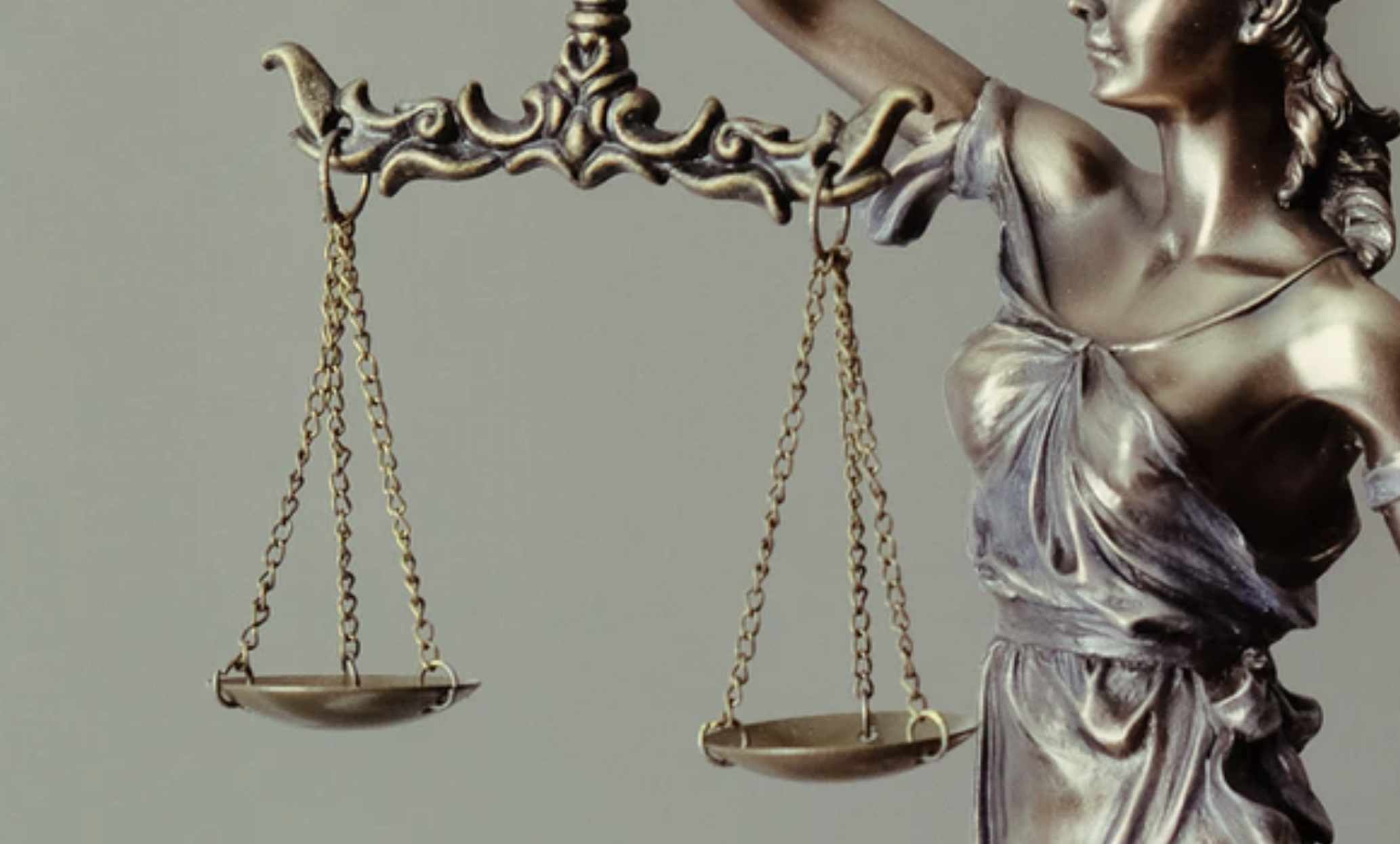
In fact, this highlights an important point about moral judgment. It is not a one-step process; it is a two-step process, as we all know from the functioning of a courtroom.

The first step in judging something raises the question of whether a particular action or a particular person is right or wrong, good or bad. This judgment should be weighed against our values—and weighed carefully, as Gibbs’s post suggests. A rush to judgment is no good thing.

At the same time, it should be weighed carefully because our values are, or should be, important. And given that this first step in the act of judging involves our values, it is, in fact, a binary judgment. We are deciding whether something is right or wrong, and no matter how difficult the judgment, there’s no third answer—no grey, no “in-between.” Betraying or suspending our values does no service to us or to the things that we should hold dear—or hold “sacred,” as the sociologist James Davison Hunter described it in his book The Death of Character.

Yet this view isn’t an argument for intolerance, nor is it an argument for the wild bursts of passion that Gibbs properly derides. The second step in judging matters, too.

That second step is simple, though not always easy: Now that we’ve decided whether someone is right or wrong, what should do we about it?

Think again of the courtroom. For a judge, a guilty plea does not answer the question of what the sentence should be. And the same is true for us. Here, shades of grey matter; circumstances matter; situations matter. The answer is no longer binary. A judge doing his or her job properly will refuse to treat an unemployed father who has stolen bread for his destitute family the same as a serial thief on his third offense for stealing cars. The first may be set free with community service and an order to repay the owner; the other will spend time in prison.

So when it comes to our friends—and perhaps when it comes to our local schools, and even to their critics—the next question becomes, Given our first judgment about whether someone is right or wrong, what do we do about it? For instance, if we feel the need to express our judgment about how to reopen our schools out loud or in writing, we can remember that this pandemic has been difficult for everyone, that we all value our children, and that the information we have at our disposal may change just a few days hence. These are important circumstances, important qualifying factors. As a result, we can still speak and still criticize—but choose to speak respectfully, without bitterness and accusation.

This kind of tolerance is real, and it is meaningful. We can be kind without betraying our values, and the respect and civility we show can become a model for students’ community and civic participation in the years to come. All of this will be on display in September, and it is an opportunity—however challenging it may be—to show our children how good character behaves in practice.

Throwing Elbows vs. ‘The Golden Half-Hour’

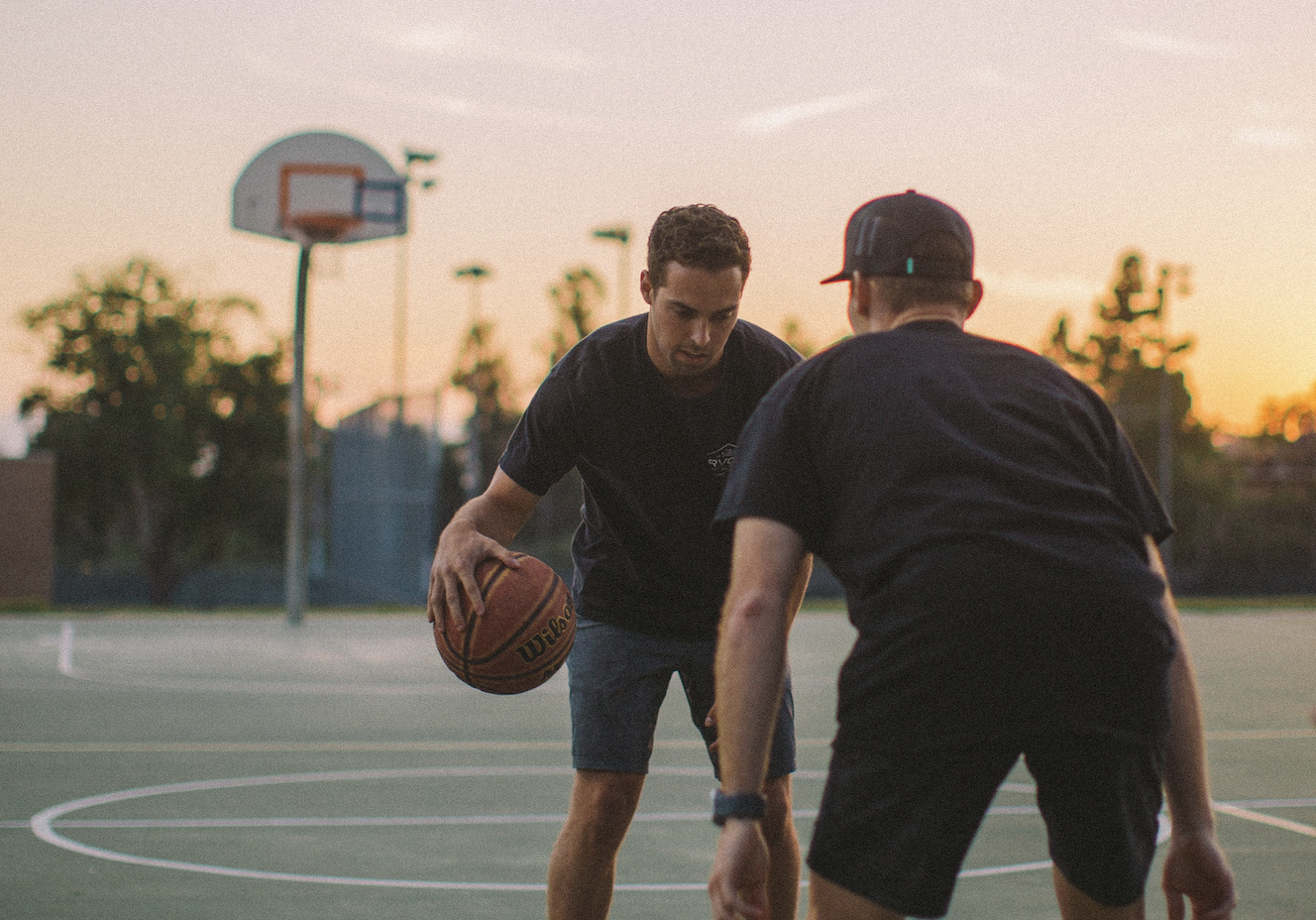
“It’s pedantic if I’m lecturing you on virtue but you never see me exercise virtue. If I’m playing basketball and someone elbows me in the face, how do I respond?”

This simple question about throwing elbows encapsulates the leadership framework of Deacon Brad Watkins, Headmaster of St. Thomas More Academy in Raleigh, North Carolina.

When Watkins took the job of headmaster ten years ago, the Catholic prep school was eight years old, the vision of parents who wanted a classical and more distinctly Catholic curriculum than that of the nearby diocesan school. But, according to Watkins, because the school hadn’t been formed by a diocese or an order like the Franciscans or the Jesuits, it lacked a unifying vision. The result was an abundance of discipline issues and a lack of school loyalty.

“We had no guiding spirit,” Watkins said. “We had a lot of problems when I came, and we needed some kind of sense of charism.”

Watkins drew inspiration from a 19th century Italian priest, St. John Bosco. An education reformer, Bosco started schools for at-risk street children employing what he called “the preventive method” to form character.

“What he wanted was teachers so immersed that their loving presence would prevent wrongdoing, because students don’t want to disappoint or injure a loving relationship,” Watkins explained. “He understood priests and brothers to be something between older siblings and parents. He wanted them to play games with students, not watch from the side—to be amongst them and doing what they were doing. It was a really different model. I basically imported that.”

St. Thomas More Academy’s teaching day starts at 7:30 with what Watkins calls the “golden half hour.” At many schools, this time is a chance for teachers to do last-minute tasks before the day begins, but at St. Thomas More, while students congregate and socialize, teachers are in their midst.

“That first half hour is the most critical time of the whole day, and I expect everyone to be interacting and engaging with kids as if they are their own children,” Watkins said. “We say, How was the game? Or, I saw the school play and you were fantastic! I tell the staff, If you do nothing else in this place, please make sure those kids know you love them at the end of the day.”

Beyond building relationships and expressing love, Watkins believes that the modeling done by teachers is vital. Unlike children in centuries past or other cultures, many students today don’t see their parents do much beyond relaxing at the end of a workday, he said. They have few opportunities to see how adults resolve conflicts or tackle tasks. Watkins believes that by living their lives in front of students, teachers have the chance to show them what virtuous adulthood looks like.

“They need to know what happens when two men have a disagreement,” Watkins said. “I want to let them see two male faculty members playing against each other in basketball and what it looks like when there’s a disagreement.”

Watkins’s expectations for engagement extend beyond the first half hour of the day.

“If the kids are outside, we are outside,” Watkins said. “There is no hiding in the faculty lounge. Teachers need to be present and available.”

This kind of radical engagement seems to be paying off in terms of student character. Watkins said that during his tenure, there has never been a fight and classroom disruptions are very rare. There has also never been a theft of any kind; in fact, students don’t lock their lockers and regularly feel comfortable leaving expensive calculators out. The school handbook, rather than listing an overabundance of rules, focuses simply on loving God and neighbor.

“There are no issues of disrespect,” Watkins said. “They get it. They feel loved.”

In addition to the gift of time, students also enjoy their teachers’ trust. One of Watkins’s concerns when he first became headmaster was an atmosphere characterized by sternness and lecturing. This was partly due to the fact that in the school’s early days, the student population included a number of students who had been expelled from public schools and accepted to build enrollment. While many of those students were now gone, a culture of heavy-handedness had persisted.

“We had draconian rules but good kids,” Watkins said. “The leaders had missed the fact that we had totally different kids now, and those kids were reacting to being oppressed.”

Watkins loosened lunchtime and dismissal procedures to give students more freedom. He also changed things like chaperoning high school field trips, letting students explore sites on their own without constant monitoring.

“One way is a culture of fear that says, Something is going to happen and I will be liable,” Watkins said. “The other is a culture of trust that communicates, I expect you to rise up and do what’s right. When you talk about character development, that’s huge. It’s a major paradigm shift.”

Engagement, modeling, trust—they are simple concepts, but at St. Thomas More, they appear to contain remarkable power for developing character.


Core Virtues, Core Knowledge, and Literature as Inspiration

Mary Beth Klee was teaching history to undergrads when the idea came to her—an idea born of a lack of promising options for her eldest son, who was slated to start kindergarten. She envisioned an independent school heavy on content, not just skills; the recent trend toward a skills-focused approach was evident in her college students, and it concerned her.

But there was more: Klee was committed to founding a school with a strong emphasis on character education.

“As a historian, I look at the things that have gone wrong in history, and I know one of the things we should focus on is raising good people,” Klee said. “The question is not whether schools are forming character, but what kind of character they are forming. We are always sending messages; it’s just a question of what messages we are sending.”

In 1991, with these priorities in mind, Klee founded Crossroads Academy, an independent day school in Lyme, New Hampshire. She was drawn to the approach of E. D. Hirsch, who advocates cultural literacy via the use of a Core Knowledge Sequence. Crossroads Academy adopted this history- and geography-rich curriculum, but Klee regretted its lack of a character component. In 1993, she received a grant from the Challenge Foundation to develop a character education program to be used in tandem with the Core Knowledge Sequence. With that, the Core Virtues program was born.

Like the Core Knowledge Sequence, the Core Virtues program was created for students in elementary school. It focuses on a different virtue every month. These virtues each relate to the four cardinal virtues of Western civilization as defined by Aristotle: justice, temperance, courage, and prudence. According to the Core Virtues website, these virtues are “common ground, broadly embraced virtues—not controversial social or political agendas.” They include such traits as diligence, gratitude, and compassion.

In this free program, available in its entirety online, virtues are expounded in the context of children’s literature—specifically, picture books. The books, over 800 volumes in all, have been carefully chosen based on the virtues they help illuminate, and they are categorized by grade level. First thing every day, teachers spend 15 to 20 minutes at a “Morning Gathering” with students. And on the first day of each month, teachers use this time to introduce a virtue, discussing it with their students. After that, the time is spent reading and reflecting on high-quality stories that illuminate the given virtue.

The idea of using stories to shape the character of children is not new. In a book explaining her approach, Klee writes,

In the Republic, Socrates urges us to choose our stories well.  We are told to choose for our students those poems and stories which “will strike their eyes and ears like a breeze that brings health from salubrious places.” We should do this, because stories and poems that “bring rhythm and harmony permeate the inner part of the soul, bring graciousness to it, and make the strongest impression.” Plato notes that with the proper sort of nurture, one bred on such stories will “praise beautiful things, rejoice in them, receive them into his soul, be nurtured by them, and become both good and beautiful in character.” Conversely, the Ancients urged us to shun childhood works that are “vicious, mean, unrestrained, or graceless,” for those “bred among images of evil as in an evil meadow, culling and grazing much every day from many sources, and little by little, collect all unawares a great evil in their own soul.”

The reflection time that follows the reading of a story may vary day to day. Students may discuss the story or compare their own experiences. Teachers are encouraged not to moralize but to guide, clarify, and enjoy their students’ reflections, believing in “the power of literature to do its work.”

Klee estimates that the program is used in about 150 schools of all kinds, from charter to independent to traditional public schools. The program is nonsectarian, and the only things for sale are posters of the virtues, including their definitions, and a resource guide for teachers who prefer the online content in a bound form.

“We aren’t trying to make money,” Klee said. “We are trying to make it possible for people to do this easily. This is an initiative a lot of people have found helpful and has born a lot of fruit. It doesn’t require hours and hours of teachers or professional development.”

Klee is aware that her simple program lacks the bells and whistles of others in the character education marketplace. But she believes it to be a powerful tool.

“We want students to know the good, love the good, and do the good,” Klee said. “Teaching them to love the good is the chief task of the Core Virtues program. You do this through the imagination and appealing to hearts, by making the good something they want to aspire to. We are not saying this Core Virtues approach is the only way you can develop character. But this is an energizing, catalytic way to keep the spotlight on character and virtue in a school setting. The key thing here is helping children fall in love with the good.”

Klee also emphasizes the value of practicing virtue. A focus on generosity in December may become a springboard for school projects like singing at a nursing home or helping at a food pantry.

“We don’t constrain ourselves to the literature,” she said. “Literature becomes the inspiration.”


Tutoring as a Coronavirus Palliative in Education

COVID-19 has disrupted the delivery of education to more than 50 million public and private school students. Parents are supplementing their children’s education in partnership with teachers online, while others partner with schools and colleges to make the best out of a tough situation.

Yet another option is often overlooked—an option that is backed by research and that can draw on the many strong teachers that schools already have in place: tutoring academies.

Tutoring youth is a time-honored practice that was employed as far back as ancient Greece, writes Beth Schueler, an Assistant Professor of Education and Public Policy at the University of Virginia, in the article linked below. And while delivering tutoring services to millions of students during the coronavirus pandemic is a challenge, it is also an opportunity. Schueler makes the case for “vacation-academies” based on tutoring to address not just the summer learning loss that occurs for so many students during this time of year, but the learning loss that the coronavirus-induced closure of schools will force upon so many students already at risk of academic failure.  

And it’s worth noting that tutoring also provides a prime opportunity for the adult modeling and practices that are an important part of student moral formation. Click here to read “Summer ‘Vacation Academies’ Can Narrow Coronavirus Learning Gaps,” by Beth Schueler.

The Content of Their Character: King’s Theme Across the Years

Martin Luther King would have been 91 years old on January 15, 2020, had an assassin’s bullet not cut short his promising life at 39 years of age. Born in segregated Atlanta, Georgia, on January 15, 1929, King’s family, church, and teachers nourished the precocious Michael King, which was his birth name until his father changed it to “Martin Luther” after a visit to Germany in 1934.

At the age of 15, King delivered his first public address, titled “The Negro and the Constitution,” at a statewide oratorical contest held at the First African Baptist Church in Dublin, Georgia. From there, he matured into a modern-day articulator of the Christian gospel of love. With his actions and ideas over the next 24 years, King broke down walls of injustice in American society in ways few people in the twentieth century had. In honor of his accomplishments, the third Monday of every January is set aside as a national holiday.

As with every King holiday, the “I Have A Dream Speech” he delivered at the March on Washington for Jobs and Freedom on August 28, 1963, will be read and listened to at public gatherings throughout the United States, Europe, Africa, and elsewhere. This speech contains prophetic themes we still use to measure our commitment to America’s political scriptures: the Declaration of Independence, the Constitution, and the Bill of Rights. The speech also contains moral themes we still use to measure our commitment toward liberty and justice for all. One phrase in the speech that addresses the latter issue is the following:

I have a dream that my four little children will one day live in a nation where they will not be judged by the color of their skin but by the content of their character.

King’s “content of their character” phrase remains a lodestone for academic and social commentators who assess our progress toward human flourishing, particularly in the field of education.

For example, scholars James Davison Hunter and Ryan Olson in 2018 coedited a book titled The Content of Their Character: Inquiries into the Varieties of Moral Formation. It is the first in-depth investigation into how families and students of every race experience moral formation in high schools, and into its impact on the students’ character. In the introduction to the book, the editors highlight early influences in King’s life and their importance to his moral formation and the content of his character as a public servant.

The meaning of King’s words is still a subject of dispute. Some people believe King’s “content of their character” is not an invitation to create a color-blind nation. Instead, it is an exhortation for the evaluation of an individual’s worth without ignoring race and heritage in the process. Others disagree. They believe the phrase is a commitment to character first, color second—if at all. This debate will likely endure for decades to come.

King’s birthday also provides an opportunity to acknowledge his attentiveness to character. Character for most of King’s existence was an essential focus of his philosophy of education. To put it another way, character for King was, well, king. And the formation of this belief began decades before he delivered the “I Have A Dream Speech” in August 1963.

Early in his life, King understood the importance of education for character development. At age 18, he published “The Purpose of Education” in the January-February 1947 edition of the Maroon Tiger, the student newspaper at Morehouse College. King began the article by identifying two functions of education. The first is that “Education must enable a man to become more efficient.” The second is that “Education must also train one for quick, resolute and effective thinking.” By doing both, King contends the human race can achieve one of its chief aims in education—“to save man from the morass of propaganda.” Who are the purveyors of this propaganda?” King named the press. He also named the classroom, pulpit, and speaker’s platform as guilty stakeholders. But King reminds us to do more.

“We must remember that intelligence is not enough,” he wrote. “Intelligence plus character—that is the goal of true education.”

In closing, King believed character and education were always intertwined. On this King holiday, let us reflect on how we can utilize education to make King’s dream a reality for this generation and those to come.

* * *

Gerard Robinson is the executive director of the Center for Advancing Opportunity, a Washington, D.C.-based research and education initiative that partners with historically black colleges and universities and other postsecondary institutions to develop solutions to the most pressing education, entrepreneurship, and criminal justice issues in fragile US communities.

Disarming Love

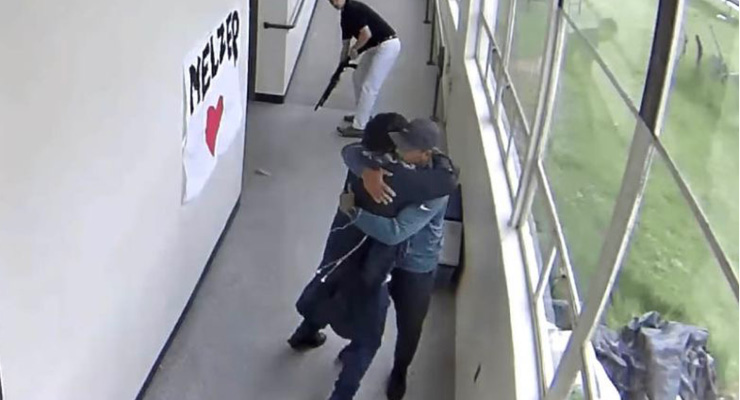
The images are first chilling and then touching—a large gun, and then a long embrace.

The surveillance video released last weekend has been viewed hundreds of thousands of times. It shows a scene from May in which Keanon Lowe, a security guard and football coach at Parkrose High School, took a loaded shotgun from then-18-year-old Angel Granados-Diaz and then wrapped him in a hug.

Granados-Diaz planned to kill himself that day—at school rather than at home so that his mother would not find his body. Lowe, having heard about “suicidal statements” made by Granados-Diaz, showed up in the student’s classroom right before Granados-Diaz arrived, carrying the gun under a long coat. Granados-Diaz tried to fire the gun on himself, but it did not discharge.

“I saw the look in his face, look in his eyes, looked at the gun, realized it was a real gun, and then my instincts just took over,” Lowe said. “I lunged for the gun, put two hands on the gun.”

As the recently released video shows, Lowe removed the gun from Granados-Diaz and handed it off to another teacher nearby. Lowe then wrapped his arms around the student, who began to cry. For a few moments, Granados-Diaz struggled against the embrace of Lowe, but then returned it.

In those moments, said Lowe, they had a conversation.

“Obviously, he broke down and I just wanted to let him know that I was there for him,” Lowe said. “I told him I was there to save him—I was there for a reason and that this is a life worth living.”

Lowe’s response is a striking model of character in at least two way. First, he showed the courage to act without thought for his own safety. Concerned for the well-being of Granados-Diaz and the other students, Lowe deliberately put himself in harm’s way for their sake.

And then, rather than responding with force and censure—which would have been understandable given the degree of risk Lowe had just faced—Lowe extended compassion and care. Granados-Diaz would later receive legal penalties associated with weapons possession, but in this vulnerable moment, Lowe led with love.

Every teacher interacting with a student who is breaking the rules faces this same double crossroad. Will we have the courage to confront the misbehavior—to call it out, to disarm it—for the child’s sake and others’? And at the same time, will we have the compassion to see beyond disturbing conduct and embrace the student who acts out from a place of pain? To keep showing love even when a child tries to push us away?

Lowe would not have been a good security guard had he failed to act on the threat; it is not loving to ignore destructive behavior. At the same time, the life of Granados-Diaz might be radically different had Lowe not responded with powerful, inescapable kindness.

Students are watching the educators around them. They imitate the way we treat our colleagues—and also the way we respond to those who act out. May we model both courage and compassion as we engage the often-hurting students around us.


On School Grounds: Transcript of Interview with Richard Fournier on Rural Public High Schools

To receive a free copy of the chapter of  The Content of Their Character that corresponds with this interview, please click here and sign up for our Weekly Digest.

This is a lightly edited transcript of an interview conducted on July 25, 2019, with education researcher Richard Fournier. He contributed the chapter on rural public high schools to The Content of Their Character, a major research project launched by the Institute for Advanced Studies in Culture in order to better understand the moral formation of high school students. The interview was conducted by CultureFeed Editor Joanna Breault.

Joanna Breault: Today I’m speaking with Richard Fournier, who is the managing director of partnerships at Transforming Education. Previously, Richard was a research and technical assistance associate at the Education Development Center, a project scholar for UVA’s Institute for Advanced Studies in Culture, a high school history teacher, a licensed superintendent in Massachusetts, and is currently an adjunct faculty member at Lasell College. Richard is also currently a doctoral candidate at Boston University. Several years ago, the Institute for Advanced Studies in Culture launched a major research project in order to better understand the moral formation of high school students. Researchers went into ten different sectors of schools from public schools, both urban and rural, to private schools, both religious and non-religious, to home schools and others. Richard was one of those researchers, and he and his team focused on rural public schools.

Thank you, first of all, for being with us today. We’re really looking forward to chatting with you. I know that you studied six different schools. I wondered if you could give me a quick overview of what makes a school a “rural school.” What characteristics did those schools that you studied share in common?

Richard Fourier: Sure, and thanks for having me. There are lots of different definitions really of what constitutes a rural school, and in some cases, some schools technically aren’t rural in the eyes of the federal government, but they still claim to be rural and identify as being rural. The definitions that I used are really through the National Center of Education Statistics—NCES—and really it goes, generally speaking, it’s really just the distance from an urban area, and so all of my schools were considered rural. There are some rural schools that are considered “fringe,” which are way out there, and some are “remote,” which are also way out there, and some are more considered “towns,” but in general it’s an area that is usually a certain distance from—pretty far away from—an urban area. It’s usually relatively small. More and more in certain states like in Maine, for example, we’re seeing consolidated districts. So you might have a larger school or high school that’s made up of four or five different rural communities all into now one school. And so, geographically it spans the whole US. So you could be looking at something in the deep woods of Maine. You can be looking at something that’s in the Midwest—completely open fields. And as such, the demographics are varied as well. So sometimes you have, in many areas, a homogenous, all-white student population, but in the other parts of the country, you might have Native American students, you might have students with large English language learner population, African American students, and a number of other areas and race and ethnic backgrounds, and lots of variety with social economic background as well.

JB: Okay. So when you were writing about rural schools, I know you wrote about three different spheres of “moral obligation” that you observed in rural public schools. Can you explain what you mean by that term and describe those three different spheres?

RF: Sure. The three that I had identified were global citizenship, religious responsibility, and military service. And I think what I really kind of intended by that, by talking about moral obligation, was simply that one common thread that I saw in all these rural schools was this sense of—I’m generalizing, but among many of the students and staff—the central obligation for those three areas. In particular, military service was a fairly common thread, whether it was actually going into the military or just simply being explicit about showing support for the military. So a lot of these schools, if not all of them, as soon as you walk in the building you see, obviously, the American flag but also either monuments or some kind of memorial or some kind of artifact that celebrates either staff members or former students who had served in the military or things that are currently going on with the military. I’ve seen in my visits lots of ROTC folks that were in there as well, military recruiters. So the communities are generally very supportive, not shy about showing that support, and many of the families and the students are connected to the military. And so even those that aren’t are usually pretty respectful about that.

Many of these communities tended to either be engaged with different religious affiliations or at least pretty supportive of it—to the extent that sometimes it even crossed the sort of “public school boundary,” where there was talk and discussion about it within the school itself.

And then global citizenship: In many ways that was actually a moral obligation on the part of staff. So a lot of teachers felt like just by nature of being in a rural community, where you’re maybe not as connected with diverse resources—a diverse group of folks that you might find the more urban environment and all the things that come with that—that there was a need among staff to be sure to promote this global citizenship idea, so that students maybe didn’t feel so isolated in those particular areas, if that makes sense.

JB: Yeah, so sort of wanting to expand students’ understanding or exposure beyond their small town?

RF: Yeah, exactly. And the internet’s a really great way to do that, but that also means certain social media literacy and guardrails around that that every school faces. But I think a lot of the staff that I talked to felt like it was especially important in those particular areas, because for some kids, it really was hard for them to reach beyond those boundaries, because they’re not in an urban environment, so they can’t walk out of the school and suddenly see lots of different people from different backgrounds. It’s a lot more homogeneous at many of the schools that I was in.

JB: So what were some of the moral ideals that were embraced by the communities that you studied and which of those do you feel like might be more unique to a rural setting?

RF: I’ll list a couple. I’m not sure how unique they are, but there’s a couple. There’s one in particular that might be. Hard work—working hard. This sense of self-reliance—you know, if you make a mistake, it’s on you and you need to fix it. Service, not just service in the military sense, but service to those who are less fortunate. And that kind of goes along with compassion and care for the community at large. And then just generally respect.

So I don’t want to make a claim that any of these are unique only to rural schools, but I will say that I think that aspect around community is definitely very much emphasized in the rural sector. I think there’s, with many the folks that I talked to, there’s a sentiment, a sense, that—particularly around the communities that were a little lower on the SES (the social economic scale)—the sense of, We might not have a lot around this community in terms of wealth or even, in some cases, resources, but we are a community and we’re going to support each other and make sure that we stick together. So the support is there. And as a result, I think I saw a lot of students, who if there’s a food drive for a certain cause—for a family that lost their house in the fire and then has no money, or maybe one of the students or parents came down with cancer or something like that and needs money for hospital services—the communities really rallied.

And again, that’s not to say that doesn’t happen in urban or suburban neighborhoods, but I saw it as just such a sense of pride for a lot of the rural staff and communities there, and I thought that was pretty interesting.

And then, I think the sense of self-reliance which I think sort of stems from this, very much rooted in the rural, blue-collar lens of life, that even, to some extent, maybe that whole “pull yourself up by the bootstraps” mentality—and it certainly isn’t a bad thing—but I saw that sense with a lot of with a lot of the teachers but mostly a lot of the students and the parents especially.

And sometimes those things were so distinct that I wasn’t sure if certain parents were being serious with me when they were talking about certain beliefs about discipline, for example. So very distinct from some of the other areas throughout the country that I’ve worked with.

JB: What you were saying about school, the community, kind of is a segue into another question I had about this idea of “school as family” and the dynamic of pitching in to help. I know you mentioned if somebody gets cancer and food drives. Are there any other examples that stick out to you of what that looks like, the idea of “school as family”?

RF: Yeah, and I think that this kind of goes along with how teachers and administrators can also create sort of a sense of belonging. Sometimes I think it’s intentional, sometimes I don’t, but the bottom line is that because the communities tend to be relatively small, there is a very clear trend of students who have noted seeing their teachers involved in lots of other aspects of their lives—for example, church. They go to church and they see their teacher or their principal. And because it’s a smaller community, many of the students there go to the same churches or the same church. There might be other outside activities. Also there’s a sort of intergenerational aspect to rural communities where often there are several teachers on staff who themselves attended that particular school. Sometimes administrators too. And so often, you’ll have a teacher who’s been in that community their whole lives and they know their students’ parents and maybe even their parents. So as a result, there’s all this intertwined dynamic and relationships, and so I think for many students and teachers, [it] does, for those reasons, feel like a big sort of family. People know each other; they know their pasts, their reputations. And sometimes that’s a good thing and sometimes it’s not, but I think all those things add up to this feeling that it’s really one big family.

JB: I actually had that question: Does that make it difficult for kids and adults, if they make mistakes, to kind of start afresh?

RF: Yeah, I think so. I grew up in Maine and I grew up a couple streets away from Stephen King, the horror author. And Stephen King—I bring this up because he used to write a lot or has written a lot about the dark sides of growing up in a sort of rural community. And one of the dark sides, I think, is the fact that it’s really tough for you or your family to escape a certain reputation. I mean, part of that’s just human nature, but because it’s a small community it’s hard to, as you said, start with a blank slate. And so I’ve talked to some students that really even in the middle school years that—or early high school years—that certainly felt that. I also think you have a lot of educated adults in these buildings who recognize that and try to usurp that in some way and alleviate the stress that can come with those kinds of reputations. So it’s probably a mix, but I do think you see it there a little more than you might in other schools, because you have so many teachers and administrators who’ve been there their whole lives and whose families they know. So that can make it a little difficult.

JB: Is there a positive bent to that in terms of wanting to make good choices because you and your family are known?

RF: Yeah no, absolutely—I think there’s a lot of positive to it. You know, you might be more willing to go out on the limb and put in extra time with a student because you know their family. You might have more context and sympathy or empathy for what they’re going through, because you know their family. And certainly, yeah, you might have some students that really want to live up to higher expectations because they think their family’s reputation or their reputations are on the line. And so yeah, I shouldn’t have just focused on the negative; I do you think there are a lot of positives for that too. But I think that can be tough for students if it’s the other way around,and they have a reputation for being… if their older brothers were troublemakers, and their father was a troublemaker, or mother, and then they’re coming in as an average student, they might have that following them around.

JB: Are there any other ways that that dynamic of everybody knowing everybody, “community as family,” “school as family” relates to character formation in particular?

RF: Well, I think it strengthens whatever moral ideals or obligations exist. I think it just reinforces them on a regular basis, because it’s a lot harder to deviate from those norms if you can’t find a separate group or subgroup of folks who are supportive of that. So for example, if you’re in the rural community and you happen to be a student that does not fit with the regular norms—and it could really look like lots of different things. Maybe we’re talking about a student who just doesn’t want to engage in many of the common activities, whether it’s sports or outdoors activities or whatever—it might be hard for them to find a particular kind of group to be part of. A student who’s gay or part of the LGBTQ community—it might be tough to find support within that community if there aren’t other folks in that community that are talking about those issues, providing support for those issues. And I don’t think it’s always… it doesn’t necessarily mean that there’s just this common bias or bigotry in those communities, it’s just that there might not be an outlet for that particular student, because maybe that hasn’t been an explicit before.

And so anyway, the point is I think that everybody knowing everybody just reinforces the norms, for better or worse. I think in a good way though, if everybody knows that “hey, when someone is in trouble, you need to put some extra effort in to help them,” you’re probably going to be following that, because everyone around you is doing the same thing—your teachers, your parents your friends. So I think it can work definitely for positive, and then maybe in some cases for negative as well.

JB: So I remember you mentioning in your chapter that it was common for teachers and administrators to kind of reach beyond their teaching duties to support their students. Can you describe some of the ways that they did that?

RF: Yeah, and I’ve seen this happen in urban communities as well. But again, I think that that idea of it feeling like a large family and everyone knowing each other—or many people knowing each other in the community—in my observations, has led to lots of teachers doing a lot of extra things to make sure students had what they needed. So that might have meant that teachers did more home visits to check in with students who might not have had a lot of money, or maybe their parents were dealing with drug addiction. Counselors in the school and teachers checking up on students literally at their homes down the street, whose parents might be addicted to heroin and they haven’t been showing up at school. You know, people in the school making sure that extra food that’s left over at lunchtime is given to students who aren’t going to have anything to eat that night. Doing things like the food drives and just making people generally aware of those kinds of issues that people are dealing with.

So I think in that sense—again, I do see that in the urban schools as well of course—but I think there’s something a little interesting about the rural communities where maybe because they’re a little smaller, it’s a little bit easier for educators to… it’s a little more in front of their faces, because they might know that person’s family from when they were in school. There’s some deeper-rooted connections there maybe. It’d be something interesting to explore.

JB: Yeah, that is interesting. So along the lines of teachers, another thing that you talked about was kind of the willingness that teachers had to engage on controversial topics, although they were often reluctant to weigh in on what they thought was right and wrong. So why do you think that is? Like where does that reluctance come from, and then if they don’t want to weigh in on moral issues, does that mean they’re not part of shaping student character, or are they doing that in a different way?

RF: Yeah, I mean I think this hits at a larger topic about character development and social-emotional learning and all those areas. I think we have a public school system in our country that prides itself on educators staying away from what I think is usually referred to as “moral education;” instead thinking about content, there’ll be critical thinking skills. But when it comes to issues of morality—in politics, frankly—exposingstudents, especially if you’re teaching civics or history or things like that, to some extent, but not having a common moral foundation for what’s right and what’s wrong.

So what happens is either A. Teachers do express these things, but they could be very different from the teacher down the hall, or B. They try to stay neutral. In both cases though, regardless of those teachers’ intentions, the students are always going to be influenced by the actions and the words of those two teachers. So whether you try to be neutral or not, you’re going to be influencing, to some extent, the way in which the student thinks about the world, sees the world, interacts with the world, and whatever social-emotional skills or mindsets that they have. There’s going to be some range of influence that that teacher has on them.

So I think in the communities for this study, what I was actually referring to in that case was the fact that I talked to a lot of teachers who, especially the ones who weren’t from the community, tend to be a little bit more on the liberal range in our political spectrum. And so especially in the social sciences, but sometimes in the sciences, there are certain topics that came up they knew were going to be hot-button topics for those particular communities, especially the communities that tend to be a little more conservative.

So two issues that come up to mind: One, thinking about current political issues and thinking about other cultures, and domestic and foreign international terrorism. I had one teacher that told me, for example, that he had a group of students that basically just would say things like, If someone is Muslim, they’re definitely a terrorist; there’s no question about that. Now those comments probably just come from that kid’s parents. But the teacher I think felt like it was hard to argue. I think he struggled in how to deal with it because on the one hand, he didn’t want to insult the kid’s parents; on the other hand, he wanted to open the student’s eyes to the possibility that that wasn’t true or isn’t true. But he mentioned to me that he also just felt a little bit outnumbered because he has a community of folks in his particular situation that he felt probably would

disagree with him. The other issue is, in the sciences, talking about evolutionary theory and versus you know… I forget the term but I think it’s something design?

JB: Intelligent design.

RF: Intelligent design. And then other topics that might come up or interfere with students’ specific beliefs when they’re in, again, a more religiously oriented, conservative community. But I also spoke to teachers who are really successful in balancing both of those worlds and approaching it in such a way that students could respect, and in some cases agree, with maybe their parents’ or their community’s beliefs, but also wrap their heads around these new concepts that they were learning in school. But I think all these things are, you know, a little bit difficult for teachers to grapple with at times. Some teachers just didn’t care and were saying, No, I’m going to teach it this way and you know, students can make their own conclusions but I’m not going to avoid these topics because I think that could get some complaints. And other teachers try to play a little more safer.

JB: Do the teachers who are from the communities tend to play it safer? Or is there no correlation?

RF: Just anecdotally, just from my own observations, usually in in a particular community that happened to be more conservative, usually the teachers who had been there are also in alignment with that philosophy. And then there were a couple towns where clearly there were still some very deep-rooted issues around race and racial justice. I mean, they came up a lot. And I wasn’t exploring that aspect too much so I didn’t go into a lot of detail in it, but it was clear to me that while in a place like Cambridge, Massachusetts, you might go into a school where they’re talking about how race might play out in the classroom or various dynamics, in some of these towns, we were still having conversations about lynchings that took place in the early nineteen hundreds; I mean, these are deep-rooted topics that people were sort of aware of, that may or may not be discussed. It was definitely another area that I’d like to explore more if I had the time.

JB: Well, we kind of touched on this a little bit but just one thing that kind of stood out to me as I read your chapter, over and over again, was the importance of athletics in school community, kind of the connection between school and the community beyond the school—that connection a lot of times is forged through athletics. So what does that mean for kids who aren’t athletic or maybe aren’t even interested in sports? Did you observe anything along those lines?

RF: Yeah, I actually expected that, just from pop-culture, stereotypes, movies, I thought that you’re going to find a bunch of students that weren’t involved in sports being like shunned or outcasts. But I really didn’t find that at all. I mean, students actually, these days, with the advent of the internet and all the connections they have in social media, found plenty of other… lots of kids were involved in gaming and have their own little clubs there. Some kids were involved in, maybe not like generic sports, but outdoors-type activities like hunting or fishing or camping or hiking or whatever that they could they could do outside of that. Some students—a lot of students actually—have vocations they were obsessed with, or passionate about I should say, before even graduating. So some kids would go to school and right after that go and do their job as a mechanic, for example. So I mean, I think they could still have that school spirit and that pride without necessarily being involved in sports. I say that, but I also do think like many schools, sports tend to lend itself, athletics can lend itself, to being more seen as popular in the eyes of teachers, administrators, and the community at large. And some of that sentiment definitely still existed with the students, and I think you’d find that in the urban schools as well.

JB: Right. Well this has bene really interesting. Is there anything else that you can think of that you think would be important for the wider community to know about rural schools as we wrap up? Anything else that came to mind?

RF: I think just if anyone is listening to this who hasn’t been in a rural school before, I think just acknowledging that there’s over 12 million students in the US who are attending rural schools. It’s just important to know that that’s occurring and that we need to think more about these students when we think about education policy, which I think tends to be weighing itself more heavily in favor of what’s going on in urban schools. And then secondly that rural schools are having a lot of success in many areas, but they also have unique struggles that we don’t see in urban areas, and so when we think about those education policies, we need to consider that they’re not always the same issues. They might have an issue with teacher retention or teacher hiring but for different reasons than in urban districts. I guess I’d leave with that.

JB: Thank you for your time today. I really appreciate it.

RF: Thank you.

JB: All right. Bye.
To Carry and Be Carried

Teachers are no strangers to heavy lifting. They support one another in challenging times, and they shoulder the burdens of their students on a daily basis. For one Ohio teacher, carrying a student became literal.

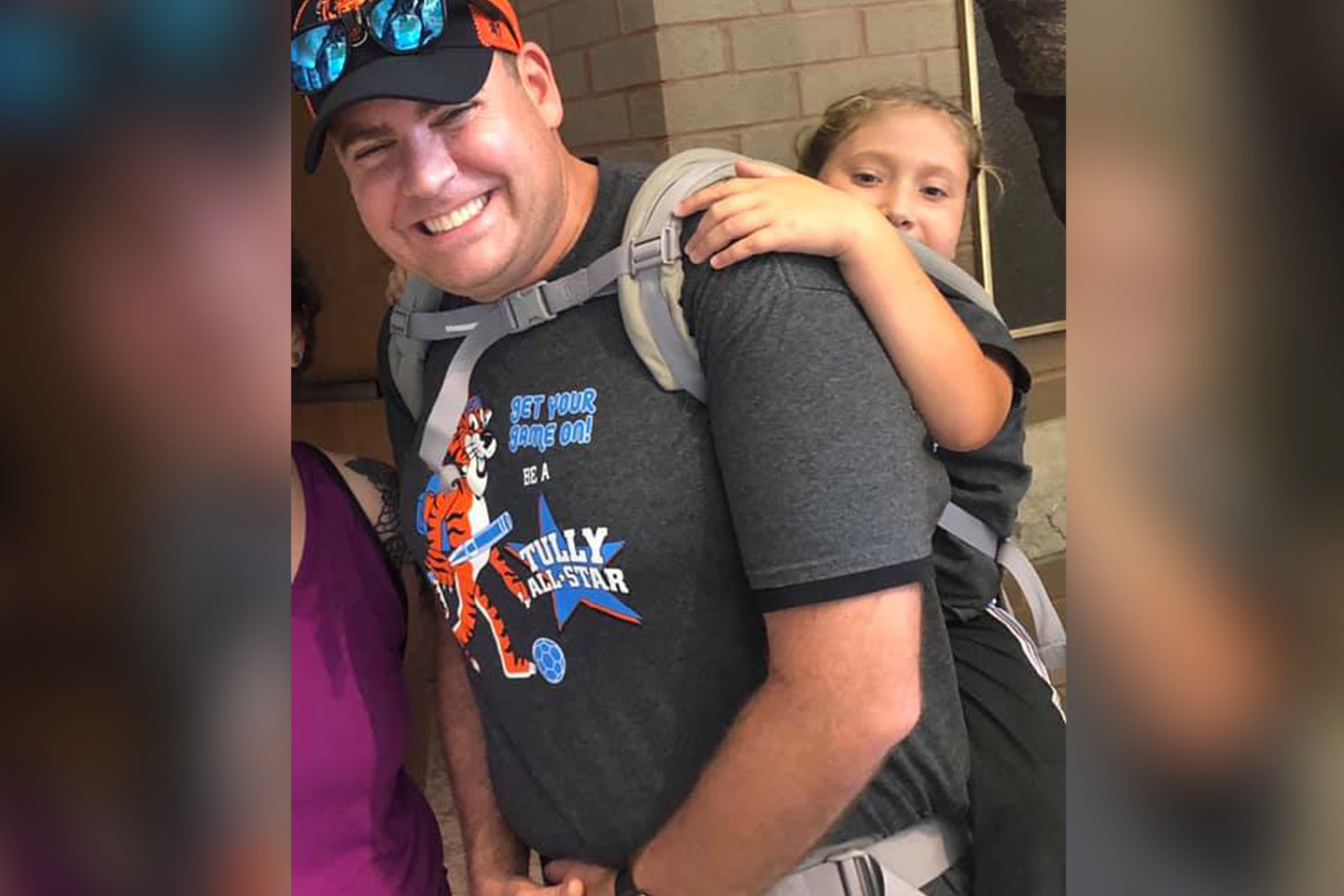
Ten-year-old Ryan King is accustomed to missing out on activities. Born with spina bifida, she is confined to a wheelchair. When her class field trip to a fossil bed by a river was recently announced, Ryan hoped she could go, but her mother was dubious. The fossil bed isn’t wheelchair accessible, and the only alternative was to carry her.

Just like other preteens, Molly craves adventure and independence from her mom—two things that were in short supply. This field trip was another reminder of her limitations.

In stepped teacher Jim Freeman, a teacher at Molly’s school. Freeman doesn’t oversee her class, but he was familiar with her smile from the hallway. For an hour, Freeman carried the 50-pound girl in a backpack carrier in 90-degree heat. Ryan had a wonderful time and was happy that for once, her classmates envied her.

“A little time out of my day and a little extra effort can give Ryan something to remember,” Freeman told Good Morning America.

Freeman well sums up the cost of serving another—in so many cases, it’s just a little time and a little extra effort. Call it what you will—kindness, compassion, generosity—this trait has the potential to radically change the experience of another person.

Extra time and effort is something most teachers provide almost instinctively. They give haircuts before fifth-grade graduations; they read to their students in the evenings on Facebook Live. And students benefit. But what if, beyond receiving a new haircut, a boost in literacy, or a piggyback ride over rough terrain, students are also receiving something even more powerful? What if the behavior they see impacts the people they become?

In the book The Content of Their Character, James Davison Hunter and Ryan S. Olson call this phenomenon “catching.” Values and behavior are contagious. As teachers model character, the students in their lives mirror it.

Consider the story of Sophia Alvarado. Melody Harbour, a special education teacher’s aide at Sophia’s school, was recently diagnosed with stage three lung cancer. According to KCBD-TV in Lubbock, Texas, Harbour endured 30 rounds of radiation and four rounds of chemotherapy. When Sophia, a third grader, saw that Harbour’s hair had fallen out, she decided to cut off her own hair in solidarity.

“This little girl is why I have to do this every day. There’s a lot of them in there,” Harbour told KCBD-TV, pointing at the school. “I can’t just sit at home and dwell on my problems.”

It’s clear that Sophia, with her gift to Harbour, chose to focus on the needs of others as well.

In another recent situation, a teacher’s asthma attack was averted by the care and quick thinking of a student. Ten-year-old Nevaeh Woods was volunteering in Kim Rosby’s kindergarten classroom when Rosby was suddenly struggling to breathe and unable to speak. Rosby held up her car keys to indicate that her inhaler was in her locked car; Woods responded by seizing the keys and running to retrieve it. Her quick thinking saved Rosby’s life.

So accustomed are they to giving, teachers don’t expect to be recipients of students’ consideration. But the experience is sweet. Beyond the actual benefit is the knowledge that one’s own example may have contributed to the child’s action.

A child’s instinct toward kindness is either reinforced or undermined by the messages and examples around her. And the teachers who “carry” their students—both literally and figuratively—are helping shape “carriers” without saying a thing. Some children won’t bear the burdens of others until adulthood, but some will bear burdens now—sometimes even those of adults.

When Discipline Divides

Like every pairing, the teacher-principal relationship includes tension. And according a recent survey by the Education Week Research Center, that discord is overwhelmingly based on one main issue: how discipline is handled within the school. 54 percent of teachers and 24 percent of principals cited student discipline as the major source of friction.

Principals have faced pressure from outside of the school—from both state and federal authorities—to reduce suspensions and expulsions. Meanwhile, teachers who are required to meet educational testing standards often struggle with the distraction that behavioral issues represent. Handling an unruly student without principal support can mean lost instructional time.

The tension can be exacerbated by the adoption of new policies without adequate teacher training. Lack of communication about who will be handling what—and what the consequences of misbehavior will be—can leave teachers feeling unclear on their recourse for student infractions. According to Education Week, strengthening that communication and, more generally, the relationships between school leadership, teachers, and parents, could go a long way to ease some of the tension revealed by the survey.

Many teachers cite tardiness and skipped classes as some of the big problems they face. And those are real challenges, as being present in class is necessary to mastering material and proving that mastery on a test.

But these aren’t the only issues teachers mention as problematic. They’re bothered by dress code violations, incessant arguing, being sworn at. Teacher objections to this kind of disrespect reflects an expectation that at least accompanies—if not exceeds—the desire that classroom culture be conducive to achievement.

“School is not just about education; we want them to be caring, responsible adults one day, citizens who respect people just because they’re people,” said Amanda Johns, who teaches fourth grade at Kennedy Elementary in Manistee, Michigan. “It’s about the common good. How does it impact the common good when a kid can get away with saying ‘you’re an idiot’ or ‘you’re so stupid’?”

Like Johns, most adults share a standard of not only academic success but personal conduct. Another term for that standard of conduct—one that respects others and upholds the common good— is “character.”

Judith Kafka, a professor of education policy and history at the City University of New York, told Education Week that discipline will be an issue to grapple with at every kind of school in every era. Even in the 1950s, she said, journalists were reporting a crisis of discipline.

Kafka added that “it may help to remember that discipline isn’t an extra thing schools have to deal with that gets in the way of teaching core subjects. Discipline is a core subject.”

This thinking—discipline as a core subject—may sound radical to overloaded educators, but it has the power to transform school culture. Rather than see discipline as a distraction to learning, educators might view a well-structured discipline process as intrinsic to the nurture of successful students—as important as math or history class. As veteran superintendent CultureFeed contributor Angus McBeath would frequently tell teachers, character formation isn’t in addition to the work; it is the work.

If discipline is concerned with how to respond to wrongdoing, character formation is its complement—focused on teaching students to do right. Teachers and principals can reduce the need for discipline by intentionally shaping character—explicitly teaching it, carefully modeling it, and seeking ways for students to practice it. Perhaps, with this common goal in mind, relationships between teachers and principals may even be strengthened and smoothed.


Good Citizens Understand Community, Engage Actively

This article was originally published on October 26, 2017. It has been slightly edited for length. 

Except for small groups of hermits, found here and there throughout human history, most human persons have lived in community since the earliest times. Perhaps it was first necessary for survival, but throughout the ages humans have formed communities and lived social lives for comfort and fulfillment.  

Customs, manners, and laws must be established if communities are to survive and flourish. Humanity’s ascent is flush with examples of evolving methods, meaning, and sophistication of humans in community. “Habits of the heart . . . [are] the sum of ideas that shape mental habits . . . the whole moral and intellectual state of a people,” claimed Alexis de Tocqueville. Citizenship is a practical response to the needs of each and every community. 

But there is another aspect to add. If we are not fully human except in community, not selves except in relation to other selves (as Charles Taylor, Robert Bellah, David Riesman, and many other thinkers argue), then how we engage with others is essential to our humanity. If we understand ourselves through relationships, then how we order our relationships is of critical importance. 

Finally if we are to truly embrace and sustain the principles of an advanced democracy, we must realize that there can be no democracy without the collective energies and coherent engagement of persons living in the democracy. Citizenship embraces the multi-faceted behaviors, relationships, and commitments necessary for civil society to function and for human persons to fully flourish. It is essential that we afford our youth the opportunities to understand deeply these principles and to begin to explore how they will engage as full-fledged members of a civil society. Equipping our young with the concepts that underpin these dual objectives of human flourishing and engagement in the common good is the work of forming good citizens in the fullest sense. 

Two things are required to accomplish this work—and schools play a vital role in their realization. First, individuals need to understand themselves as selves entering the public square. Second, they need to understand what it means to participate actively in the communities in which they are engaged.  

Educators tasked with this developmental responsibility must first make sense of their own relationship to the common good and their communities. This process of discovery will yield insights into how a human person forms attachments and the individual strengths necessary to fully participate, properly serve, and ultimately to exercise the rights and responsibilities of full citizenship.