Middle schooler wins $1,000, then creates essay contest to honor local veterans

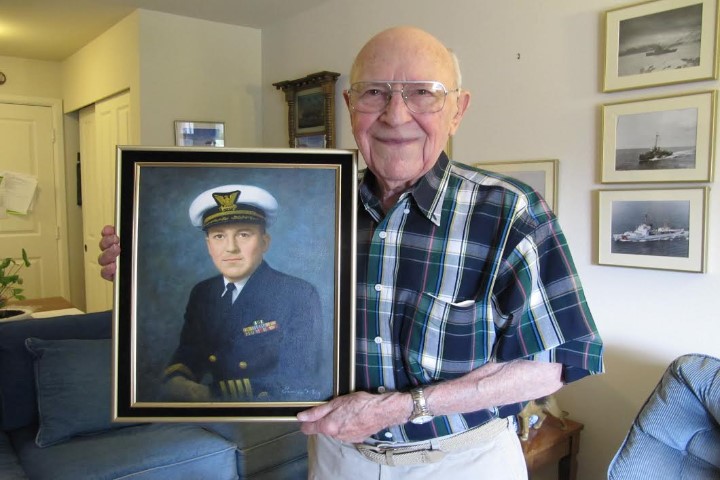
JoLane Middle School student Marin Gray recently won $1,000 in the VFW Patriot’s Pen statewide essay contest, and the Oregon 13-year-old’s first instinct was to give something back to veterans. So Gray created her own essay contest by inviting local middle school students to explain why they’re grateful for local military veterans who fought to protect their freedoms, The News-Review reports.

A total of 26 students submitted essays, which were judged by Roseburg High School Principal Jill Weber and local veteran Neil Hummel. The top five finishers were invited to the Veterans of Foreign Wars Patrick W. Kelley Post 2468 in Roseburg to read their work to veterans in person this month.

Geneva Academy student Jonathon Jacobsen took home the top prize and $100. His essay pointed to how soldiers “have protected us from many dangers that might have befallen us,” from the Revolutionary War to Afghanistan.

“Because of them we are unscathed and living in peace,” he wrote. “Those that have completed their service deserve respect from us all.”

Gray also read “America’s Gift to My Generation,” her Patriot’s Pen essay, which focused on how soldiers paid the ultimate price for upholding America’s ideals. Sacrificing for what’s right, she wrote, is an American tradition dating back to the Revolutionary War. “Unpaid and unfed, this nation’s first soldiers fought because they believed that the choir of ‘We the People’ held more power to influence our destiny than the voice of a king,” Gray said.

Local vets loved the event.

“I want to thank all the kids, the young people, for just knowing what some of these guys have gone through,” said Bill Johnson, a chaplain who helps vets in recovery.

“When I came back from Vietnam, I didn’t get anything. I got spit on,” Joe Wouters told The News-Review. “These kids are at least welcoming us home.”

Gray’s essay contest is the third event she’s organized over the last two years to help students and others in her community. She organized a Kindle giveaway to Eastwood Elementary School students in December when the library closed. She also created a cultural awareness program last year called Building Respect and Value for Everyone (BRAVE) to bring in presenters from 16 nations to speak to hundreds of local sixth-graders about appreciating different cultures and about bullying, according to the news site.

This story highlights how a service ethos within a school can expand especially as the attitude towards service is expressed in a range of practices and routinized actions. Even mandated community service can create a change in attitude. Researchers at the Institute for Advanced Studies in Culture found that even when “its value was questioned by students and parents, community service was an important part of the school’s moral ecology and an important way to reinforce the school’s ethical mission.” The experience of Marin Gray form the basis of an expanding array of service activities.

Teachers and principals working to strengthen moral and citizenship formation in their students can find information and strategies at the UK’s The Jubilee Centre. In The Jubilee Centre’s own words, the following illustrates how the centre views it work.  “The Jubilee Centre is a pioneering interdisciplinary research centre on character, virtues and values in the interest of human flourishing.  The Centre is a leading informant on policy and practice through its extensive range of projects contributes to a renewal of character virtues in both individuals and society.”


 

UK poll finds 80 percent of teachers believe character education improves grades

A new poll of teachers in the United Kingdom shows the vast majority believe that a greater focus on character education would have a positive influence on student academics.

Researchers with Populus and the University of Birmingham’s Jubilee Centre for Character and Virtues asked 450 working teachers about the potential impact of more character education in schools, and defined character education as developing “positive strengths such as honesty, confidence, and critical thinking,” Phys.org reports.

The survey also asked whether it’s important for students to “understand what is ethically important in difficult situations and how to choose the right course of action.”

Researchers questioned teachers in a wide variety of British schools, from public schools to faith-based schools to academy, special, alternative and independent schools. They also sampled educators from different seniority levels.  Overall, 80 percent of teachers across the UK agreed that character education is important.

“This poll provides a further indication from teachers that a greater focus on character education in schools would not only help to develop the skills young people need when venturing out into the work world, but also help to improve academic achievement,” said James Arthur, Jubilee Centre director.

According to Phys.org:

The survey findings show that whilst only 1 in 3 teachers are aware of their school having a specific character education policy in place, provision for character development is currently delivered through a number of routes.

The two most commonly reported by teachers were PSHE/ Citizenship classes (58 percent), and as part of the ‘whole-school ethos’ (48 percent).

However, when asked where they thought such provision should be delivered to have the greatest effect, whole-school ethos was the most popular option at 65 percent, with the other two most popular responses being PSHE/ Citizenship (56 percent), and through all curriculum subjects (47 percent).

“These findings also corroborate previous Jubilee Centre research that has highlighted the transformational impact that placing character at the heart of a school’s ethos can have,” Arthur said.

The Institute for Advanced Studies in Culture has worked closely with the UK-based Jubilee Center. While we can celebrate the greater openness to character education within UK schools, one would also have to caution against making a utilitarian argument for character education. Implicit in character is the “story of living for a purpose that is greater than the self. Though this purpose resides deeply within, its origins are outside the self and so it beckons one forward, channeling one’s passions to mostly quiet acts of devotion, heroism, sacrifice, and achievement.”

Teachers and principals working to strengthen moral and citizenship formation in their students can find information and strategies at the UK’s The Jubilee Centre. In The Jubilee Centre’s own words, the following illustrates how the centre views it work.  “The Jubilee Centre is a pioneering interdisciplinary research centre on character, virtues and values in the interest of human flourishing.  The Centre is a leading informant on policy and practice through its extensive range of projects contributes to a renewal of character virtues in both individuals and society.”

 

Student starts birthday tradition to help the homeless

Fresno State University senior Jasmine Castillo started a tradition for her 21st birthday, and it’s since turned into a family affair that’s also inspired her 7-year-old sister to serve.

The public health administration major decided four years ago she would rather spend her 21st birthday helping others than celebrating by having her first legal adult beverage, so she launched a fundraiser online called “Jaz’s Birthday Wish” to buy toiletries for the Poverello House homeless shelter in downtown Fresno.

“For me growing up, people always wanted to drink,” Castillo told The Collegian. “And I was just like, it was never a thing for me. Why do we have to do that?” “How about we do something more positive?” she said. “More beneficial.”

For the first couple of years Castillo delivered supplies to the Poverello House on her birthday, simply dropping off the donations. But in 2017 she decided to take a more active role, and recruited family to personally hand out packages of toiletries, as well water and burritos.

This year Castello raised $356.25 to buy ingredients to make 290 burritos and make 284 packs of toiletries. She spent her birthday cooking up the burritos with an assembly line of family helping out, including her 7-year-old sister.

“I want to signify that I’m here to help, that I want to make a change,” she said. “I’m always telling my family I’m going to change the world.”

Dulce Sora, a friend of Castello’s from Edison High School, told The Collegian the birthday tradition is just one of several ways her friend reaches out to help the less fortunate in the community. Castello also volunteers with the Muscular Dystrophy Association and Saint Agnes Medical Center, and was recognized by District 31 Assemblyman Henry Perea in 2012 as “Woman of the Year” for her efforts.

“It didn’t just start. She’s always been involved through programs like this, or she’s always tried to help everybody,” Sora said. “If they need help, she always wants to be the first one there.”

Researchers at the Institute for Advanced Studies in Culture asked, “What accounts for a diversity of moral commitments?” “Why would one youngster avoid the homeless person and another either help him with money or talk with him about his problems?” Social scientists typically favor a range of background factors, such as race, class, and gender to account for such differences. But against this, the child’s “underlying attachment to a moral culture was the single most important and consistent factor in explaining the variation in their moral judgments.”

Teachers and principals working to strengthen moral and citizenship formation in their students can find information and strategies at the UK’s The Jubilee Centre. In The Jubilee Centre’s own words, the following illustrates how the Centre views it work.  “The Jubilee Centre is a pioneering interdisciplinary research centre on character, virtues and values in the interest of human flourishing.  The Centre is a leading informant on policy and practice through its extensive range of projects contributes to a renewal of character virtues in both individuals and society.”

Canadian bus crash survivor may never walk again, but wants to do his part to improve the world

In mid-April, Humboldt Broncos hockey player Ryan Straschnitzki woke up to a devastating sight – dozens of teammates and others lying dead and injured in the wreckage of the team bus along a Canadian highway.

“It was pretty devastating seeing my teammates lying there, bloodied and whatnot,” he told CBC News. “My first instinct was to get up and help them, but I couldn’t move my legs.”

Over the next few days Straschnitzki learned that 10 of his junior college teammates, and six others on board the bus died in the collision with a semi-truck north of Tisdale, Saskatchewan. The tragic crash, which reverberated throughout the world, left Straschnitzki with a broken neck, back and left clavicle, and he’s now paralyzed from the neck down.

Doctor’s don’t believe he’ll ever walk again, but the 18-year-old defenseman said there was also another, perhaps more profound, change.

CBC News reports:

Straschnitzki views his survival as a second chance from God, an opportunity to do his part to improve the world in whatever way he can.

Hockey is the obvious answer, he said, adding that he has expressed an interest in continuing his sports career in sledge hockey. Becoming a public speaker is another potential avenue.

Straschnitzki told Global News he’s unsure when he’ll be able to head home to Alberta, but the support from his family and others since the crash is lifting his spirits and keeping him hopeful for the future.

James Davison Hunter in his seminal book, The Death of Character, found that a “child’s underlying attachment to a moral culture were the most important and consistent factor in explaining the variation in their moral judgments.” Even when subjected to rigorous statistical analysis, the conclusion is the same: the moral culture children were living within was the most important determinant of their behavioral predispositions.

“I’m pretty tired and pretty sore, but with the positive thoughts and with the support I’m getting I can pretty much deal with anything at this point,” he said.

During recovery, Straschnitzki said he’s simply focused on getting well and returning to hockey, while offering lessons from his experience to others going through struggles.

“I’m just going to not dwell on the past and do what my body is capable of doing,” he said. “Hopefully get on the ice again and play the sport I love, no matter what.”

And while Straschnitzki told the Calgary Sun he’s “just happy to be alive,” he’s already working toward a goal of one day making the Olympic sledge hockey team – a focus on the future he hopes will send a message to others struggling through life: “It gets better … Don’t give up …”

Teachers and principals working to strengthen moral and citizenship formation in their students can find information and strategies at the UK’s The Jubilee Centre. In The Jubilee Centre’s own words, the following illustrates how the centre views it work.  “The Jubilee Centre is a pioneering interdisciplinary research centre on character, virtues and values in the interest of human flourishing.  The Centre is a leading informant on policy and practice through its extensive range of projects contributes to a renewal of character virtues in both individuals and society.”
Academics lament eroding college culture’s negative impacts on character, marriage, families

Two veteran academics are ringing the alarms about the behavior and mindset of college students in America today, pointing to a “profoundly unintellectual” environment rife with sexual promiscuity that’s undermining marriages and families.

Former Yale English professor William Deresiewicz and Vigen Guroian, professor of religious studies at the University of Virginia, presented their thoughts at a recent conference at Franciscan University of Steubenville, Ohio, The College Fix reports.

Deresiewicz argued that many students seemingly lack passion and “aren’t trained to pay attention to the things they feel connected to.”

The former Yale professor, who also taught at Columbia University, contends many American universities have become “profoundly unintellectual” because students are more focused on the process of learning and “accumulating gold stars,” which means they “don’t have time for intellectual curiosity.”

Students, he said, “can’t think for themselves because they don’t have time.”

The result is students who have told Deresiewicz “’I hate all my activities, I hate all my classes, I hated high school, and I expect to hate my job,’” he told students. Higher education, Deresiewicz believes, now produces “a large number of mentally smart, (but) situationally confused graduates.”

“You might as well go to Wall Street and make a lot of money if you have nothing better to do,” he said.

These concerns echo those expressed recently by James Davison Hunter, executive director of the Institute for Advanced Studies in Culture who spoke at the Baylor University’s Institute for Faith and Learning recently. Hunter warned, “In an effort to establish a neutral and inclusive moral paradigm, the moral universe is emptied of all particularities that make it binding on the conscience…. An inclusive morality tends to reduce morality to the thinnest of platitudes.”

Guroian, author of controversial Christianity Today article “Dorm Brothel,” spoke about the how what’s becoming a collegiate sexual free-for-all is eroding the moral fabric of traditional courtship and marriage, leading to rising divorce rates.

“I believe that the college experience has an impact on the marriages our children make,” he said.

In the past, college was a place where many people found their spouse, Guroian said, but it now more resembles “a parent-funded motel party.”

“Dating has taken a back seat,” he said. “Where courtship languishes, marriage weakens.”

Hunter reminds us that communities grounded in the particularities of religion have the capacity to form moral character substantive enough to deal with life’s ethical challenges.

Teachers and principals working to strengthen moral and citizenship formation in their students can find information and strategies at the UK’s The Jubilee Centre. In The Jubilee Centre’s own words, the following illustrates how the centre views it work.  “The Jubilee Centre is a pioneering interdisciplinary research centre on character, virtues and values in the interest of human flourishing.  The Centre is a leading informant on policy and practice through its extensive range of projects contributes to a renewal of character virtues in both individuals and society.”
 

“King High Remembers” brings high schoolers together with veterans for intimate interviews

A “King High Remembers” project launched at the California school in the 2000-2001 school year is starting to come full circle.

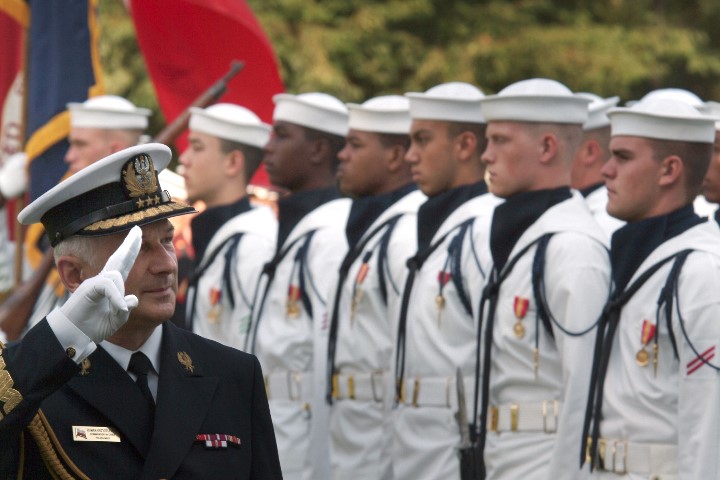
In March, hundreds of folks flooded into the Riverside school for the 18th annual event, where high school juniors dressed to impress as they interviewed military veterans, who brought along photos, medals and other memorabilia to share with the next generation, The Press-Enterprise.

The intent is to help connect history for students while preserving the memories of veterans to honor their service.

This year was the first year Sgt. Nick Cady shared his experiences from six deployments to Iraq and Afghanistan – a record of service inspired in part by his time interviewing veterans as a student at the first annual event.

Cady discussed the reality of fear during war zone firefights, and his motivations for persevering through seemingly impossible situations. “Not a single veteran or service member can say they’re not scared to die,” Cady told students. “But you become calloused and numbed to the fact that you’re going to get shot at and you may not live.”

Student Logan Diaz, 16, wanted to know what inspired Cady to press on as his fellow soldiers sacrificed their lives in battle.

“There’s a lot of evil in the world,” he said. “Attacks kept happening in the U.K. or stateside, or your friends got hit, and I wanted to do something.”

These concrete stories, personally embodied by these veterans, provides concrete instruction in the nature of the good. The Institute of Advanced Studies in Culture found, “The importance of modeling the good is especially important in the public schools because explicit moral teaching is (or is perceived to be) fraught with disagreement, controversy, or legal challenges” This approach cut through all these fears and obstacles.

King history teacher John Corona said he started the program 18 years ago to celebrate heroes in the community who deserve recognition, though many don’t court attention. Last month, nearly 300 people participated in multiple interview rooms. Since the program began, nearly 1,000 veterans have shared their stories.

Riverside Unified School District board president Patricia Lock-Dawson told participants in this year’s event that she hopes the interviews reignite a sense of service that was more common in past generations, The Press-Enterprise reports.

“Today, our students get to hear what actually goes into that phrase, ‘serving your country,’” she said. “We get a tangible glimpse into history through your experience, and we get to say ‘thank you for your service’ and really know what that means.”

Teachers and principals working to strengthen moral and citizenship formation in their students can find information and strategies at the UK’s Jubilee Centre. In the Jubilee Centre’s own words, the following paragraph illustrates how they view their work:  “The Jubilee Centre is a pioneering interdisciplinary research centre on character, virtues and values in the interest of human flourishing.  The Centre is a leading informant on policy and practice and through its extensive range of projects contributes to a renewal of character virtues in both individuals and societies.”

U.S. Navy renews focus on character development

The U.S. Navy is updating its leadership programs at the Naval War College with a keen focus on character and competence which may have been prompted after a series of embarrassing ship collisions last year.

Chief of Naval Operations Adm. John Richardson announced the changes at the Rhode Island school in early April, when he announced the formation of a new College of Leadership and Ethics to weave lessons on character, self-awareness, leadership and ethics into the curriculum, according to U.S. Naval Institute News.

Trainees at the College of Leadership and Ethics will receive 10 days of devoted class time in each core class, as well as additional military faculty to boost the role of what was formally the Navy Leadership and Ethics Center.

Richardson told the news site the Navy is also working to ensure sailors, both subordinates and those in leadership, get feedback from others about their performance and character development through the service’s assessment system.

“We’re in the final stages of a revision to our FITREPS (officer fitness reports) system, our evaluation system. So in an ideal closed-loop environment you would say at the beginning, this is what we value, this is what we think is important. We’re going to teach you those things (through schools, on-the-job training and self-learning). So that’s how we move you along this road in competence and character,” Richardson said.

Researchers at the Institute for Advanced Studies in Culture believe that there are five ways that “thick” moral communities can best be formed.  They identify the following in the Institute’s latest publication, The Content of Their Character—1) authoritative sources, 2) formal instruction, 3) informal “catching,” 4) routine practices, and 5) surrounding social support—one might want to add evaluation. You become what you measure. Here the Navy is adding character to their FITREP evaluations and thereby highlighting the Navy’s aspiration of a “good person.” This steps makes character real and an essential part of the school’s culture.

The Institute for Advanced Studies’ latest book, The Content of Their Character provides findings of the Institute’s research into ten sectors of K-12 high school across America regarding moral and citizenship formation of high school students.  The sectors studied were as follows:  urban public high schools, rural public high schools, charters, evangelical schools, Catholic schools, Jewish and Muslim schools, prestigious independent schools, alternative pedagogy schools and homeschooling.

Admiral Richardson said two fatal ship collisions with commercial vessels last year did not prompt the changes, but did provide examples of why leadership and ethics are important.

“When you think about where our commanding officers and leaders fall short, there’s just been too many instances where those shortcomings have had to do with ethical types of issues, in addition to the competence thing. So it’s clearly an area where we needed to make sure we were emphasizing,” he said.

“Perhaps the ultimate expression of trust and confidence is to give that commanding officer that ship and that crew and expect them to go over the horizon on their own and come back stronger than when they left in every respect, both from a warfighting competence standpoint but also I want them to bring our teams back stronger in character,” Richardson continued. “And so there was certainly an element of the [post-collision] investigations that said, hey, we need to really make sure that in each of our communities – and this one focused on the surface community – that our careers, our education, our career path is really focused on developing competent, confident commanding officers with the competence of character.”

Teachers and principals wanting to strengthen moral and citizenship formation in their students will find information and strategies to do so at the UK’s Jubilee Centre.

AL football champ launches campaign to change bullying school culture

Former University of Alabama lineman Bradley Bozeman is tired of talking about bullying. He’s determined to do something about it.

Bozeman played an important role in Alabama’s national championship a few months ago, and he’s now training during the off season in anticipation of the NFL draft, but he’s also taking some time to launch a new campaign to speak with students across Alabama about how their actions impact others.

The effort started when ESPN radio host Rachel Baribeau visited the university to speak with Bozeman and his teammates about character, and Baribeau asked Bozeman to make a video for a young girl who was bullied in her school. Instead, Bozeman made the hour trip from Birmingham to Pell City to speak at the girl’s school, an experience he “fell in love with,” he said.

“I don’t want to be just a ‘talk about it and not do anything about it,’” Bozeman told the news site. “That’s why I went ahead and started a campaign. I’ve been jumping on it, trying to go different places. I think a lot of our problem is people say, ‘Oh, that’s bad,’ but what are you actually doing about it?”

Bozeman isn’t as high-profile as other celebrities who have spoken out about bullying, but he’s well-known in Alabama, where he’s working to speak at three schools per week, with the goal of reaching 20-25 schools in April. The 6-5, 305-pound blocker doesn’t have a prepared speech, but rather speaks from his own experiences with bullying as a big clumsy kid growing up.

A chronic challenge in moral education is one of authority. In the State of Alabama few individuals have more moral authority and persuasive influence than a University of Alabama national champion 300-pound football player. In addition to the size of his person and statue of his fame, Bozeman is speaking from his own experience. James Hunter of the Institute for Advanced Studies in Culture observes, “Experience was always a precursor to the possession of character and practical wisdom, for it schools the individual in the range of circumstances within which the virtues would find expression.”

“No. 1 is trying to get them to understand that bullying is a huge problem,” Bozeman said. “Four thousand kids a year commit suicide because of depression, bullying and so on and so forth. The impact that you can have on somebody’s life just by being kind to them or the other way by being a bully … that’s my main point of it.”

Ultimately, Bozeman said he’s hoping to make an impact that will help change the culture in schools, a mission he intends to continue once he reaches the NFL.

“It’s just something that’s really heavy on my heart. This is something that I really think is a big thing in our schools,” Bozeman said. “It starts with kids. Our future is our kids and the youth of America right now. What if we could change the mindset from being all about me? There’s no respect anymore. … I think if we can affect kids in a positive matter and give them the things that some kids don’t know. They just do it because they think it’s funny or it’ll impress their friends.”

“But let’s give them the knowledge and the tools to be able to change the strain we have going.”

Teachers and principals wanting information and strategies for strengthening moral formation work in their school can go to the UK’s The Jubilee Centre.


SC fifth-graders reflect on character, decision-making through courtroom role play

Fifth-graders at South Carolina’s Horry and Georgetown county schools are learning about leadership, civics, the judicial system, bullying, peer pressure, drugs and other important issues through role playing.

Students at nine schools in Horry and Georgetown counties took part in a 20-week class called Project LEAD, which aims to explain the legal and social consequences of criminal behavior, from drug use, to shoplifting, graffiti and other more serious crimes, WPDE reports.

Horry County Solicitor Jimmy Richardson told WMBF in 2016 he started the program with fifth graders at Conway Elementary School after learning about the program from a defense attorney in California. “The hope is that it will affect them in a way that they will think about the consequences of bad choices, and also think about the consequences of good choices,” he said at the time. “We’ve talked to them about gangs and graffiti, we’ve talked to them about avoiding drugs and avoiding bullying.”

This program does more than just provide information. It engages their imagination as they place themselves within the story that they are narrating. This builds on the communitarian vision of moral education. James Hunter, founder of the Institute for Advanced Studies in Culture, writes in The Death of Character, “For communitarians, morality exists by social consensus, its moral pedagogy operates mainly through social experience. It is through experience that students participate in moral community and practice moral action.” Students learn about the consequences of their actions through the experience of these complex legal dramas.

Richardson solicited volunteers like Conway mayor and attorney Barbara Blain-Olds to help out, and specifically targeted fifth-grade students based on his experience in the criminal justice system.

“When we looked at the people that have gone through Drug Court, they tell us that they got started with illegal drugs, on average, at about 12 years old, so fifth, sixth grade,” he said. “ … I can tell you this; right now, there are a lot of voices out there, one big voice calling out to them are these little local gangs and we want to be a positive voice.”

The program, which has since added 8 schools, concludes with a mock trial that allows students to play the roles of judge, prosecutor, witness and defendant in a real courtroom. This year, at a mock trial in a North Myrtle Beach courtroom, students tried a case involving a student who brought a gun to an arcade.

Parents also participated in the trial, working with educators to guide students through the process and help them reflect on the important character issues involved in the case.

“This program teaches kids a valuable lesson of how the judicial system works and how they can come together to … stop all the drugs, and most importantly the bullying, so they don’t end up in the system,” parent Ron Denly told WPDE.

For teachers and principals interesting in knowing more about character and citizenship formation, information can be found at the UK’s Jubilee Centre.

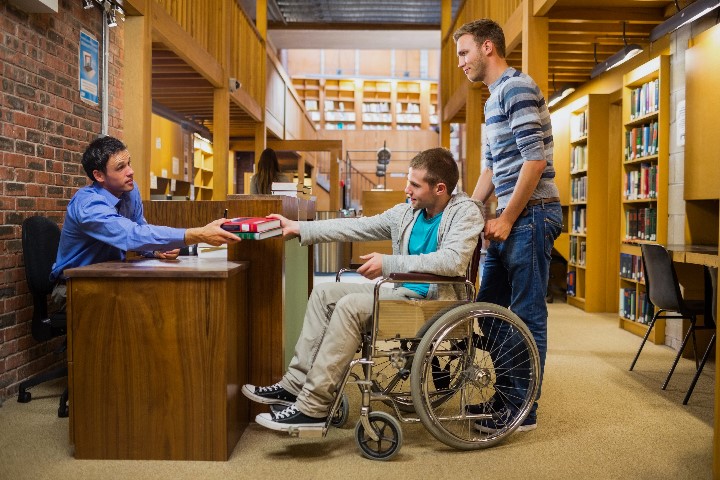
UI students launch nonprofit to help disabled classmates navigate college

University of Iowa student Michael Penniman is changing the way disabled students experience college with the help of two friends and a nonprofit start-up they launched last year.

Penniman suffered an injury during a wrestling match with a friend in 2012 that left him a quadriplegic. After years of recovery that required him to relearn to talk and use his arms, he began taking classes at Des Moines Area Community College.

Two years ago, Penniman transferred to the University of Iowa as a sophomore, but he was often left stranded by the home health care companies he relied on to get out of bed and to class each day, the Iowa City Press-Citizen reports.

When his care providers missed shifts, Penniman reached out to his friend and fellow undergraduate Peter Easler, who eventually took over when Penniman’s regular caregiver broke her foot.

That’s when the two – along with another friend, Jacob Newcomb – hatched the idea to create a more reliable, student-run business to help their disabled classmates, while also providing a way for reliable college students to earn extra money.

According to the Press-Citizen:

Called Students Care, the idea is to use Medicaid waiver funds — which they hope to one day supplement with grant funding and other fundraisers — to pay students who perform home care in a more reliable and more personable way.

The startup is very much in the early stages. It is a registered nonprofit, with 12 employees, which they pay from $8.50 to $11 per hour. Other than Penniman, who himself is involved in the startup’s operation, they have one other client, a student at Kirkwood Community College.

Penniman, now a 25-year-old junior, trains new employees on how to meet clients’ needs, while Easler focuses on maintaining a high quality of care as they grow the business.

“That was the biggest thing for me for a while. Every day, I would ask, ‘How is this year compared to last year?’” Easler told the AP. “Because I don’t want to build something up if it’s not exceeding expectations.”

Newcomb said the concept of students helping students works well because it means help is always nearby, and the connections encourage disabled students to get more involved with UI’s activities and clubs.

In the book, The Death of Character, sociologist James Davison Hunter has highlighted research that shows that peer-to-peer service heightens the self-esteem among participants.  Not only is the founder of Students Care a person with disabilities, he has found ways to deliver his service in ways that show respect and establish new relationships.

“For college kids who aren’t disabled, its super easy to get involved in things,” he said. “We don’t want there to be any barriers for students with disabilities to go to a four-year university where they can enjoy it the whole time they are here.”

Teachers and principals interested in strengthening character formation in their school may find information and strategies at the UK’s The Jubilee Centre.