$2.1M commitment to Georgia character education program

Business and school leaders in Bibb County, Georgia, want to ensure every student has the tools to form the habits that form good character, and they’re putting their money where their mouth is to make it happen.

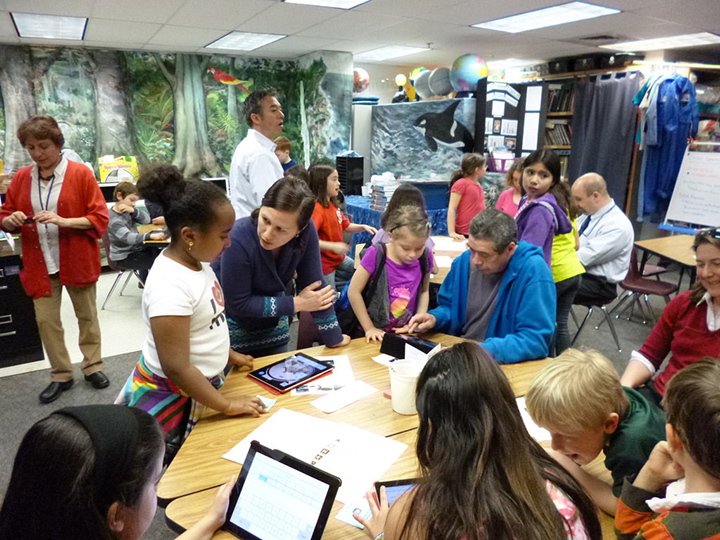
The OneMacon Business Education Partnership teamed up with Bibb County schools to launch a fundraising campaign in March, and officials announced this month that they’ve raised $2.1 million to expand a pilot “Leader in Me” character education program to all of the district’s elementary and middle schools over the next four years, The Telegraph reports.

“Believing and doing require a lot of effort, and you all have made a lot of investment in this community,” said Blake Sullivan, Business Education Partnership co-chairman, at an assembly at Vineville Academy in early November. “We’re going to have some of the best schools in Georgia.”

District officials implemented the Leader in Me program at two local elementary schools during the 2015–16 school year, and expanded the program to two others last year. The new funding means it will now roll out in the remainder of the district’s elementary and middle schools in coming years, superintendent Curtis Jones said.

The program was developed by Sean Covey, with the FranklinCovey company, in 2009, and it’s based on The 7 Habits of Highly Effective People, a book penned by Covey’s father, Stephen Covey. FranklinCovey also donated 10% of the $2.1 million fundraising goal, with the rest coming from other businesses and community donations.

The Leader in Me program, which concentrates on changing the culture and climate of schools, is already in place in 3,500 schools in 55 countries, according to the news site.

“It’s a systematic approach to building 21st century skills in children and in staff members and in the community,” Covey said, adding that he hopes the Bibb County program will provide a model for other communities to follow. “There’s so much instability in the world today. You need a framework of your own and a set of core principles to found yourself on and skills, like taking responsibility, goal-setting, resolving conflict. This is basic blocking and tackling of being an effective and happy person today.”

Jones said the Leader in Me program is designed to change how students think, with the hope that they’ll carry the message into the community.

“It allows our students to really learn how to display strength of character,” he told The Telegraph. “Those words are easy, but how do you do it? Students are asking, ‘What do I do?’ Now we say, ‘You can practice the seven habits and that will help you demonstrate strength of character.’”

The habit-forming approach to good character certainly isn’t anything new, but rather a tradition that dates back to the famed philosopher Aristotle.

“It makes no small difference . . . whether we form habits of one kind or of another from our very youth,” Aristotle wrote in Nicomachean Ethics, “it makes a very great difference, or rather all the difference.”

The Leader in Me program offers sample resources at TheLeaderInMe.org for educators interested in the habit-forming curriculum.

“With over 40 age-appropriate activities in each activity guide, teachers can use the activity guides to introduce and teach the 7 Habits and other foundational leadership concepts to elementary students,” according to the site. “These activities are aligned with Education Standards and with skills for the 21st Century. The lessons in the guides are flexible and can be assigned daily, semiweekly, or weekly according to the available time in each classroom.”

Storytelling for social justice in St. Louis

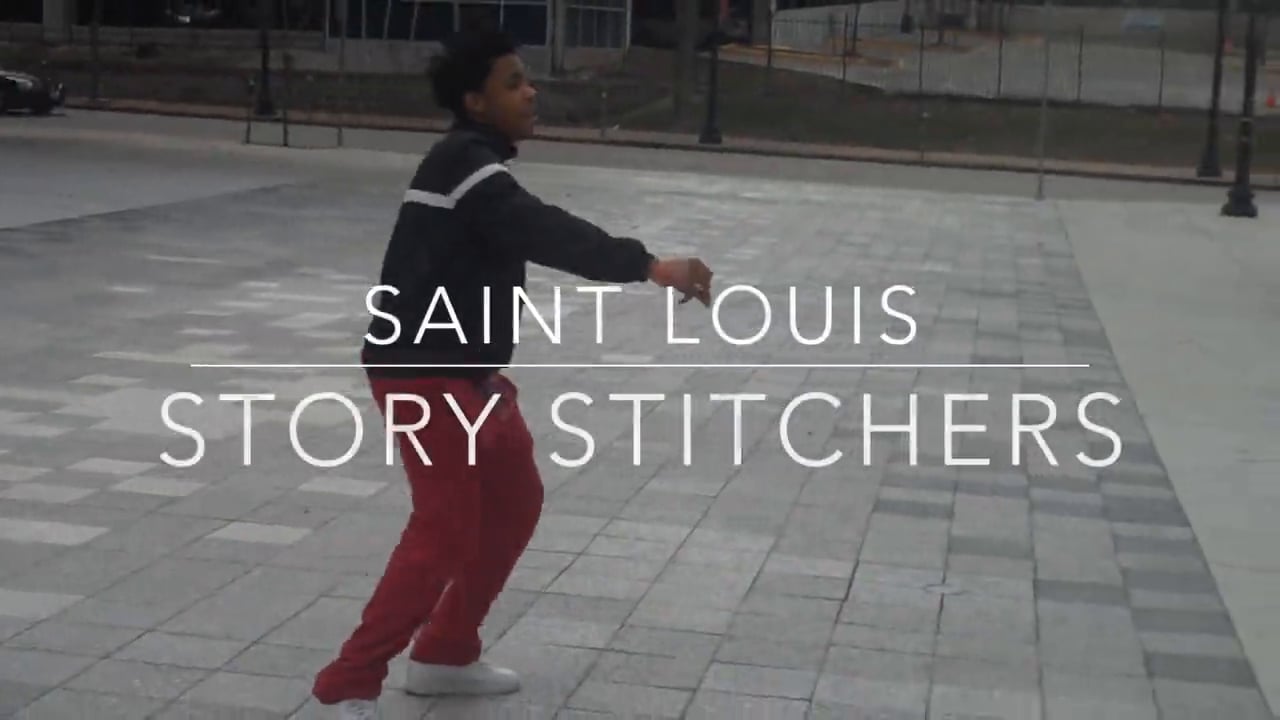
Students in St. Louis are steeped in gun violence, but a nonprofit art collective is working to change the dynamic by recruiting black youth to produce music, poetry, and other art to raise awareness about social justice issues in their community.

The St. Louis Story Stitchers pair professional artists with local black youth between 15 and 24 years old to tell their stories in ways that promote strong character virtues and civic pride, intergenerational relationships, and literacy, EdSurge reports.

“Story Stitchers erase real and perceived divisions through cultural exploration and arts practice,” according to its website, “by stitching together our city.”

The goal is “to promote a better educated, more peaceful and caring region through storytelling.”

In much of The Gateway City, peace is hard to come by.

“In St. Louis in the past five years, 15,000 victims were murdered, shot or robbed at gunpoint. Over 90 percent of St. Louis residents who were killed by guns were African-American, and two-thirds were under the age of 30,” EdSurge reports. “The Circuit Attorney reports there were 2,092 shootings in 2015 and half involved youth age 25 or under.”

Story Stitchers offers local youth another way by showcasing their talents in public awareness campaigns on social justice issues including discrimination, literacy, the lack of fresh foods, and gun violence. This summer, the group launched a Pick the City UP campaign that helped students host music, poetry, and other live performances in the city’s cultural venues, parks, and neighborhoods where they live.

Some learned to craft raw and authentic messages of hope and to offer solutions through hip hop and dance, while others documented the performers to produce photos, video and other messages posted online.

With Story Stitchers, the city’s black youth are learning to “work collaboratively to generate research, rhythms, writing and recordings that eventually become live performances, PSA spots and educational videos with strong messaging,” EdSurge reports.

The young adults are paid for their efforts, through both sales of published songs, poetry, and videos, and for work on video projects and administrative tasks for Story Stitchers.

In essence, the art collective is helping St. Louis’ black youth turn their violent reality into something positive, while also improving the city’s moral ecology with real-life experiences that develop character, literacy, and a sense of purpose.

James Hunter, sociologist at the University of Virginia and founder of the Institute for Advanced Studies in Culture, notes in The Tragedy of Moral Education in America that character “is a story about living for a purpose that is greater than the self.”

“These purposes, and the narrative in which they are embedded, translate character into destiny,” according to Hunter. “In so doing, they also establish the horizons of the moral imagination—the expanse of the good that can be envisioned. “

St. Louis program focuses on ‘character instead of curriculum’

AESM Middle School in downtown St. Louis is implementing a new character education program in hopes it will make a positive impact on students’ lives well into the future.

“If you don’t have good character traits,” principal Ceandre Perry told KMOV, “students can struggle in the real world.”

“So we want to make sure we’re equipping them right now with those ideas in order for them to be successful in high school and go on into the real world,” he said.

The news site highlighted how the “new school program focuses on character instead of curriculum.”

“Instead of focusing on just math and science, it stresses nonacademic growth that will help students long after they leave school,” KMOV reports.

The three-year “Character Plus” program was funded through an unspecified grant.

KMOV provides very few details on what the program actually entails, but the news report illustrates a fundamental problem facing character education, as well as other important issues like moral formation, and social and emotional learning in schools: they’re viewed as education extras that are not necessarily elements of a “real” or traditional academic curriculum.

The fact is, whether or not educators and the media formally acknowledge character education or moral formation, students are learning both through daily life at home and at school. It’s often part of a “hidden curriculum” that will determine if students lead a flourishing life, or something else.

Plenty of students get straight As in school, but flunk life miserably.

An intentional focus on character and morality in the daily school rituals is a positive step in the right direction, but it’s only one of several important elements. Character education programs that are ultimately successful also push students and teachers to commit to a particular view of reality.

If a program is not rooted in strong particular commitments, what the Institute for Advanced Studies in Culture terms “particularity,” then it will not withstand the assaults of daily life.

The Community School for Social Justice in the South Bronx and the Ron Brown High School in Washington, D.C., are two examples of public high schools with very strong particular commitments.

Virtual approaches to real-word problems

Nevada’s Office of Safe and Respectful Learning recently launched a new website for students and parents to report bullying online, raising questions about how the virtual approach will correct real-world problems in schools.

“The legislature made the reporting system possible,” Christy McGill, director of the Office of Safe and Respectful Learning, told KOLO. “They took a real hard look at the bullying that had gone on in the past in our schools and they decided enough is enough.”

In 2015, lawmakers appropriated funds to the Nevada Department of Education to create the Office of Safe and Respectful Learning, which is tasked with maintaining a 24-hour, toll-free statewide hotline, as well as an internet site, for anyone to report bullying.

Both the hotline and the site, bullyfreezone.nv.org, are reportedly designed as avenues to report bullies without having to confront them, according to the news site.

“If you think back to when you were bullied,” McGill said, “your worst fear is to meet your bully head-on.”

According to bullyfreezone.nv.org:

The Bully Free Zone web site is designed to assist students, parents and school staff with bully prevention methods. The resources and information included in this web site are structured to be easy to use for everyone. This is not an inclusive list of resources.

The mission of the Office for a Safe and Respectful Learning Environment is to train, empower, educate, collaborate, advocate, and intervene in order to ensure that every student in Nevada, regardless of any differing characteristic or interest, feels fully protected physically, emotionally, and socially. We believe that by creating a safe environment, one which is fostered by a caring adult relationship, all children will thrive to meet their passions and aspirations. This office is responsible for the foundational four levels of a hierarchy of learning: physical needs, safety, belonging, and self-esteem.

In addition to the online reporting system, the site also offers lesson plans, an educator “share fair,” “students in the spotlight,” and bullying information by school district. There’s also tips for families, safety pledges, and advice on how to deal with bullies.

Once a bullying report is made, “a school official will promptly begin to investigate the situation,” according to EdScoop.

What’s not apparent, however, is how the reporting system will correct the underlying problems that are driving the problem in schools, particularly a lack of support for educators to take action.

Murray Milner, senior fellow at the University of Virginia’s Institute for Advanced Studies in Culture, notes in his book Freaks, Geeks, and Cool Kids, that “bullies have always been a problem.”

“Part of growing up is learning to deal with them,” he wrote. “But this does not mean that young people should be without assistance in this regard.”

Milner’s research shows high-schoolers do not receive much support against bullies, in part because teachers ignore cruelty unless it spills over into actual violence. The situation, Milner argues, stems from teachers’ lack of power and support from school officials to take action.

Teachers are also often tasked with monitoring hundreds of students in as many as five classes per day, which is further complicated by a lack of authority to issue sanctions against bullies.

Many parents are aware of the situation and many have struggled to convince school officials and teachers to take a more active role in policing bullies.

Increasing knowledge of the problem is good, but an online reporting system does not ensure teachers have the knowledge or authority to take action when necessary.

Virtual means cannot correct the flaws in real communities.

And it begs the question: If parents don’t feel comfortable reporting problems directly to school officials, why would they have any confidence those officials will follow through on the electronic alerts?

Lack of courage at the heart of nation’s political crises

In a passionate piece in The Atlantic that criticizes all corners of our current political world, Eliot A. Cohen diagnoses us all as suffering from a character crisis. While there are many “forces and phenomena in play,” he writes, “it is character that remains the issue that confronts us in almost every story about national politics . . . ”

“Of all the elements that constitute character, courage is the essential one. Physical courage is in part innate, in part something that can be inculcated by training and experience. The courage to take responsibility emanates more naturally from ambition. What is rarer and more difficult than either is moral courage.”

“As historian Allan Nevins put it, ‘moral courage is allied with the other traits that make up character: honesty, deep seriousness, a firm sense of principle, candor, resolution.’ And of moral courage there is an unquestioned deficit today—in the halls of Congress where the Republican Party has yielded what once were its values to an adventurer in the White House; in a White House presided over by a bully and a braggart who infects even upright generals with his breathtaking dishonesty; in universities where administrators and faculty yield to student mobs baying to be protected from uncomfortable ideas and unpopular individuals, and elsewhere.”

However, research from the Institute for Advanced Studies in Culture over the last five years would suggest that this crisis of character has been a long time in coming. Dr. Jeffrey Dill, in the “Interview Report” for the 2012 “Culture of American Families” report, noted that “. . . throughout all of the interviews—3,500 pages of transcripts—the words ‘character’ and ‘virtue’ were only used a total of 26 times by 12 different respondents (by way of contrast, the word ‘independent’ and variations of it were used 173 times by 60 respondents). We intentionally did not ask about character directly because we wanted to see if it would emerge organically. Parents clearly cared about the character of their children, but instead of using words like ‘character’ or ‘virtue,’ they used descriptive words like ‘good heart,’ ‘nice,’ ‘self-respect,’ and ‘self- reliance.'”

“Are these words adequate substitutes for ‘character,’ ‘virtue,’ ‘humility,’ ‘patience,’ ‘wisdom,’ or ‘courage’? That is difficult to measure, but words and language do convey meaning and ultimately shape human perceptions of reality. The words we use have the power to create the worlds we inhabit . . . This is especially true in the context of socializing the young. The words parents now employ . . . connote softer, more individualistic, and therapeutic meanings. We might think of them as less commanding or authoritative. The tension—or paradox—lies in the gap between the authority required to do what parents say they want—to form their children into the right kinds of people—and the language they use to describe it.”

Cohen concludes his essay by urging us “to recover an admiration of imperfect civic courage by flawed people, even in occasionally dubious causes. That is best done by returning to our own history, not in a spirit of hero worship, but of respect for the virtues that make free government possible. It is an educational motif out of style, and desperately needed.”

One way of doing that is to read the stories that can be found in great literature, both for children and for adults. In those stories we will find the embodiment of character in which we can participate, stories that give us a purpose greater than we find within us. Another resource is available from the Jubilee Centre: a secondary school lesson on the virtue of courage.

Student scientists eager to see the forest and the trees

Fourth-graders at Colorado’s Fox Creek Elementary want to learn more about how to conserve the Backcountry Wilderness Area, an 8,200-acre preserve that borders school property.

Over the last three years, students have spent two hours a week studying the vast Douglas County outback through a partnership with the Highlands Ranch Community Association, which manages the 13 square miles of Ponderosa pines and Gambel oaks that’s home to a wide array of wildlife, from elk and pronghorn to wild turkeys and prairie dogs.

Each year, students compare ecosystems in the park, measure footprints, collect samples, look at temperatures, and conduct other field work.

“When the students come out,” camp director AnnaKate Hein told the Highlands Ranch Herald, “they are expected to be scientists.”

But something different happened this year. Armed with data and inspired by their time in the Wilderness Area, students requested to take the program to another level and put what they learned to use through a service-learning project.

According to the Herald:

To raise money for the project, Fox Creek students hosted a hot chocolate stand at Haunted Forest, a popular event in October organized by HRCA. Backcountry staff expected students—15 kids on each of the two nights—to bring in $100. They profited upward of $500.

Hein said students will likely work on constructing bluebird houses in open spaces or working to protect the ponderosa pines from elk, which often use the trees for cover.

“Science isn’t always about having the right answer,” Hein said. “Our big goal is to keep kids questioning.”

The Backcountry Wilderness project will certainly help local plants and wildlife, and forge a closer connection between Fox Creek and the HRCA, but it’s the students themselves who will undoubtedly benefit the most.

The service-learning project is part of an ancient tradition that’s known as “becoming by doing.”

Aristotle wrote in “Nicomachean Ethics” that “states of character arise out of like activities.”

By doing science in the Backcountry, the students are becoming scientists. By taking responsibility for protecting and caring for the Backcountry, the students are becoming responsible citizens and naturalists, virtues they’ll likely carry into adulthood.

Educators interested in incorporating similar service learning concepts into their classrooms can find materials and lesson plans by iCivics and others at ShareMyLesson.com.

UK officials scrap ‘landmark’ character education program

Former British education secretary Nicky Morgan described a multi-million dollar character education grant program as “a landmark step for our education system” when she unveiled the plan in 2014.

Now it’s gone, replaced by new Education Secretary Justine Greening with an Essential Life Skills program that’s geographically restricted to 12 areas in the country designated as social mobility “cold spots,” TES.com reports.

The $4.5 million Character Grant program was rolled into the larger, $28 million Essential Life Skills program, though education officials did not mention the change when they announced the new program in early October.

“The government has also announced today that £22 million will be shared among all 12 Opportunity Areas through a new Essential Life Skills programme, to help disadvantaged young people have access to the same opportunities as those in the top-performing schools. The aim is to help them develop wider skills such as resilience, emotional wellbeing and employability. The programme will complement the individual Opportunity Area plans by providing extra-curricular activities, such as sports, volunteering and social action projects, which give pupils the opportunity to develop leadership skills,” according to the government announcement.

The death of the Character Grant program was revealed by Morgan, author of Taught Not Caught: Educating for 21st Century Character, after she pressed parliament about the fate of her Character Grant program. Education official Nick Gibb responded in mid-October that the program “has closed.”

“The term ‘life skills’ is a bit utilitarian and does not say much about flourishing,” Morgan said.

“The proof is in the pudding—let’s see which organizations get the funding,” she said. “If it goes to develop the same character traits, I understand if that means a change in its focus to these areas.”

The government announcement cites important virtues like “resilience” and “emotional wellbeing” as elements of the new initiative, but it’s clearly more focused on “employability” and “access to opportunities.”

“Local independent partnership boards—made up of school leaders, business owners, council leaders and other local partners—will work to boost attainment from the early years of a child’s education right through to university. Other initiatives include projects to raise aspirations, by providing all young people in Opportunity Areas with at least four inspiring ‘encounters’ with the world of work, for example through work experience or mentoring,” according to the government news release.

While building collaboration between schools and the community is critical for the success of any program, the new focus on “life skills” over character education failed to recognize the essential role character education and moral formation play in preparing students for work and life.

Johann Neem, senior fellow of the Institute for Advanced Studies in Culture, argues that shift from a more liberal education to specific life skills for college and career readiness seemingly ignores the importance of instilling character virtues.

“Society needs philosophers . . . but not everyone must become one,” Neem wrote for The Hedgehog Review. “Instead, a liberal education would develop the skills, knowledge, and dispositions or virtues necessary to use philosophy’s insights to inform action in the world.

“Unlike the pure philosopher or sophist, the ideal orator ‘unites wisdom and eloquence,’ knowledge with skills and virtue,” he continued.

A character education framework can guide educators in public schools to intentionally integrate character into their classrooms, regardless of unsupportive policies.

“That remains a worthy aspiration for the graduates of our public schools, some of whom will become philosophers and scientists,” Neem said, “but all of whom are human beings and citizens.”

H.S. Football: West Milford seniors pay it forward

West Milford High School football coach Don Dougherty is teaching his players how to “Punt, Pass & Read.”

The New Jersey coach told NorthJersey.com that when he took over as head of the varsity team in 2012, his focus was as much on devising offensive and defensive strategy as it was on what his players are doing off the field.

“From the beginning I felt the need and importance for our student athletes to give back to their community,” Dougherty said. “I wanted to put academics and athletics together for a good cause. Introducing that combination to the younger kids in our community makes a lot of sense and it promotes the importance of education and hometown pride.”

The effort also puts school sports in the proper context as a model for life, one that shows students there’s more important things than the numbers on the scoreboard.

Six years ago Dougherty launched the “Punt, Pass & Read” program to get West Milford players into local elementary schools, where they spend two days reading to youngsters throughout the school district.

Now, the program is spearheaded by seniors on the team who don their game jerseys to visit all six of the district’s elementary schools. Each year, they spend about an hour at each school reading to and talking with students, and the result is bringing the community closer together, they said.

“It’s really cool to see the students’ reactions and their smiles when we walk into the classrooms,” said senior captain A.J. Bakunas. “It means a lot to them for us to come in and read and just spend time with them. I know about this program when last year’s seniors participated and it’s something I’ve looked forward to being a part of.”

“I saw a lot of joy and smiles on the kids’ faces,” added senior Dylan Purdy. “They all wanted to interact with us and I thought that was great. I hope this program makes the kids want to read more. The younger students look up to us as role models and if they see their idols interested in reading hopefully it will want them to read more.”

Dougherty contends local elementary students aren’t the only ones benefiting from the program.

“The entire week is a humbling experience. It allows the seniors to reflect and see where they came from and how far they’ve come as student athletes. We’re constantly preaching hometown pride and staying home. This program touches on everything and it’s something we plan on continuing for years to come,” he said.

“All the students and staff at the schools really embrace the program and it’s something they look forward to every year,” Dougherty told NorthJersey. “The younger students ask the players for autographs and the teachers get to spend time with their former students who are now seniors in high school. It’s just a rewarding experience for everyone involved.”

Parents “want their children to develop into loving, morally upright, and hard-working adults who preserve close ties to their families,” according to the “Culture of American Families” report from the Institute for Advanced Studies in Culture.

Parents believe that “fame, athletics, popularity, and power matter little in the larger scheme of their children’s lives,” so it’s a powerful dynamic when athletics can be a means to forming the good character that parents want for their children.

The Positive Coaching Alliance helps coaches, leaders, and parents understand double-goal coaching: winning and teaching character.

T.C. Williams student wins hero prize

T.C. Williams High School student Ana Humphrey wanted to make a difference, and now she’s heralded as a hero.

The 16-year-old from Alexandria, VA, is one of 25 young people across North America recently named as a winner of the 2017 Gloria Barron Prize for Young Heroes, a distinction founded in 2001 by author T.A. Barron in honor of his mother.

“Nothing is more inspiring than stories about heroic people who have truly made a difference to the world,” Barron told The Connection. “That is the purpose of the Gloria Barron Prize: to shine the spotlight on these amazing young people so that their stories will inspire others.”

Humphrey’s story grew out of a hands-on life science class in 7th grade that involved work to restore a local wetland. It was a rewarding opportunity she wanted other students to experience, which compelled Humphrey to launch the Watershed Warriors Club.

The nonprofit pairs high schoolers with local 5th graders to promote environmental awareness through similar hands-on activities that incorporate science, technology, engineering, and math. Humphrey partnered with the National Park Service and the local Four Mile Run Conservancy, crafted lesson plans, and reached out to area elementary schools. Within three years, the group engaged nearly 300 mostly low-income, minority students at four elementary schools, and is now working to expand the program to other high schools.

“I now know, given the tools and experience, that students of all ages can become drivers of change in their community,” said Humphrey as she received the Barron Prize.

Without people like Humphrey who embody virtues, it’s almost impossible to embody them yourself. We can’t just say “work harder, be nicer.” We are inspired by people who have done good things despite great adversity.

“Character reflects the affirmation of our commitments to a larger community, the embrace of an ideal that attracts us, draws us, animates us, inspires us,” wrote James Davison Hunter in The Death of Character. Heroes demonstrate what can happen when a person lives for something beyond the self. Almost always we see that true heroism comes from a long obedience in the same direction.

Character is formed intentionally when students are led to think about their life’s purpose and goals through an exercise like this one from the Jubilee Centre for Character and Virtues.

How this nonprofit is helping teachers forge connections with families

A nonprofit education funding website is launching a campaign to help teachers raise money to host “family engagement nights” at their schools.

DonorsChoose.org, which operates like a crowdfunding site for teachers, is working with the Carnegie Corporation of New York to help promote “family engagement nights,” where educators can better connect with the parents of students in their classrooms.

Celeste Ford, spokeswoman for the foundation, told Education Week Carnegie plans to match up to $500,000 of money raised for the family engagement nights through teacher proposals posted to DonorsChoose.org.

The website has helped educators raise money for their classrooms for 20 years, and Carnegie will be looking for creativity in proposals for the family engagement nights to match money raised dollar-for-dollar. Tim Sommer, partnerships director at DonorsChoose.org, said the website expects to receive about 200 proposals from across the country.

“Teachers of all grade levels are eligible to apply, including those in early childhood programs, Sommer said. They will follow the same pitch process as they would for any fundraising campaign on DonorsChoose.org, but must focus on explaining why they need certain supplies for their particular idea for a family engagement night,” Education Week reports.

The news site notes that the effort coincides with a change in federal regulations in the Every Student Succeeds Act that replaced a focus on “parental involvement” with one of “parent and family engagement.”

“Moral education can work where the community, and schools and other institutions within it, share a moral culture that is integrated and mutually reinforcing; where the social networks of adult authority are strong, unified, and consistent in articulating moral ideals and their attending virtues; and where adults maintain a ‘caring watchfulness’ over all aspects of a young person’s maturation,” University of Virginia sociologist James Davison Hunter writes in The Tragedy of Moral Education in America.

Fold told Education Week that fostering a closer connection between families and teachers is a growing priority for education philanthropists. The partnership with DonorsChoose.org is designed to provide funding to make that happen.

Teachers can set up a campaign on the website, and explain what goods they may need to host a family engagement night. DonorsChoose.org screens applications to ensure they’re legitimate, and that teachers requesting help are from a traditional public school or public charter school. Once approved, the fundraising begins and can last up to four months, or until the goal is met.

Once the campaign is fully funded, DonorsChoose.org orders the materials and sends them directly to the teacher. The site has helped teachers raise nearly $600 million over the last two decades, with the average project funded at just under $600.

DonorsChoose.org expects to approve proposals for family engagement nights with the hope of turning them into a reality by the end of February. The site will also ask parents and community members to fill out a survey to gauge which programs worked best.

“Those who successfully fill out the information on site right after the activity will get a DonorsChoose.org gift card through which they can play the role of education philanthropist by deciding which project in their school or district should get some more funding,” Education Week reports.